


Solar Panel Portal Registration Online: Your Gateway to Energy Independence
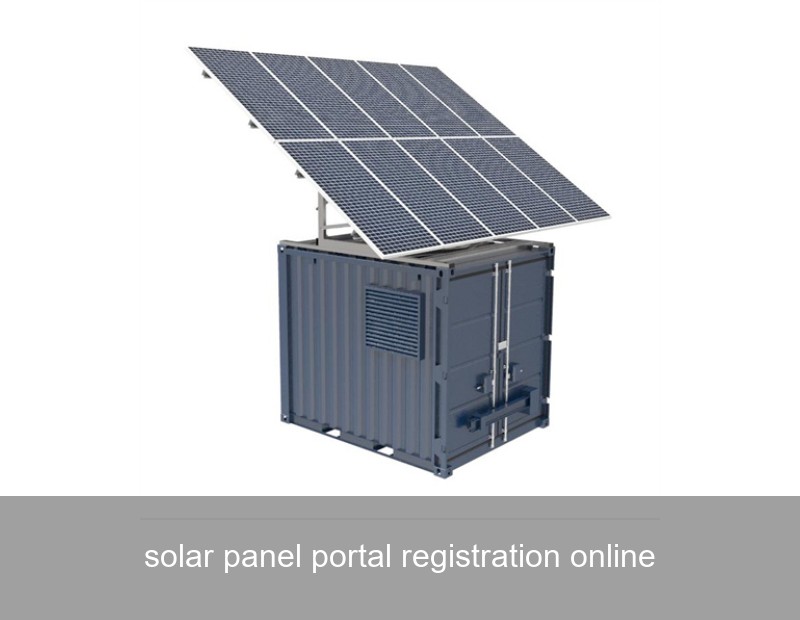
Have you ever looked at your roof and imagined it quietly generating clean, free electricity? For millions of homeowners in Europe and the US, this is no longer a dream. The solar revolution is here, but the journey from sunlight to savings involves a crucial, often overlooked step: solar panel portal registration online. This digital gateway is the key to unlocking financial incentives, grid connection, and the full potential of your investment. Let's demystify this process and explore how it fits into the broader picture of a smart, resilient home energy system.
Table of Contents
- What is a Solar Panel Portal Registration Online?
- Why Online Registration Matters: Beyond Paperwork
- Navigating the Process: A Step-by-Step Guide
- Common Hurdles and How to Overcome Them
- Real-World Impact: A Case Study from California
- Beyond Registration: Integrating with Smart Storage
- The Future of Solar Management
What is a Solar Panel Portal Registration Online?
Simply put, solar panel portal registration online is the official digital process of notifying your local utility company, government body, or relevant authority that you have installed a photovoltaic (PV) system. It's the 21st-century version of filing paperwork, but it's far more significant. This registration serves multiple purposes: it initiates the permission to operate (PTO) from your utility, activates net metering agreements, and is often mandatory to qualify for state rebates, tax credits like the US Federal Investment Tax Credit (ITC), or European feed-in tariffs.
Think of it as registering your car with the DMV—it makes your system legal, traceable, and eligible for the "roads" (the electrical grid).
Why Online Registration Matters: Beyond Paperwork
The shift to online portals isn't just about convenience. It represents a fundamental change in how we manage distributed energy resources. Here’s what accurate and timely registration unlocks:
- Financial Incentives: Programs like net metering allow you to get credit for excess power you feed back to the grid. No registration, no credits.
- System Monitoring: Many portals integrate with your inverter's data, giving you a dashboard to track production in real-time.
- Safety & Grid Stability: Utilities need to know where distributed generation is located to safely manage grid voltage and perform maintenance.
- Increased Property Value: A fully permitted and registered system is a documented asset, often increasing your home's resale value.

Image Source: Unsplash - Symbolizing digital management of solar assets.
The Data Behind the Trend
The Solar Energy Industries Association (SEIA) reports that the U.S. solar market is expected to quadruple in capacity by 2030. In Europe, driven by the REPowerEU plan, solar installations are skyrocketing. This explosive growth makes efficient, digital registration not just a nicety, but a necessity for grid operators and homeowners alike. Manual processing would create insurmountable bottlenecks.
Navigating the Process: A Step-by-Step Guide
While requirements vary by country, state, and utility, the general workflow for solar panel portal registration online follows a logical sequence.
| Step | Action | Key Stakeholder |
|---|---|---|
| 1. Pre-Installation | Submit interconnection application via utility portal. | Homeowner/Installer |
| 2. Installation | System is physically installed and inspected. | Licensed Installer |
| 3. Final Registration | Submit final diagrams, photos, and inspection sign-off through the portal. | Homeowner/Installer |
| 4. Approval | Utility reviews and grants "Permission to Operate" (PTO). | Utility Company |
| 5. Activation | System can be safely turned on and connected to the grid. | Homeowner |
Pro Tip: A reputable installer will manage most of this process for you. Your role is to provide access and sign documents. Always ask about their process for handling online registration before you sign a contract.
Common Hurdles and How to Overcome Them
Even online, the process can have pitfalls. Common issues include:
- Document Errors: A single discrepancy between the submitted electrical diagram and the installed system can cause weeks of delay.
- Utility Backlogs: In high-growth regions, utilities may be overwhelmed, slowing PTO issuance.
- Technology Gaps: Older inverters might not communicate seamlessly with modern utility portals.
This is where partnering with an experienced technology provider makes all the difference. At Highjoule, our HiveMind Energy Management Platform is designed to streamline this integration. For our customers, system data from our high-efficiency battery storage and hybrid inverters can be pre-formatted to meet utility portal requirements, reducing errors and administrative time. We view smooth registration as the first step in a lifelong energy partnership.
Real-World Impact: A Case Study from California
Let's look at a real example. In 2023, a medium-sized winery in Sonoma County, California, installed a 250 kW solar array paired with a 500 kWh Highjoule BESS (Battery Energy Storage System). Their goal was twofold: reduce crippling peak demand charges and ensure backup power for critical refrigeration.
The Challenge: The utility's portal for commercial interconnection was complex, and the winery needed to register both the solar generation and the storage system for a specific self-generation incentive program (SGIP).
The Solution: The installation team, using Highjoule's project support tools, compiled all necessary commissioning data—including battery specifications and grid interaction protocols—directly from the BESS's own monitoring system. This data was formatted and submitted through the utility's online portal as a single, coherent package.
The Result: The registration and interconnection approval was secured in 8 weeks, 3 weeks faster than the local average for similar commercial projects. The winery now not only saves over $4,000 monthly on energy costs but also participates in a virtual power plant (VPP) program, earning revenue by allowing the utility to dispatch its stored energy during peak grid stress. The online portal was the critical conduit that made this advanced functionality possible.

Image Source: Unsplash - Example of commercial solar and storage in an agricultural setting.
Beyond Registration: Integrating with Smart Storage
Registering your solar panels online is the beginning. The true modern energy system doesn't just produce—it stores and optimizes. This is the core of Highjoule's mission.
Imagine your newly registered solar system producing a surplus at noon. Without storage, you export it to the grid for a credit. But with a Highjoule Residential Energy Storage System, that excess energy charges your battery. Then, in the evening when grid prices are high, you power your home from the battery, maximizing self-consumption and insulating yourself from price volatility.
Our systems are designed with these digital ecosystems in mind. The HiveMind Platform doesn't just help with registration; it provides an intuitive app that lets you monitor solar production, battery state of charge, home consumption, and even set preferences for backup resilience or cost savings—all from your smartphone. The portal registration is the handshake with the grid; our platform is the brain that manages the relationship.
Expert Insight: The Grid-Interactive Home
As grids become smarter, the solar panel portal registration online will evolve into a dynamic two-way communication channel. Future systems might automatically adjust their output based on grid needs (a service called frequency response) or sell stored power during peak events. Preparing for this future means choosing equipment that is software-upgradable and protocol-aware. Highjoule's commercial and residential BESS are built on an open-architecture philosophy, ensuring they can adapt to new grid service markets and portal requirements as they emerge.
The Future of Solar Management
Will the solar panel portal registration online process become fully automated? Possibly. We're moving towards a world where blockchain-enabled smart contracts could automatically register assets and settle transactions. However, the human desire for control and understanding will remain. The ultimate goal is a seamless experience where the technical and administrative burdens are invisible, allowing you to focus on the benefits: lower bills, a smaller carbon footprint, and greater energy security.
Your solar journey is unique. What energy goal—complete independence, maximum financial return, or unwavering backup power—is driving you to consider solar panels today?
 Inquiry
 Online Chat