


Understanding Energy Storage Cabinet Prices: A Smart Buyer's Guide
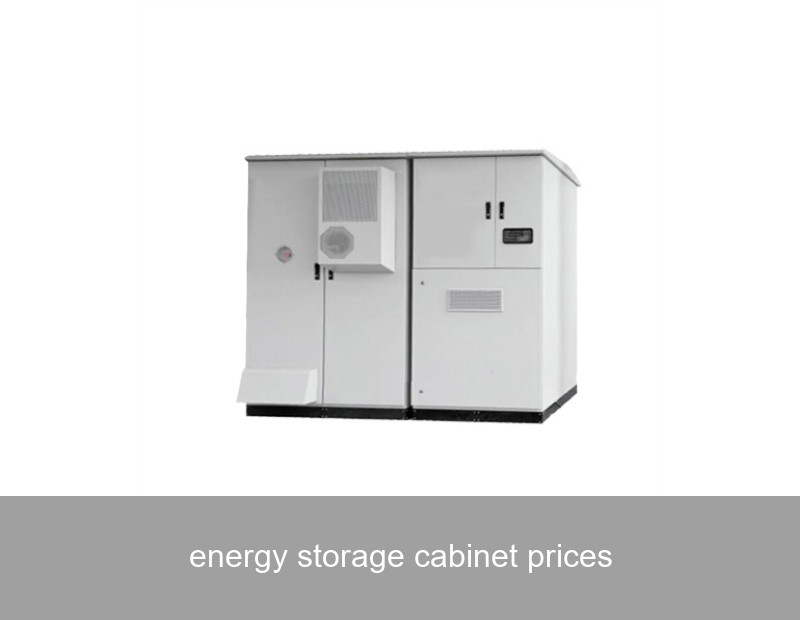
If you're exploring energy storage solutions for your business or home, you've likely encountered a wide range of energy storage cabinet prices. The variation can be staggering, leaving you wondering: what truly drives the cost, and how do you ensure you're investing in a system that delivers long-term value, not just a low upfront price? This guide will demystify the factors behind the price tag, helping you make an informed decision for a resilient and sustainable energy future.
Table of Contents
- Key Factors Influencing Energy Storage Cabinet Prices
- The Core Cost Driver: Battery Chemistry & Performance
- Real-World Value in Action: A Commercial Case Study
- Total Cost of Ownership: The True Metric for Value
- The Highjoule Approach: Engineering Value into Every System
Key Factors Influencing Energy Storage Cabinet Prices
Think of an energy storage cabinet not as a simple box of batteries, but as a sophisticated, integrated power plant. Its price reflects the sum of its advanced parts and capabilities. The main components that determine cost are:
- Battery Cells & Chemistry: The type (e.g., LFP - Lithium Iron Phosphate, NMC), brand, capacity (kWh), and expected cycle life.
- Power Conversion System (PCS): The bi-directional inverter that manages AC/DC conversion, a critical component for efficiency.
- Battery Management System (BMS): The "brain" that ensures safety, monitors health, and optimizes performance of each cell.
- Thermal Management: Cooling systems (liquid or air) essential for safety, longevity, and consistent performance.
- Enclosure & Safety Features: Robust design, fire suppression systems, and environmental ratings.
- Software & Intelligence: The energy management system (EMS) that enables smart control, grid services, and ROI optimization.

As a global leader since 2005, Highjoule engineers every one of its IntelliStorage cabinets with a balance of these elements, ensuring that the price reflects durable value, not just component cost.
The Core Cost Driver: Battery Chemistry & Performance
The battery cell is the heart of the system, and its chemistry is the primary price determinant. Let's break down the two dominant types in the market:
| Chemistry | Typical Price Premium | Key Characteristics | Best For |
|---|---|---|---|
| LFP (Lithium Iron Phosphate) | Baseline | Superior safety, longer cycle life (6,000+ cycles), stable performance, cobalt-free. | Daily cycling applications, safety-critical environments, maximizing lifespan. |
| NMC (Nickel Manganese Cobalt) | Historically Lower, Now Comparable | Higher energy density, good performance across temperatures. | Applications where space is extremely limited. |
While NMC once had a density advantage, LFP technology has advanced significantly. For most commercial and industrial applications, LFP's exceptional cycle life and inherent safety make it the preferred choice, offering a lower cost per cycle over the system's lifetime. Highjoule's standard systems utilize premium-grade LFP cells, not because they are the cheapest option upfront, but because they provide the most reliable and economical long-term operation for our clients.
Beyond the Cabinet: System Integration & Intelligence
Here's where price differentiation becomes stark. A low upfront quote might offer a cabinet, but a true solution provides seamless integration and intelligent control. This is the difference between a cost and an investment.
- Plug-and-Play vs. Custom Integration: Pre-configured systems can simplify installation, but site-specific engineering ensures optimal performance with your existing solar PV, generator, or grid connection.
- Software is a Game-Changer: A basic system may just store and discharge. Highjoule's NeuroGrid AI software transforms the cabinet into a revenue or savings-generating asset. It can automatically shift energy use to avoid peak demand charges, participate in grid flexibility programs (where available), and provide backup power during outages.
According to a 2023 NREL report on storage costs, "balance of system" costs and software controls are increasingly pivotal in realizing the full value of storage. Ignoring this is like buying a smartphone without an operating system.
Real-World Value in Action: A Commercial Case Study
Let's move from theory to practice. Consider a mid-sized dairy processing plant in Bavaria, Germany. Their challenge: high grid electricity costs and significant peak demand charges that eroded profitability.
Phenomenon: Spiking energy costs during production hours.
Data: Monthly peak demand charges often exceeded €15,000. Their solar PV system was underutilized, exporting excess power at low feed-in tariffs.
Case: The plant installed a 240 kWh Highjoule IntelliStorage Commercial Cabinet paired with our NeuroGrid software. The system was configured for peak shaving and solar self-consumption optimization.
Insight & Result: Within the first year, the intelligent system reduced their peak demand from the grid by over 40%, slashing demand charges. It also increased their on-site solar consumption from 55% to over 80%. The annual savings amounted to approximately €68,000. While the energy storage cabinet price was a significant capital investment, the projected payback period is under 5 years, and the system will continue delivering savings for its 15+ year lifespan. The price was not an expense; it was a strategic investment with a clear, calculable ROI.

Total Cost of Ownership: The True Metric for Value
When evaluating energy storage cabinet prices, shift your focus from Capex (Capital Expenditure) to TCO (Total Cost of Ownership). A cheaper cabinet may have hidden future costs.
- Degradation & Lifetime: A system rated for 3,000 cycles may need replacement twice as fast as a 6,000-cycle system, doubling your long-term cost.
- Efficiency Losses: A system with 88% round-trip efficiency loses 12% of the energy you put into it. A 96% efficient system (like Highjoule's) saves that energy, compounding savings over time.
- Service & Warranty: Does the price include comprehensive warranty and local technical support? Downtime is lost savings. Highjoule provides a 10-year performance warranty and has service hubs across Europe and North America.
The Highjoule Approach: Engineering Value into Every System
At Highjoule, we believe the right price is one that delivers peace of mind and predictable returns for decades. Our IntelliStorage cabinets for commercial, industrial, and residential applications are built on this principle. We offer scalable, modular designs that allow you to start with what you need and expand later. Our integrated NeuroGrid platform ensures your system is always operating in the most economically optimal mode, whether your goal is energy independence, cost reduction, or revenue generation through grid services.
We don't just sell cabinets; we deliver tailored power resilience solutions. Our team works with you to analyze your load profile, energy bills, and sustainability goals to design a system that targets your specific financial and operational objectives. This consultative approach ensures the energy storage cabinet price you see is directly tied to a tangible value proposition.
Ready to Move Beyond the Sticker Price?
The conversation about energy storage cabinet prices is ultimately a conversation about the future of your energy resilience and costs. What would a 30% reduction in your annual energy spend do for your business's competitiveness or your household's budget? What is the cost of not having power during your next critical operation or a grid outage?
We invite you to start a different kind of conversation. Contact Highjoule's energy experts today for a free, no-obligation analysis of your energy profile. Let's calculate what a truly intelligent storage system could save you, not just what it costs.
 Inquiry
 Online Chat