


The Single Energy Storage Cabinet: Your Compact Powerhouse for Energy Independence
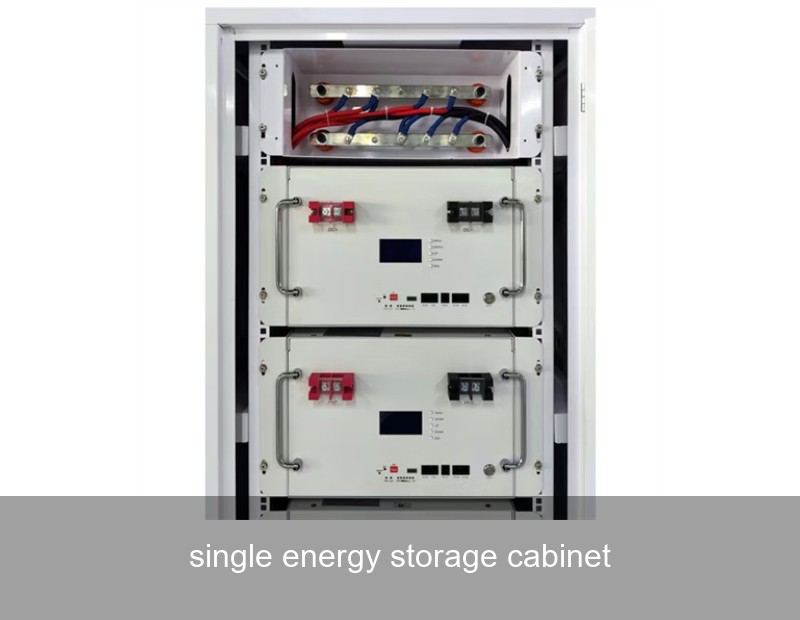
Imagine a quiet, unassuming cabinet in your garage, basement, or utility room. Now, imagine that cabinet holding the key to slashing your electricity bills, keeping your lights on during a blackout, and maximizing your use of solar power. This isn't science fiction; it's the reality offered by the modern single energy storage cabinet. For homeowners and businesses across Europe and the US, this integrated unit is becoming the cornerstone of a smarter, more resilient, and sustainable energy strategy. But what exactly is it, and how can it transform your relationship with the grid? Let's explore.
Table of Contents
- What is a Single Energy Storage Cabinet?
- The Driving Forces: Why Now is the Time
- Real-World Impact: A Case Study from California
- Choosing the Right System: What to Look For
- The Future is Modular and Smart
What is a Single Energy Storage Cabinet?
At its core, a single energy storage cabinet is a complete, all-in-one energy storage system (ESS) housed within a single enclosure. Think of it as a "plug-and-play" power bank for your entire property. Unlike piecemeal systems that require separate components from different vendors, a cabinet integrates the critical elements: the battery modules, the battery management system (BMS), the inverter/charger, thermal management, and safety systems. This integrated design by leading providers like Highjoule ensures seamless communication between components, optimized performance, and significantly easier installation and maintenance.
For nearly two decades, Highjoule has been at the forefront of this integration. Our HyperCube S Series single cabinet solutions are engineered for simplicity and robustness. They are designed to seamlessly pair with new or existing solar PV systems, providing a tidy, scalable answer to energy security for residential and commercial properties.
The Driving Forces: Why Now is the Time
The surge in popularity of single cabinets isn't accidental. It's a direct response to several converging trends:
- Volatile Energy Prices: In Europe, following geopolitical tensions, electricity prices have seen unprecedented volatility. In the US, rates continue a long-term upward trend. Storing cheap solar energy or off-peak grid power for use during expensive peak hours offers immediate financial payback.
- Grid Resilience Concerns: From wildfires in California to winter storms in Texas, grid outages are becoming more frequent and severe. A single energy storage cabinet provides automatic backup power, keeping essential circuits running.
- Policy and Incentives: Government policies are strongly supportive. The US Inflation Reduction Act (IRA) offers a direct 30% tax credit for installed storage. Similarly, many European countries, like Germany and Italy, provide substantial subsidies and favorable tariffs for storage paired with photovoltaics.
- Solar Maximization: Without storage, excess solar energy generated midday is often exported to the grid at low rates. Storage allows you to capture that surplus for use in the evening, dramatically increasing self-consumption.

Image Source: Unsplash - A compact single cabinet installation in a home garage.
How It Works: More Than Just a Big Battery
Let's break down the intelligence inside that cabinet. It's a symphony of components working in concert:
- Battery Cells: Typically Lithium Iron Phosphate (LFP), chosen for their long life, safety, and stability. Highjoule uses grade-A cells with a proven track record for over 6,000 cycles.
- Battery Management System (BMS): The "brain" of the battery. It continuously monitors voltage, temperature, and current of each cell, ensuring safety, longevity, and optimal performance.
- Hybrid Inverter: The "translator." It converts direct current (DC) from the batteries and solar panels into alternating current (AC) for your home. Crucially, it can also manage power flow from the grid, prioritizing solar self-consumption and backup power.
- Thermal Management: A quiet, efficient cooling system maintains the battery at its ideal operating temperature, which is critical for performance and lifespan in both hot and cold climates.
- System Controller & Software: This is where the user meets the machine. Through a simple app, you can monitor energy flows, set preferences (like "reserve 50% for backup"), and even participate in grid services programs where available.
Highjoule's systems take this further with AI-driven energy management software. Our EcoSynx platform learns your consumption patterns and automatically optimizes charging and discharging to maximize your economic return, all while keeping the system operating at peak health.
Key Specifications at a Glance
| Feature | Typical Residential Cabinet | Highjoule HyperCube S10 Example |
|---|---|---|
| Usable Capacity | 5 - 15 kWh | 10.2 kWh (scalable) |
| Continuous Power | 3 - 7 kW | 5 kW (backup) |
| Battery Chemistry | LFP (Lithium Iron Phosphate) | High-density LFP |
| Warranty | 10 years | 12 years / 10,000 cycles |
| Key Function | Self-consumption, Backup | Self-consumption, Backup, Grid Services Ready |
Real-World Impact: A Case Study from California
Data and theory are one thing, but real-life results are what truly matter. Consider the case of the Miller residence in Sonoma County, California. This area is prone to Public Safety Power Shutoffs (PSPS) to prevent wildfires, leaving families without power for days.
Phenomenon: Frequent, multi-day grid outages disrupting life and work.
Data: In 2022, they experienced 4 outages totaling 11 days. Their 8 kW solar array was useless during outages without storage.
Case: In early 2023, they installed a Highjoule HyperCube S12 single energy storage cabinet (12 kWh capacity) alongside their existing solar. The system was configured to power critical loads: refrigeration, lighting, internet, and a home office.
Insight & Result: During the next PSPS event later that year, the home remained powered for the full 3-day outage. The solar panels charged the battery during the day, creating a self-sustaining microgrid. Their annual electricity bill, previously around $2,400, was reduced to near zero, with the system paying for itself in estimated 6-7 years, even faster with the Federal ITC. The peace of mind, they noted, was "priceless."
Choosing the Right System: What to Look For
Not all cabinets are created equal. When evaluating a single energy storage cabinet, ask these key questions:
- Scalability: Can you easily add more battery capacity later if your needs grow? Highjoule systems are modular by design.
- Software Intelligence: Does it have smart, adaptive software, or is it just a simple timer? Advanced algorithms are where the real savings are unlocked.
- Grid Services Ready: Can the system participate in Virtual Power Plant (VPP) or demand response programs? This can provide an additional revenue stream.
- Safety Certifications: Look for UL 9540 (US) or equivalent IEC standards (EU) for the entire system, not just components.
- Installation & Support: Choose a provider with a certified installer network and strong local technical support. Highjoule partners with a wide network of trusted installers across North America and Europe to ensure a smooth process from start to finish.
The Future is Modular and Smart
The single energy storage cabinet is just the beginning. The future lies in interconnected, smart systems that communicate not just within your home, but with the wider grid. We're moving towards ecosystems where your cabinet, your EV charger, your heat pump, and your appliances coordinate to minimize cost and carbon footprint. Highjoule is actively developing these next-generation platforms, where your storage asset can play an active role in stabilizing the community grid, turning consumers into "prosumers" with real energy autonomy.

Image Source: Unsplash - Professional technician ensuring system quality.
For authoritative information on battery safety standards, you can refer to resources from UL Solutions or the latest energy storage reports from the International Energy Agency (IEA).
So, as you look at your next electricity bill or hear about another grid alert, ask yourself: Is my property just a passive consumer, or is it ready to become an active, resilient energy hub? What would the ability to create and control your own power change for you tomorrow?
 Inquiry
 Online Chat