


Energy Storage Cabinet: The Solar Battery Backbone for Modern Power Independence
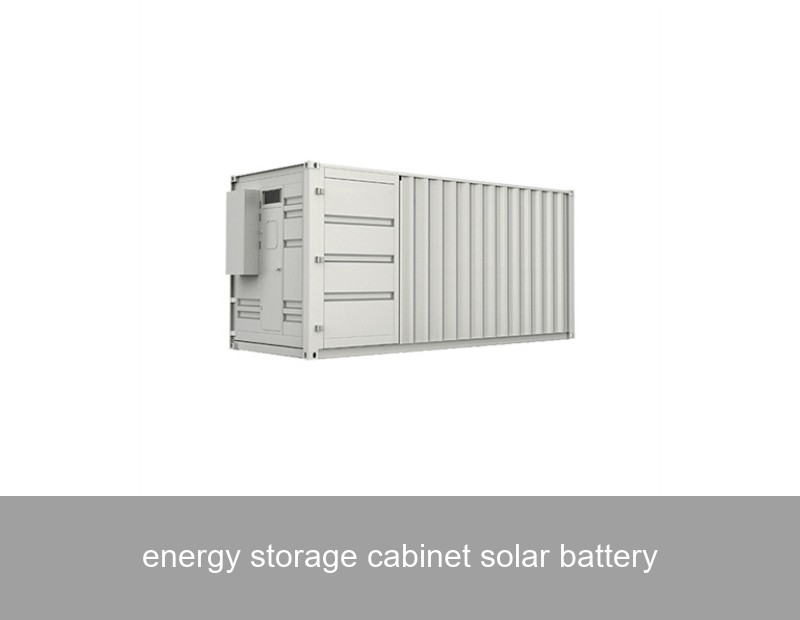
Imagine a device that doesn't just store solar energy but actively manages it, turning your home or business into a resilient power hub. This is the reality of today's advanced energy storage cabinet solar battery systems. Far more than a simple battery box, these integrated cabinets are the intelligent core of a sustainable energy setup, combining power electronics, thermal management, and sophisticated software in one secure unit. For homeowners and businesses across Europe and the U.S., the shift isn't just about having backup power—it's about taking definitive control over energy costs, reliability, and carbon footprint. Let's explore how this technology is reshaping our relationship with electricity.
Table of Contents
The Phenomenon: From Simple Batteries to Integrated Power Hubs
For years, solar panel adopters faced a common dilemma: their systems produced abundant power when the sun shone, often feeding excess back to the grid for modest credits, but left them vulnerable during blackouts or high-rate evening hours. The standalone solar inverter was only half the solution. The market demanded a brain and a bank—a system to store and strategically deploy energy. Enter the modern energy storage cabinet. This isn't merely a rack of batteries; it's a unified enclosure that typically houses the battery modules, a hybrid inverter or dedicated battery inverter, a battery management system (BMS), safety disconnects, and cooling systems. It's a plug-and-play powerhouse designed for safety, efficiency, and ease of installation.
Companies like Highjoule have been pivotal in this evolution. Since 2005, Highjoule has refined the concept, moving from component-level solutions to fully integrated, smart energy storage systems. Their Helios-Stack Commercial Cabinet and Aegis Home Power Hub are prime examples. These products are engineered as complete solutions, where the cabinet itself is a critical component ensuring safety, optimal thermal performance for battery longevity, and a sleek, standardized footprint that simplifies both residential and commercial deployments.

Image Source: Unsplash - Representative image of a modern residential energy storage system.
The Data: Why Storage is Now a Non-Negotiable
The driver for adopting a solar battery cabinet isn't just ideology; it's compelling economics and growing grid instability. Consider this:
- Soaring Electricity Prices: In Europe, household electricity prices in the first half of 2023 were, on average, over 40% higher than pre-pandemic levels (2019). In the U.S., rates have risen steadily, with periods of extreme volatility in markets like Texas (U.S. Energy Information Administration).
- Declining Solar Export Rates: "Net metering" policies are being revised. In California (NEM 3.0), compensation for exported solar power dropped by about 75%, making storing solar energy for self-use far more valuable than sending it back to the grid.
- Resilience Demand: A 2023 survey in the U.S. found that 39% of homeowners considering solar were primarily motivated by protection against power outages. The energy storage cabinet provides seamless backup power, often switching on in milliseconds.
- Battery Cost Trajectory: The cost of lithium-ion battery packs has fallen by over 90% since 2010, making integrated storage systems increasingly accessible (BloombergNEF).
This data paints a clear picture: pairing solar with an intelligent storage cabinet is transitioning from a premium option to the standard for a rational, future-proof energy investment.
What's Inside the Box? Anatomy of a High-Performance Cabinet
| Component | Function | Highjoule's Approach |
|---|---|---|
| Battery Modules | The core energy storage medium, typically Lithium Iron Phosphate (LFP) for safety & longevity. | Uses modular, scalable LFP modules with a >6000 cycle life at 80% depth of discharge. |
| Power Conversion System (PCS) | Manages AC/DC conversion, grid interaction, and seamless backup switching. | Integrates a bi-directional hybrid inverter with >98% efficiency and <20ms switchover. |
| Battery Management System (BMS) | Monitors cell voltage, temperature, and state of charge to ensure safety and longevity. | Features a 3-tier BMS with active cell balancing and predictive health analytics. |
| Thermal Management | Maintains optimal operating temperature for battery performance and safety. | Employs a silent, low-energy liquid cooling system for uniform temperature control. |
| Energy Management Software | The "brain" that optimizes charging/discharging based on tariffs, weather, and usage. | Highjoule's "Neuron" platform uses AI for forecast-based optimization and remote monitoring. |
The Case Study: A German Bakery's Recipe for Resilience
Let's look at a real-world application. Bäckerei Schmidt (a medium-sized bakery chain in Bavaria, Germany) faced a critical challenge. Their ovens, refrigerators, and dough mixers were massive energy consumers. High daytime energy costs were eroding margins, and even brief voltage dips could ruin a batch of product. They needed to stabilize their power supply and reduce costs.
The Solution: In 2022, they installed a 120 kW solar array paired with two Highjoule Helios-Stack 100 kWh energy storage cabinets. The system was designed to:
- Store excess midday solar production.
- Power the facility during high-price evening hours (peak shaving).
- Provide full backup power for critical cold storage during grid outages.
The Results (12-month period):
- Energy Self-Consumption: Increased from 35% to 82%.
- Grid Energy Costs: Reduced by 68%.
- CO2 Emissions: Lowered by an estimated 42 tonnes annually.
- ROI: Achieved in under 5 years, factoring in German BAFA incentives.
"The Highjoule cabinets weren't just batteries; they became an automated energy manager for our operations," said the bakery's managing director. "The reliability during the winter storm blackouts was invaluable—we kept baking while others shut down." This case exemplifies the commercial triple win: cost reduction, resilience, and sustainability.

Image Source: Unsplash - Representative image of commercial solar and storage.
The Insight: Key Features of a High-Performance Storage Cabinet
Not all storage cabinets are created equal. Based on industry expertise and deployments like the one above, here are the non-negotiable features to look for:
1. Safety First: Chemistry and Construction
The industry standard is shifting decisively to Lithium Iron Phosphate (LFP) chemistry. Why? It's inherently more stable and less prone to thermal runaway than older NMC chemistries. A quality cabinet like Highjoule's Aegis series builds on this with a UL 9540 certified enclosure, integrated fire suppression options, and robust physical protection for the internal components.
2. Intelligence and Software
Hardware stores energy, but software creates value. Your system should be able to:
- Automatically switch to backup power during an outage.
- Optimize charge/discharge cycles based on real-time electricity prices (time-of-use arbitrage).
- Integrate with weather forecasts to save extra energy before a cloudy day.
- Provide transparent monitoring via a user-friendly app.
3. Scalability and Serviceability
Your energy needs will evolve. A modular cabinet design allows you to add battery modules incrementally. Also, consider serviceability: can individual modules be diagnosed and replaced easily without taking the whole system offline? Highjoule designs for this, minimizing potential downtime and protecting your long-term investment.
The Future & Your Next Step
The trajectory is clear. As grids modernize and electricity markets become more dynamic, the solar battery storage cabinet will be the essential interface between your private power generation and the public utility. We're moving towards energy ecosystems where homes and businesses with storage can participate in virtual power plants (VPPs), providing grid stability services and earning additional revenue.
Highjoule is at the forefront of this transition, offering not just products but comprehensive energy solutions—from initial consultancy and system design to installation support and ongoing performance optimization for commercial, industrial, and residential clients.
So, here's a question to ponder: As electricity becomes less predictable in cost and supply, what is the true cost to your home or business of *not* having control over your own power? The technology to seize that control, to build resilience and independence, is no longer a futuristic concept—it's neatly packaged in a modern, intelligent energy storage cabinet, ready to be integrated into your energy strategy.
 Inquiry
 Online Chat