


Powering Progress: The Rise of Solar Projects in Bangladesh and the Critical Role of Energy Storage
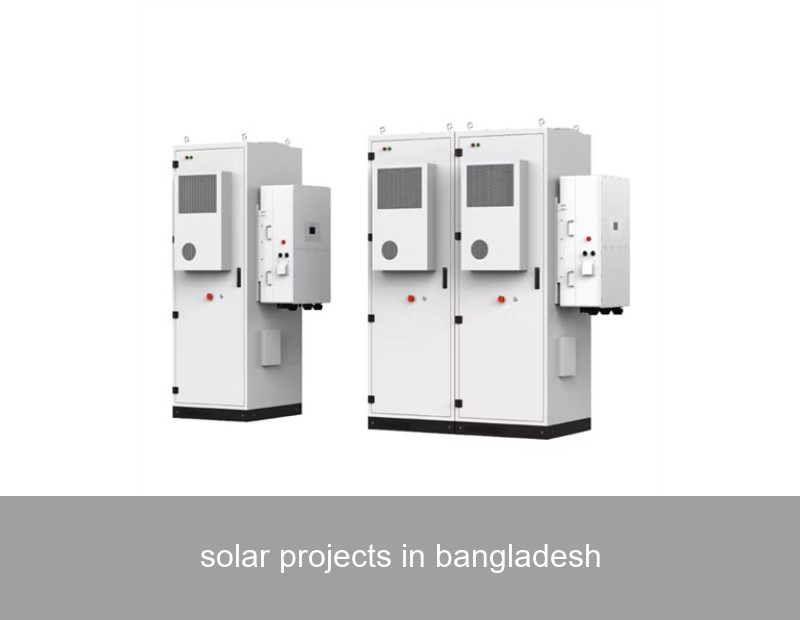
Imagine a nation where sunshine is abundant, yet reliable power can be scarce. This is the paradox facing Bangladesh, a country on the front lines of climate change while simultaneously experiencing remarkable economic growth. To bridge this gap, solar projects in Bangladesh have emerged as a beacon of hope. But as any energy expert will tell you, generating solar power is only half the battle. The real challenge—and opportunity—lies in storing it effectively to ensure lights stay on after sunset and factories keep running. This is where advanced energy storage systems become not just an add-on, but the cornerstone of a truly resilient and sustainable energy future.
Table of Contents
- The Phenomenon: Bangladesh's Solar Surge
- The Data: Growth, Gaps, and Grid Challenges
- The Case Study: Solar Home Systems to Mega Plants
- The Storage Imperative: Why Solar Needs a Battery Best Friend
- Highjoule's Role: Delivering Stability for Solar Projects in Bangladesh
- The Future Horizon: What's Next for Bangladesh's Energy Independence?
The Phenomenon: Bangladesh's Solar Surge
Bangladesh's journey with solar energy is a compelling story of necessity and innovation. With a dense population and a grid historically reliant on fossil fuels, power outages were a frequent obstacle to development. However, the country possesses a powerful natural asset: an average of over 4.5 kWh/m² of solar irradiance daily. Leveraging this, Bangladesh embarked on one of the world's most successful off-grid solar programs, initially focusing on Solar Home Systems (SHS) that brought electricity to millions of rural households for the first time.
Today, the scope has dramatically expanded. From rooftop installations on garment factories—a key economic sector—to large-scale solar parks, solar projects in Bangladesh are diversifying. The government's target to generate 10% of its power from renewable sources by 2030 is a significant driver, with utility-scale solar poised to play a major role. This transition isn't just about clean energy; it's about energy security, economic resilience, and improving the quality of life for millions.
The Data: Growth, Gaps, and Grid Challenges
The numbers tell a story of rapid growth. According to the International Renewable Energy Agency (IRENA), Bangladesh had installed over 700 MW of solar PV capacity by the end of 2023, a figure that continues to climb monthly. The World Bank-supported projects alone have contributed to the installation of over 4.5 million SHS units.
However, this growth exposes a critical technical challenge: intermittency. Solar power generation peaks in the middle of the day, but Bangladesh's electricity demand often peaks in the evening. This creates a mismatch. Without a way to store the midday surplus for evening use, the grid faces instability, and the full value of solar investments isn't realized. Furthermore, as larger solar plants come online, their variable output can strain the existing grid infrastructure, leading to curtailment (wasting solar energy) or reliability issues.
The Case Study: From Rooftops to Resilience - The Teknaf Industrial Park
Let's look at a tangible example. A large industrial park in Teknaf, housing several textile and processing units, installed a 5 MW rooftop solar system to reduce operating costs and carbon footprint. Initially, they faced a familiar problem: the solar system met 80% of their daytime load, but they remained 100% dependent on the diesel generator and the grid at night. Power quality fluctuations during cloudy periods also risked damaging sensitive manufacturing equipment.
The solution was integrating a battery energy storage system (BESS). By deploying a containerized, grid-tied BESS solution, the park could store excess solar energy generated during the day. This stored energy then:
- Provided uninterrupted power during the evening peak demand, cutting diesel generator runtime by over 70%.
- Acted as an instantaneous backup during grid sags or outages, protecting machinery.
- Stabilized voltage and frequency on the local network, improving overall power quality.
The result? The park increased its solar self-consumption from 65% to over 95%, slashed energy costs, and achieved a return on investment in under 5 years. This case underscores a universal truth for solar projects in Bangladesh: pairing solar with storage unlocks exponential value.

Image: Modern industrial rooftop solar installations, similar to those being deployed across Bangladesh, require smart storage to maximize value.
The Storage Imperative: Why Solar Needs a Battery Best Friend
Think of a solar panel as a prolific water pump, and the grid or factory as a complex network of pipes and taps. A BESS is the essential water tank in between. It doesn't just store; it manages the flow intelligently. For developers and investors in Bangladeshi solar, understanding storage technology is now as crucial as understanding PV modules.
Key functions of a modern BESS for solar include:
| Function | Benefit for Solar Projects in Bangladesh |
|---|---|
| Energy Time-Shifting | Store cheap midday solar for expensive evening peak use, maximizing revenue. |
| Frequency & Voltage Regulation | Stabilizes the grid, allowing for higher penetration of variable solar power. |
| Backup Power & Resilience | Provides critical backup for commercial/industrial operations and microgrids. |
| Capacity Firming | Makes a solar plant's output more predictable and dispatchable, like a traditional power plant. |
Highjoule's Role: Delivering Stability for Solar Projects in Bangladesh
This is precisely where Highjoule, as a global leader in advanced energy storage since 2005, brings its expertise to bear. The challenging conditions in Bangladesh—from high temperatures and humidity to variable grid conditions—demand storage solutions that are not only intelligent but exceptionally robust and safe.
For large-scale solar projects in Bangladesh, Highjoule's Utility-Scale BESS offers a modular, containerized solution. Built with our proprietary battery management and system integration technology, it ensures maximum cycle life, efficiency, and safety, even in demanding climates. Our systems are designed to provide the grid services (like frequency regulation) that will be crucial as Bangladesh's national grid integrates more renewable energy.
For commercial and industrial (C&I) applications, like the Teknaf case study, our Highjoule C&I ESS is a perfect fit. These scalable systems allow factory owners, shopping malls, and data centers to drastically increase their solar self-consumption, reduce demand charges, and gain energy independence. The intuitive energy management software allows operators to monitor performance and savings in real-time.
Furthermore, for remote or island areas where grid extension is costly, Highjoule's expertise in designing solar-plus-storage microgrids provides a turnkey solution for reliable, 24/7 renewable power. Our systems are engineered for longevity and low total cost of ownership, a critical factor for project bankability in emerging markets.

Image: A technician inspecting a containerized battery energy storage system, similar to Highjoule's solutions suitable for large-scale solar integration.
The Future Horizon: What's Next for Bangladesh's Energy Independence?
The trajectory for solar projects in Bangladesh is set for significant expansion. With ambitions for solar parks exceeding 100 MW in capacity, the integration question becomes paramount. The next phase will likely involve hybrid power plants combining solar, storage, and potentially other generation sources, all managed by sophisticated software platforms. Policy frameworks that recognize and reward the grid-stabilizing services of storage, as seen in more mature markets, will be a key accelerant.
For international partners, investors, and Bangladeshi energy leaders, the focus must now shift from "solar capacity installed" to "stable, dispatchable clean energy delivered." The technology to make this leap is here and proven. The question is no longer if storage is needed, but how to implement it most effectively to ensure the nation's solar revolution powers sustainable development for decades to come.
Is your organization involved in a solar project in Bangladesh or a similar emerging market? What do you see as the biggest hurdle to integrating storage at scale, and what kind of partnership would help you overcome it?
 Inquiry
 Online Chat