


Demystifying the Energy Storage Capacity Formula for Home and Business
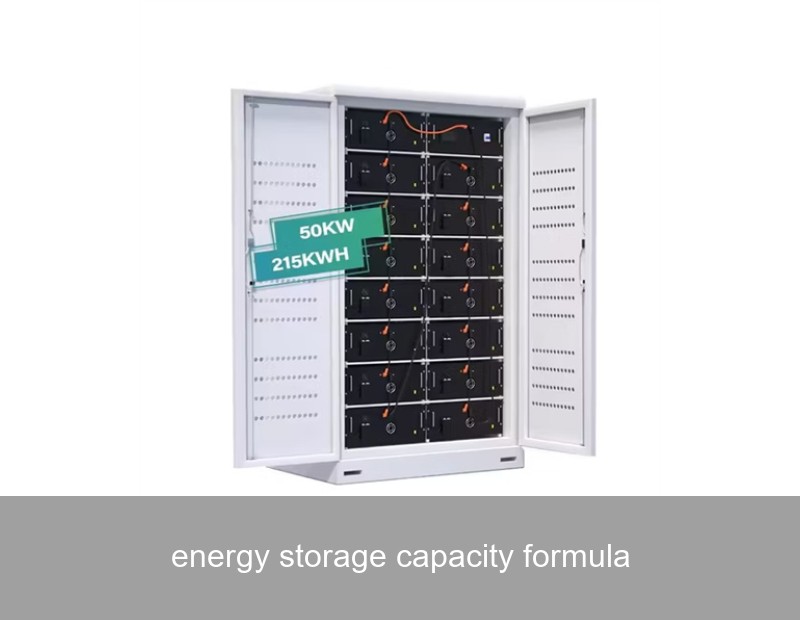
If you're considering a battery storage system for your home, business, or community project, you've likely encountered the term "energy storage capacity." It's the headline number, the big metric that tells you how much power a battery can hold. But what does it really mean for your daily life or operations? More importantly, how do you calculate what you actually need? The energy storage capacity formula is the essential starting point, but understanding its components and implications is key to making a smart investment. Let's peel back the layers and see how this simple calculation is the foundation of energy independence and resilience.
What is the Energy Storage Capacity Formula?
At its core, the fundamental energy storage capacity formula is beautifully simple:
Energy Capacity (kWh) = Power (kW) × Time (h)
Think of it like a water tank: the Power (kW) is the rate at which you can draw water (like the width of the pipe), and the Time (h) is how long you can draw at that rate. The result, Energy Capacity in kilowatt-hours (kWh), is the total volume of water in the tank. For example, a 5 kW solar array producing energy for 4 hours generates 20 kWh of energy. To store that, you'd ideally want a battery system with at least 20 kWh of capacity. But here's where it gets practical: your goal isn't just to store energy; it's to have it available when you need it most.

This is where companies like Highjoule add immense value. Since 2005, we've moved beyond just selling kWh. We analyze your specific load profile, solar generation (if any), and tariff structures to determine not just the capacity you need, but the optimal power rating (how much electricity can flow in/out at once) and the system's depth of discharge to ensure the formula works for your real-world scenario.
Breaking Down the Formula: It's More Than Just kWh
To truly master your energy needs, you need to understand the variables in the energy storage capacity formula in detail.
- Energy Capacity (kWh): This is the star of the show. It defines the total amount of electrical energy a battery system can store. A typical residential system might range from 10 to 20 kWh, enough to cover critical loads or a significant portion of evening consumption.
- Power Rating (kW): Often the unsung hero. This determines how much electricity the system can deliver at any given moment. Can it start your air conditioner's compressor (a high-power demand) while also running your refrigerator? Highjoule's IntelliBESS product line, for instance, offers scalable power modules, ensuring your system can handle both sustained loads and sudden surges.
- Time (h): This is your desired backup duration or discharge period. Do you need 2 hours of backup for peak shaving or 10+ hours for off-grid resilience? The time variable directly shapes your required capacity.
Let's put this in a table to see how different needs affect system design:
| Scenario | Goal | Key Load (Power) | Desired Duration (Time) | Minimum Useful Capacity (kWh) |
|---|---|---|---|---|
| Residential Peak Shaving | Offset evening grid use | 3-5 kW (Baseline home load) | 4 hours | 12 - 20 kWh |
| Commercial Demand Charge Reduction | Trim short, high-power peaks | 50-100 kW (HVAC, machinery startup) | 0.5 - 1 hour | 25 - 100 kWh |
| Off-Grid Residential | Full autonomy during cloudy days | 2-3 kW (Essential loads only) | 24 hours | 48 - 72 kWh |
From Formula to Reality: A Real-World Application
Theory meets practice in a compelling case from Southern California. A medium-sized winery was facing two major challenges: crippling demand charges from the utility and an unreliable grid that threatened temperature-sensitive fermentation processes.
The Problem (Phenomenon): Their energy bill showed short, sharp spikes in usage (especially during pumping and cooling cycles), leading to high demand charges. They also needed backup for critical 50 kW cooling loads for up to 2 hours during outages.
The Data & Calculation: Highjoule's energy audit revealed a 75 kW peak that needed trimming. The energy storage capacity formula was applied with a focus on power and a specific duration:
Energy Needed = 75 kW × 2 hours = 150 kWh.
However, our analysis showed the peak could be shaved by 50 kW for 1.5 hours, a more cost-effective target: 50 kW × 1.5 h = 75 kWh.
The Highjoule Solution (Case): We installed a modular Highjoule IntelliBESS 100 system configured for 100 kW of instantaneous power and 80 kWh of usable capacity. The system's intelligent controller was programmed to "watch" the facility's total grid draw and instantly inject power from the batteries whenever usage approached the peak threshold, effectively flattening the demand curve.
The Outcome (Insight): The results were concrete:
- A 30% reduction in monthly demand charges, achieving payback in under 4 years.
- Seamless backup power for critical processes, ensuring product quality and safety.
- Increased use of their existing solar PV system, storing excess midday generation for later use.

Beyond the Basics: What the Formula Doesn't Tell You
While the energy storage capacity formula gives you a vital number, several critical factors lie beneath the surface:
- Depth of Discharge (DoD): You can't use 100% of a battery's nameplate capacity without damaging it. If a 10 kWh battery has a recommended 90% DoD, its usable capacity is only 9 kWh. Highjoule systems are engineered with advanced battery management to optimize longevity and usable capacity.
- Round-Trip Efficiency: No system is 100% efficient. If you put 10 kWh in, you might get only 9.4 kWh out. Our systems boast over 94% round-trip efficiency, ensuring more of your stored energy ends up powering your home or business.
- Battery Chemistry & Degradation: Lithium-ion chemistries (like LFP used by Highjoule) offer longer cycle life and stability compared to older technologies. The energy storage capacity formula calculates today's need, but a quality system is designed to meet a high percentage of that need for 10+ years. For a deep dive on battery chemistries, the U.S. DOE explains lithium-ion technology here.
Choosing the Right System for Your Calculated Needs
Once you have a ballpark figure from the energy storage capacity formula, the next step is finding a system that matches. This is where Highjoule's holistic approach shines. We don't just offer a box with a kWh rating; we provide an integrated Smart Energy Platform.
Our platform includes:
- IntelliBESS Modular Batteries: Scalable in both capacity and power to match your precise formula outcome.
- AI-Powered Energy Manager: This software brain goes beyond simple discharge. It learns your patterns, forecasts weather and usage, and automatically decides when to store, use, or even sell back energy to maximize your economic return.
- Professional Integration & Support: From initial site assessment and financial modeling to grid interconnection support and long-term monitoring, we ensure the system performs as calculated for its entire lifespan.
For example, a German homeowner with a 15 kWh daily evening load might start with a 10 kWh Highjoule system paired with our Energy Manager. The system would prioritize using stored solar energy for high-tariff periods, potentially reducing grid imports by 70% without needing to cover 100% of the load—a smarter, more economical application of the formula.

Your Energy, Your Calculation
The energy storage capacity formula is your key to unlocking energy security and savings. But it's the first step on a journey. The real power comes from pairing that basic calculation with intelligent technology and expert guidance that translates numbers into real-world resilience and return on investment. At Highjoule, we've spent nearly two decades perfecting this translation for thousands of customers worldwide.
What's the one energy goal—be it backup, savings, or sustainability—that you would use the energy storage capacity formula to start planning for today?
 Inquiry
 Online Chat