


Top 10 Battery for Inverter Systems: Your Guide to Reliable Backup Power
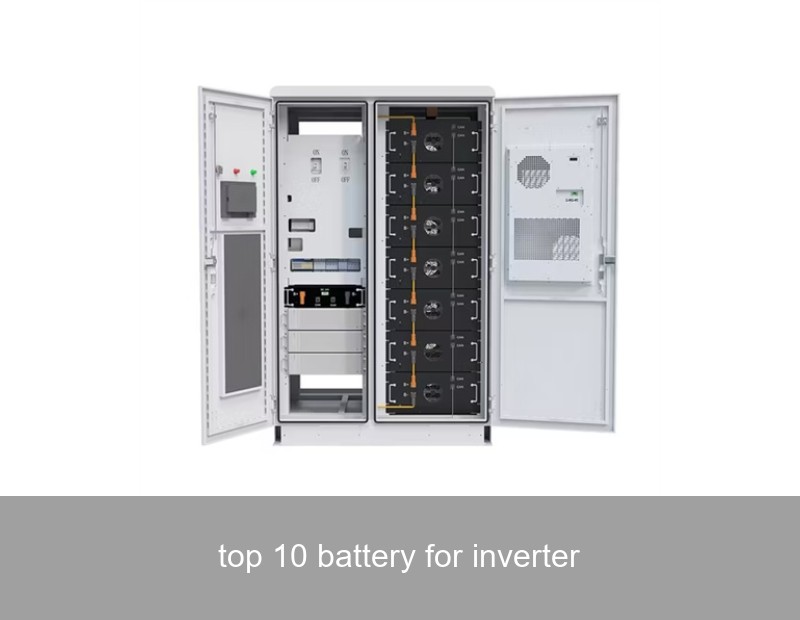
Have you ever experienced that frustrating moment when the lights flicker and go out, or worse, your home office or critical appliance suddenly powers down? For many homeowners and businesses across Europe and the US, power reliability is no longer a luxury—it's a necessity. This growing demand for energy independence and resilience has made the choice of the top 10 battery for inverter systems a critical decision. An inverter battery is the heart of your backup or solar storage system, determining how long you can keep the lights on and your life running smoothly. In this guide, we'll demystify the key factors in choosing the right battery and explore the leading technologies that make the cut.
Table of Contents
Key Criteria for a Top-Tier Inverter Battery
Not all batteries are created equal. When compiling a list of the top 10 batteries for inverters, we must look beyond just brand names and focus on performance metrics that matter to you, the user. Here are the non-negotiable factors:
- Cycle Life: This is arguably the most important number. It tells you how many complete charge and discharge cycles a battery can handle before its capacity significantly degrades. A quality lithium-ion battery can offer 6,000+ cycles, while a good lead-acid might manage 1,200.
- Depth of Discharge (DoD): Can you use 100% of your battery's capacity? Almost never. DoD indicates the percentage of the battery that can be safely used without damaging it. Modern Lithium Iron Phosphate (LFP) batteries comfortably allow 90-100% DoD, whereas lead-acid is often limited to 50%.
- Round-Trip Efficiency: How much energy you get out versus what you put in. High efficiency (e.g., 95%+) means less energy is lost as heat, saving you money.
- Power Rating (kW): Determines how many appliances you can run simultaneously.
- Energy Capacity (kWh): Dictates how long those appliances can run.
- Warranty & Brand Support: A strong warranty (often 10 years) is a proxy for the manufacturer's confidence in their product.

Image Source: Unsplash (Representative image of battery technology)
Where Highjoule Fits In
At Highjoule, with nearly two decades of experience since 2005, we've engineered our Residential Energy Hub and Commercial Storage Solutions around these very criteria. Our systems utilize advanced Lithium Iron Phosphate (LFP) chemistry, prioritizing exceptional cycle life, 100% usable capacity, and inherent safety to provide a seamless and reliable power backbone for homes and businesses. We don't just sell batteries; we provide intelligent, integrated systems that communicate flawlessly with your inverter and solar panels.
The Top Battery Technologies for Modern Inverters
Based on the criteria above, here's a breakdown of the technologies that typically dominate any authoritative top 10 list:
| Technology | Key Advantage | Best For | Consideration |
|---|---|---|---|
| Lithium Iron Phosphate (LFP) | Superior safety, long cycle life, high DoD | Most residential & commercial solar+storage applications | Higher upfront cost, but superior lifetime value |
| NMC (Nickel Manganese Cobalt) | High energy density (compact size) | Applications where space is a major constraint | Generally slightly lower cycle life than LFP |
| Advanced Lead-Acid (AGM/Gel) | Lower initial cost, well-understood technology | Basic backup power, non-daily cycling | Lower DoD, shorter lifespan if deeply cycled regularly |
| Emerging: Solid-State | Potential for even greater safety & density | Future applications; currently in R&D/commercialization | Not yet widely available for residential inverters |
For the vast majority of users seeking a top 10 battery for inverter systems today, LFP chemistry represents the sweet spot of performance, safety, and longevity. It's the technology of choice for leading providers focused on total cost of ownership. For instance, Highjoule's systems are built on LFP technology and come with integrated energy management software. This smart technology doesn't just store energy; it learns your usage patterns, can prioritize solar self-consumption, and even participate in grid services where available, turning your storage system into a potential revenue stream.
Real-World Performance: A Case Study from California
Let's move beyond theory. Consider the case of a medium-sized winery in Sonoma County, California. Their challenges were clear: frequent preventative power shutoffs (PSPS) during fire season threatened temperature-sensitive fermentation tanks, and high time-of-use electricity rates cut into profitability.
- Goal: Ensure 24/7 power for critical cooling and processing loads, reduce peak grid demand charges.
- Solution: A 250 kW / 500 kWh Highjoule C&I (Commercial & Industrial) battery storage system, coupled with their existing solar array.
- Results (Data from first 12 months):
- 100% Backup Success: The system provided seamless backup during 8 grid outages, totaling over 60 hours.
- Demand Charge Reduction: By peak shaving, the winery reduced its monthly demand charges by an average of 40%.
- ROI Acceleration: Combined savings from backup protection and demand charge management projected a payback period under 5 years.
This case underscores that a top-performing battery system is an operational asset, not just an expense. It provides both peace of mind and tangible financial returns. You can explore more about grid resilience from authoritative sources like the National Renewable Energy Laboratory (NREL).

Image Source: Unsplash (Representative image of commercial solar+storage)
Making the Right Choice for Your Needs
So, how do you translate this into a decision for your home or business? Ask yourself these questions:
- What is my primary goal? Is it whole-home backup, maximizing solar self-consumption, or reducing electricity bills through arbitrage?
- What are my critical loads? Calculate the total wattage of the appliances you must keep running (e.g., refrigerator, furnace, medical equipment, servers).
- What is my budget for total cost of ownership? Consider the upfront price and the expected lifespan and replacement costs.
Partnering with an expert provider is crucial. A company like Highjoule doesn't just deliver hardware. Our technical experts work with you and your installer to conduct a detailed energy assessment, model your consumption, and design a system that precisely matches your inverter and your goals, ensuring you get true top-tier performance.
The Future of Home & Business Energy Storage
The landscape is evolving rapidly. We're moving towards interoperability, where batteries from different manufacturers can work together for grid stability, and virtual power plants (VPPs), where thousands of distributed systems act as one large power plant. Choosing a system with smart, grid-responsive technology today, like those offered by Highjoule, future-proofs your investment. For a deeper dive into VPPs, the U.S. Department of Energy provides excellent resources.
As you consider your path to energy independence, remember that the "best" battery is the one that aligns perfectly with your unique energy profile and long-term vision. It's not just about buying a component; it's about investing in a solution.
 Inquiry
 Online Chat