


What Types of Energy Storage Systems Are There? A Guide to Powering Your Future
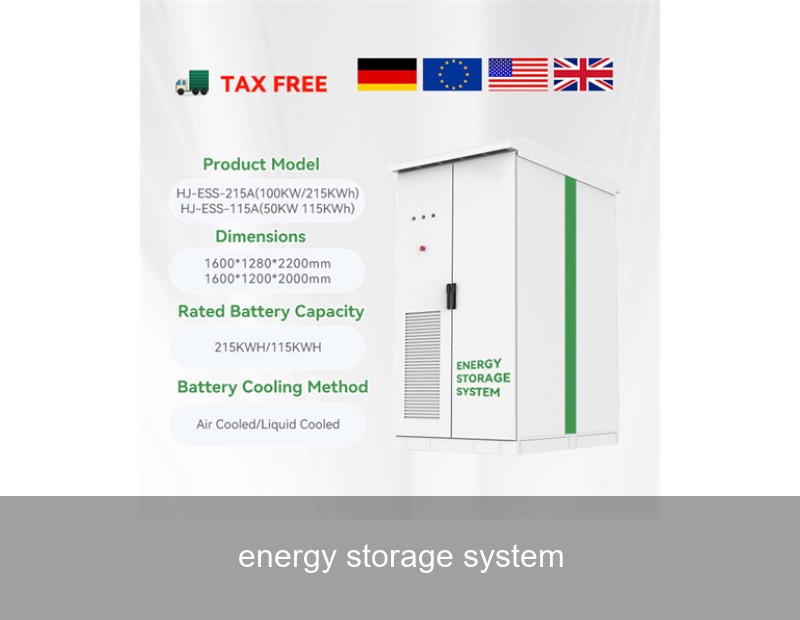
Have you ever wondered how we can keep the lights on when the sun isn't shining or the wind isn't blowing? The answer lies in energy storage systems. As the world shifts towards renewable energy, understanding the different types of storage technologies becomes crucial for businesses, communities, and homeowners alike. This isn't just about backup power; it's about creating a resilient, efficient, and sustainable electrical grid. In this guide, we'll explore the various energy storage solutions available today, their applications, and how they are shaping a cleaner energy future, particularly in markets like Europe and the United States.
Table of Contents
The Core Challenge: Why We Need Energy Storage
Imagine a typical sunny afternoon in Germany or California. Solar panels are generating more electricity than the local grid can immediately use. Without storage, this clean, free energy goes to waste. Conversely, on a calm, cloudy evening, demand spikes but renewable generation plummets. This mismatch between supply and demand is the fundamental problem energy storage aims to solve. It acts as a buffer, absorbing excess energy when it's abundant and releasing it when it's scarce. This process, called arbitrage, stabilizes the grid, reduces reliance on fossil-fuel peaker plants, and maximizes the value of every solar panel and wind turbine. For commercial and industrial users, this also translates directly to significant cost savings by avoiding peak demand charges from utilities.
What Types of Energy Storage Systems Are There?
The landscape of energy storage is diverse, with each technology serving different scales, durations, and applications. Let's break down the main categories.
Battery Energy Storage Systems (BESS)
This is the most dynamic and rapidly growing segment. BESS uses electrochemical cells to store energy. They are highly modular, scalable, and can be deployed almost anywhere.
- Lithium-ion (Li-ion): The current market leader, known for high energy density, efficiency, and decreasing costs. Widely used in everything from electric vehicles to home and grid-scale storage. Different chemistries like Lithium Iron Phosphate (LFP) offer enhanced safety and longer lifespan, a key focus for modern providers.
- Flow Batteries: These store energy in liquid electrolytes contained in external tanks. They excel in long-duration storage (4+ hours) and have a very long cycle life with minimal degradation, making them ideal for industrial and microgrid applications.
- Lead-Acid: A mature, lower-cost technology often used for backup power. However, they have a shorter lifespan and lower depth of discharge compared to newer alternatives.
As a global leader since 2005, Highjoule specializes in intelligent BESS solutions. Our HI-Series commercial & industrial storage systems utilize advanced LFP chemistry for maximum safety and longevity. Coupled with our AI-driven energy management platform, they help businesses across Europe and the U.S. cut energy costs, ensure power resilience, and meet sustainability targets.

Image Source: Unsplash - A modern grid-scale battery storage installation.
Mechanical Storage
These systems convert electrical energy into mechanical energy, store it, and convert it back when needed.
- Flywheel Energy Storage: Stores energy in a rotating mass. It can deliver a very high power output for short durations (seconds to minutes), perfect for frequency regulation and uninterruptible power supply (UPS) applications.
- Compressed Air Energy Storage (CAES): Uses surplus electricity to compress air and store it in underground caverns. To generate power, the air is released, heated, and expanded through a turbine. It's suitable for large-scale, long-duration storage.
Thermal Energy Storage
This involves capturing heat or cold for later use. A common example is using electricity to make ice at night, which is then used for cooling buildings during the day, drastically reducing daytime air conditioning loads and costs. Molten salt storage is another form, famously used in concentrated solar power (CSP) plants to generate electricity after sunset.
Pumped Hydro Storage
The oldest and still the largest-capacity form of grid storage globally. It works by pumping water to a higher reservoir when energy is cheap and releasing it through turbines to a lower reservoir to generate electricity during peak demand. While highly efficient, it requires specific geographical features and has significant environmental and planning hurdles for new projects.
| Technology | Typical Scale | Discharge Duration | Primary Use Case | Approx. Efficiency |
|---|---|---|---|---|
| Lithium-ion BESS | Residential to Grid | 1-4 hours | Peak shaving, backup, renewables firming | 85-95% |
| Flow Battery | Commercial to Grid | 4-10+ hours | Long-duration storage, microgrids | 70-85% |
| Pumped Hydro | Grid-Scale (100s MW) | 6-20+ hours | Bulk energy management | 70-85% |
| Flywheel | Commercial/Industrial | Seconds-Minutes | Frequency regulation, UPS | 85-90% |
A Real-World Case: California's Storage Success
Let's look at a concrete example from the United States. California has aggressively pursued renewable energy, but faced the classic "duck curve" challenge—a rapid evening ramp-up in demand as solar generation fades. To address this, the state invested heavily in battery storage.
Phenomenon: Grid instability and the risk of blackouts during extreme heatwaves when solar output dropped.
Data: According to the California Energy Commission, the state's battery storage capacity exploded from about 250 MW in 2019 to over 6,600 MW by the end of 2023. During a critical September 2022 heatwave, batteries provided a record 3,360 MW of power to the grid at peak evening time, preventing rolling blackouts.
Case: One of many projects, the Moss Landing Energy Storage Facility (Phase III is 350 MW/1,400 MWh) uses thousands of lithium-ion battery modules. It charges during the day from the grid (often with excess solar) and discharges during the evening peak, acting as a massive shock absorber for the state's electricity system.
Insight: This case proves that large-scale BESS deployment is not just theoretical; it is a practical, reliable, and critical tool for grid modernization. It allows for higher penetration of renewables while maintaining reliability. For businesses, this model is scalable downward. A manufacturing plant or a shopping mall can implement a similar strategy on-site with a tailored BESS from a provider like Highjoule. Our microgrid solutions integrate solar, storage, and smart controls, allowing campuses and industrial sites to create their own resilient, cost-optimized energy networks, much like a miniature version of the California grid.

Image Source: Unsplash - Commercial solar plus storage installation.
Choosing the Right System for Your Needs
So, with all these options, how do you decide? It boils down to your primary objective:
- For Residential Users: The main goals are backup power during outages and maximizing self-consumption of rooftop solar. A modular, safe lithium-ion (like LFP) system is typically the best fit. Highjoule's Home Energy Hub offers this seamlessly, with user-friendly monitoring.
- For Commercial & Industrial (C&I): The driver is often cost savings through demand charge reduction and energy arbitrage. You need a robust, high-cycle life BESS with sophisticated energy management software. Scalability and safety are paramount in these settings.
- For Utilities & Grid Operators: The focus is on grid services: frequency regulation, voltage support, and deferring infrastructure upgrades. Here, a mix of technologies—from fast-responding BESS and flywheels to long-duration storage—might be deployed based on the specific service required.
Consulting with an expert who understands both the technology and the local market regulations (like FERC in the U.S. or EU grid codes) is essential. A good provider won't just sell you hardware; they will analyze your load profile, local utility rates, and goals to design an optimal solution.
The Future of Storage and Your Role in It
The innovation pipeline is full. We're seeing research into solid-state batteries, gravity-based storage, and green hydrogen as a long-duration storage medium. The common thread is a push for higher density, lower cost, longer duration, and the use of abundant, non-critical materials.
But the future isn't just about new chemistries; it's about intelligence. The true value of an energy storage system is unlocked by its brain—the software that decides when to charge, when to discharge, and how to interact with the grid or other on-site generation. This is where Highjoule's expertise shines, turning a simple battery into a strategic asset that generates revenue and enhances resilience.
The transition to a sustainable energy system is a collective effort. Every business that installs a BESS, every homeowner who adds storage to their solar panels, becomes an active participant in a more stable and cleaner grid. What energy challenge is your home or business facing today, and how could a tailored storage solution turn that challenge into an opportunity?
 Inquiry
 Online Chat