


Understanding the Price of Sungrow Batteries: A Smart Investment in Energy Independence
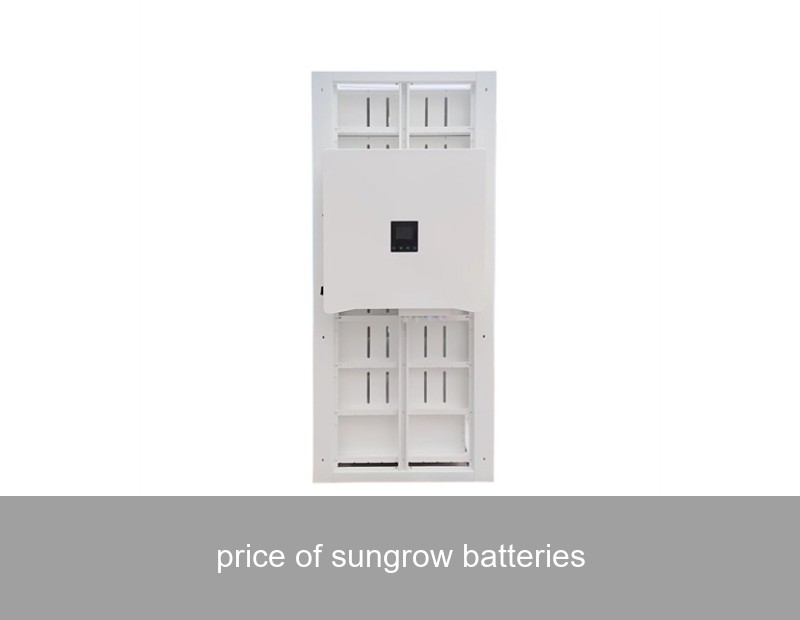
When you're researching solar energy storage, the price of Sungrow batteries is a key data point. But is it the *only* one? As a homeowner or business leader in Europe or the US looking to maximize your renewable investment, you're likely seeking more than just a cheap battery. You want a reliable, intelligent, and cost-effective system that delivers value over its entire 15+ year lifespan. This article will dissect the factors that truly determine the value of a battery storage system, using Sungrow as a reference point, and guide you toward making an informed decision for your energy future.
Table of Contents
- Beyond the Sticker Shock: What Drives Battery Storage Pricing?
- The Core Components of Cost: Cells, Tech, and Intelligence
- A Real-World Case: The German Bakery's Power Resilience
- Highjoule's Approach: Delivering Value Beyond the Kilowatt-Hour
- The True Cost of Ownership: Your Questions Answered

Image: A complete home energy system integrates solar panels, an inverter, and a battery. The total value depends on seamless integration. Credit: Unsplash
Beyond the Sticker Shock: What Drives Battery Storage Pricing?
Let's be honest: the initial quote can be daunting. A battery system represents a significant investment. However, viewing it through the narrow lens of upfront cost is like buying a car based solely on the showroom price, ignoring fuel efficiency, maintenance, and resale value. The price of Sungrow batteries, or any reputable brand, is built on several critical pillars:
- Cell Chemistry & Quality: Most residential batteries, including those from Sungrow, use Lithium Iron Phosphate (LFP). LFP is renowned for safety, longevity, and stability. Higher-grade, automotive-quality cells command a premium but offer better performance and cycle life.
- System Integration & Power Electronics: A battery is more than just cells in a box. The built-in inverter, battery management system (BMS), and thermal controls are crucial. A sophisticated BMS ensures safety, maximizes cycle life, and maintains efficiency.
- Scalability & Modular Design: Can you start small and expand later? Modular systems might have a higher initial entry point but offer greater long-term flexibility and can be more cost-effective over time.
- Software & Grid Services: The real "brain" of a modern system. Advanced software enables features like time-of-use optimization, virtual power plant (VPP) participation, and seamless backup power. This intelligence adds value but also development cost.
According to a report by the U.S. Department of Energy's NREL, while hardware costs are declining, soft costs like installation, permitting, and customer acquisition remain a significant portion of the total price. This highlights why a quality installer is as important as the hardware brand.
The Core Components of Cost: Cells, Tech, and Intelligence
To understand the market, we need to look at the breakdown. Think of a battery storage system as a team: the cells are the muscles, the inverter is the heart, and the software is the brain.
| Cost Component | What It Encompasses | Impact on Performance & Price |
|---|---|---|
| Battery Cells & Pack | Raw LFP cells, assembly, enclosure, cooling system. | Directly determines usable capacity (kWh), cycle life, and safety. Higher energy density and cycle ratings increase cost. |
| Hybrid Inverter | Converts DC from solar/battery to AC for home use; manages energy flow. | Efficiency rating (e.g., 97% vs. 98%) impacts harvested energy. Power rating (kW) defines how many appliances can run simultaneously during backup. |
| Energy Management System (EMS) | Software, monitoring platform, smart grid integration capabilities. | Enables cost-saving modes (like peak shaving), VPP revenue, and user-friendly control. This is where brands differentiate significantly. |
| Installation & Commissioning | Labor, electrical work, permitting, grid connection approval. | Varies greatly by region, system complexity, and installer expertise. A certified, experienced installer ensures safety and warranty validity. |
So, when you compare the price of Sungrow batteries to another brand, you must ask: am I comparing equivalent cell quality, inverter efficiency, and software intelligence? Often, a lower upfront price may mean compromises in these areas, leading to higher long-term costs.
A Real-World Case: The German Bakery's Power Resilience
Let's move from theory to practice. Consider a mid-sized artisan bakery in Bavaria, Germany. Their challenge: high afternoon electricity rates, critical need for refrigeration continuity, and a desire to use their rooftop solar power after sunset.
- Phenomenon: Energy costs were eroding profit margins, and a single grid outage would spoil inventory.
- Data: They had a 30kWp solar array. Their analysis showed a 40kWh battery could shift 70% of their daily consumption away from peak rates and provide 8 hours of backup for critical loads.
- Case: They evaluated several systems. While a base-level battery had a tempting price, they opted for a solution with advanced commercial software that could precisely control cooling loads and participate in a local flexibility scheme. The premium was 15%.
- Insight: Within two years, the combined savings from peak shaving and the revenues from grid services had paid back the price premium. The bakery achieved energy independence and turned their storage system into a revenue asset, not just a cost center. This case underscores that the lowest price of entry is rarely the lowest cost of ownership.

Image: For businesses, battery storage is about operational resilience and financial optimization. Credit: Unsplash
Highjoule's Approach: Delivering Value Beyond the Kilowatt-Hour
At Highjoule, with nearly two decades of experience since 2005, we view our battery systems as long-term partners in your energy journey. We understand that our clients—whether homeowners in California or factories in the Netherlands—are investing in outcomes: lower bills, unwavering reliability, and a sustainable footprint.
Our product philosophy centers on Total Cost of Ownership (TCO). Here’s how we build value into every system, which may explain why a direct comparison on the price of Sungrow batteries alone doesn't capture the full picture:
- Highjoule H-Series Residential Storage: Built with top-tier LFP cells, our batteries feature an industry-leading cycle life of 8,000+ cycles. Our integrated Helios Energy OS learns your consumption patterns and automatically optimizes for time-of-use rates, solar self-consumption, and backup readiness. It’s this intelligence that maximizes your financial return.
- Highjoule C&I PowerStack: For our commercial and industrial clients, scalability and grid services are key. The PowerStack is modular from 100kWh to multi-MWh scales. Its advanced firmware allows for seamless participation in demand response programs and microgrid formation, creating new revenue streams that actively offset the system's price.
- Service & Warranty: Our 15-year comprehensive warranty includes performance guarantee. We partner with a certified network of installers across Europe and North America to ensure flawless commissioning and support. This peace of mind is an intrinsic part of the value proposition.
We encourage you to look at metrics like Levelized Cost of Storage (LCOS)—the total cost of owning and operating the storage system per kWh discharged over its lifetime. A lower LCOS often correlates with a higher-quality, smarter system, even if its initial price point is higher. A study by Lazard consistently shows that while upfront costs vary, operational value and longevity are critical to financial viability.
The True Cost of Ownership: Your Questions Answered
Let's address some final, crucial considerations that move the conversation beyond the initial invoice.
How do incentives affect the final price?
In the US, the federal Investment Tax Credit (ITC) can cover 30% of the total installed cost, including the battery if paired with solar. In many European countries, like Italy or Austria, generous subsidies and tax deductions are available. These incentives dramatically reduce the net investment, making a high-quality system like Highjoule's even more accessible. Always factor in local incentives when evaluating net cost.
What about future expansion?
Your energy needs may grow. A system that is "stackable" or modular protects your initial investment. Highjoule systems are designed for easy capacity expansion, so you can add more battery modules as your needs evolve, without replacing the core electronics.
The installer is key
The best battery can underperform if poorly installed. We cannot overstate the importance of choosing a certified, experienced installer. They ensure optimal placement, configuration, and grid compliance, which directly impacts system efficiency, safety, and your eligibility for warranties and insurance.

Image: Smart energy management puts control and savings in the user's hands. Credit: Unsplash
Given that the technology and the market will continue to evolve, what specific energy goal—total blackout protection, maximizing solar self-sufficiency, or creating a new revenue stream—is most critical for you to achieve in the next 12 months?
 Inquiry
 Online Chat