


Building Energy System Resilience: A Modern Imperative for Homes and Businesses
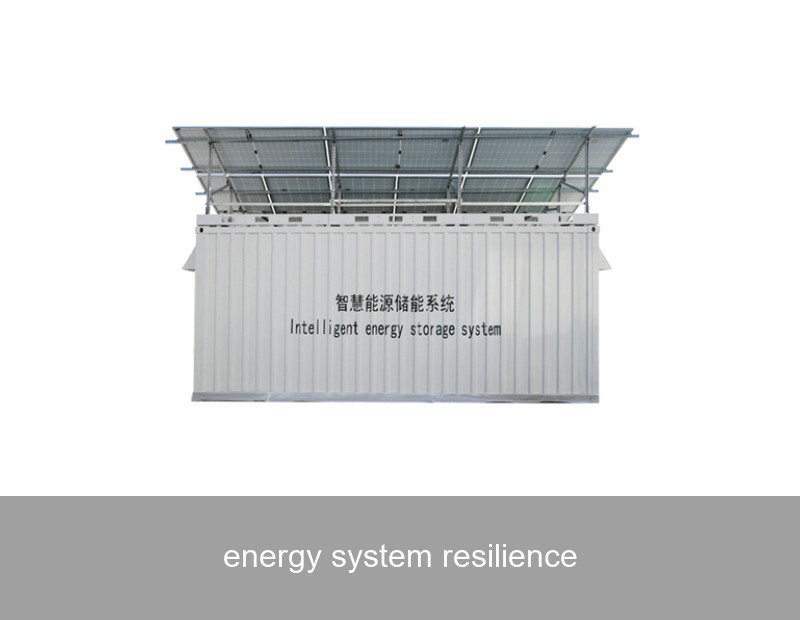
Have you ever flicked a light switch during a storm and been met with silence? Or watched news of a grid failure disrupting an entire region? These aren't just inconveniences; they're stark reminders of our dependence on a fragile, centralized power system. Today, the concept of energy system resilience has moved from an engineering concern to a critical priority for homeowners, business leaders, and communities alike. It's no longer just about having power; it's about ensuring its continuous, reliable, and intelligent flow, no matter what challenges arise. In this article, we'll explore what true resilience means, why modern threats demand new solutions, and how advanced energy storage is fundamentally rewriting the rules of energy independence and stability.
Table of Contents
- The Growing Storm: Why Our Grids Are Under Pressure
- Beyond Backup: Defining True Energy System Resilience
- The Resilience Engine: How Advanced Battery Storage Works
- A Case Study in Resilience: The California Microgrid Project
- Building Your Resilience Strategy: Key Components
- Highjoule's Role: Intelligent Systems for a Resilient Future
- Your Path to Power Independence
The Growing Storm: Why Our Grids Are Under Pressure
The traditional electricity grid, a marvel of the 20th century, is facing 21st-century stresses it was never designed to handle. The phenomenon is global, but let's look at the data. In the United States, the average annual duration of power outages has more than doubled since 2013, with major events like wildfires, hurricanes, and winter storms causing prolonged disruptions(U.S. Energy Information Administration). Europe faces similar pressures, from extreme heatwaves straining capacity to geopolitical tensions highlighting energy security risks.
This isn't just about weather. Our energy landscape is transforming rapidly:
- Intermittent Renewables: Solar and wind are essential for decarbonization, but their variable nature can challenge grid stability without proper management.
- Electrification: From electric vehicles to heat pumps, we're plugging more critical infrastructure into the same grid.
- Aging Infrastructure: Much of the grid's hardware is decades old, operating beyond its intended lifespan and capacity.
The result? A system more prone to volatility. The question for asset owners is shifting from "Will the power go out?" to "How can I ensure my operations are immune to these disruptions?"
Beyond Backup: Defining True Energy System Resilience
Resilience is often confused with simple backup power. A diesel generator provides backup. True energy system resilience is far more comprehensive and dynamic. Think of it as the immune system for your power supply.
| Backup Power | Energy System Resilience |
|---|---|
| Reactive (starts after failure) | Proactive & Adaptive (anticipates and manages disruptions) |
| Single purpose: provide power during outage | Multiple functions: outage protection, grid services, cost optimization, renewable integration |
| Often requires manual intervention | Fully automated, intelligent response |
| Limited runtime (fuel-dependent) | Sustainable, renewable-fueled, potentially indefinite runtime |
A resilient energy system doesn't just "ride out" a blackout; it may never experience one because it can island itself from the main grid at the first sign of trouble, seamlessly sustaining operations using locally stored energy.

Credit: Unsplash - Modern industrial facilities increasingly combine solar generation with battery storage to build resilience.
The Resilience Engine: How Advanced Battery Storage Works
At the heart of the modern resilience solution is the advanced Battery Energy Storage System (BESS). This is the technological leap that transforms passive consumers into active energy managers. A BESS does more than store electricity; it intelligently manages it.
Here's how a sophisticated system, like those developed by Highjoule, builds resilience:
- Instantaneous Response: Within milliseconds of a grid fault, the system detects the anomaly and disconnects, forming a local "microgrid." Power to critical loads never flickers.
- Solar Self-Consumption Optimization: It stores excess solar energy produced during the day for use at night or during outages, maximizing your renewable investment.
- Peak Shaving: The system intelligently discharges during periods of high grid demand (when electricity prices are highest), slashing energy bills and reducing strain on the public network.
- Grid Services: In some markets, resilient systems can even support the main grid by providing frequency regulation, making the entire network more stable for everyone.
A Case Study in Resilience: The California Microgrid Project
Let's ground this in reality. A compelling example comes from a community in Northern California, an area increasingly plagued by Public Safety Power Shutoffs (PSPS) due to wildfire risk. In 2022, a joint project involving a local utility, a school district, and a technology provider deployed a community-scale resilience microgrid centered on a 2.5 MW / 5 MWh battery storage system.
The Results? During a planned 48-hour grid outage in late 2023, the microgrid successfully "islanded":
- It provided uninterrupted power to a critical emergency shelter and communications hub.
- It kept the local high school's essential systems online, preserving security and refrigeration.
- The system was primarily charged by a pre-existing solar carport, demonstrating true renewable-powered resilience.
- Data showed a 99.99% uptime for the critical facilities during the event, compared to neighboring areas that were without power(NREL Microgrid Case Studies).
This case underscores that resilience is achievable today, delivering both tangible security and a strong return on investment.
Building Your Resilience Strategy: Key Components
So, what does it take to build a resilient energy system for your home or business? It's a layered approach:
- Assessment & Planning: Identify your critical loads. What must stay on for 2 hours? 24 hours? Indefinitely? This defines the scale of your solution.
- Generation: On-site renewable generation, typically solar PV, is the fuel source for a sustainable resilient system.
- Storage: The battery is the cornerstone. Its capacity (kWh) determines duration, and its power rating (kW) determines what appliances it can run.
- Intelligence: The brain of the operation. An advanced energy management system (EMS) autonomously controls energy flow based on weather, usage patterns, and grid status.
- System Design & Integration: Professional design ensures all components—solar inverters, battery inverters, critical load panels—work in perfect harmony.
Highjoule's Role: Intelligent Systems for a Resilient Future
At Highjoule, we've spent nearly two decades translating the theory of energy resilience into reliable, daily practice. We understand that every client's needs are unique. That's why our approach isn't just about selling hardware; it's about delivering a guarantee of continuity.
Our HPS Series commercial and industrial battery storage systems are engineered for maximum resilience. With features like seamless transition to backup power in under 20 milliseconds, scalable capacity from 100 kWh to multi-MWh, and our proprietary JouleMind AI energy management platform, they provide a fortress-like defense against outages. For residential communities and smaller businesses, our Home & Business Energy Hub integrates solar, storage, and smart management into a single, sleek package, offering peace of mind from a single point of control.
Our services extend beyond installation. From initial resilience auditing and financial modeling to 24/7 remote monitoring and maintenance, we partner with you for the lifecycle of your system. The goal is simple: to make grid disruptions a non-event for your home or operations.
Credit: Unsplash - Intelligent monitoring is key to managing a resilient energy system.
Your Path to Power Independence
The journey toward energy resilience is also a journey toward greater autonomy, sustainability, and financial predictability. The technology is proven, and the need is clearer than ever. We're moving from a centralized, one-way grid model to a decentralized, intelligent network of resilient nodes. The power, quite literally, is shifting to the edge.
What would it mean for your business if the next grid warning became an opportunity to demonstrate unshakable operational continuity? What would it be worth to know your family's safety and comfort are secured, regardless of what's happening on the main grid? The first step is a conversation about your unique energy profile and resilience goals.
What is the one critical process in your home or business that you cannot afford to lose power to, even for a minute?
 Inquiry
 Online Chat