


Equipo de Respaldo Eléctrico: Your Guide to Uninterrupted Power in an Uncertain Grid
Imagine this: you're in the middle of an important video conference, dinner is cooking in the oven, and your home office is humming. Suddenly, the lights flicker and die. The silence is deafening. In that moment, the value of reliable electricity becomes crystal clear. This is where equipo de respaldo eléctrico – backup power equipment – transitions from a "nice-to-have" to an absolute essential for homes and businesses across Europe and the United States. But with so many options, from roaring generators to silent batteries, how do you choose the right shield against blackouts? Let's demystify the world of backup power.
The Rising Need for Reliable Backup Power: More Than Just Inconvenience
The phenomenon is undeniable. Our reliance on digital infrastructure, remote work, and home-based essentials has never been higher. Simultaneously, power grids are facing unprecedented stress. The data tells a compelling story. In the U.S., the average annual duration of power outages has more than doubled since 2013, with major events like wildfires and storms causing prolonged disruptions (U.S. Energy Information Administration). In Europe, concerns about energy security and the transition to renewable sources highlight the need for localized grid resilience.
This isn't just about keeping the lights on. It's about:
- Business Continuity: A single outage can cost thousands in lost revenue, data corruption, and idle staff.
- Health & Safety: Powering medical devices, refrigeration for medication, and basic heating/cooling.
- Peace of Mind: Knowing your family is safe, food is preserved, and you remain connected during a crisis.
The old paradigm of the portable gasoline generator is being challenged. It's loud, requires manual operation, emits fumes, and depends on a fuel supply that can be scarce during emergencies. The market is shifting towards smarter, cleaner, and more integrated solutions.
Types of Backup Power Equipment: A Quick Comparison
Let's break down the main contenders in the equipo de respaldo eléctrico arena. Each has its place, but their capabilities differ significantly.
| System Type | How It Works | Pros | Cons | Best For |
|---|---|---|---|---|
| Portable Gas Generator | Burns fuel (gas, propane) to generate AC power. | Low upfront cost, highly portable, high power output. | Manual start, noisy, emits CO, requires fuel storage/refueling, not for indoor use. | Occasional, short-duration backup for tools or a few essentials. |
| Standby Generator | Permanent, automatic system that runs on natural gas or propane. | Automatic start, high whole-home power capacity. | High upfront & installation cost, requires fossil fuel line, noisy, regular maintenance. | Properties in areas with frequent, long outages where whole-home power is critical. |
| Solar + Battery Storage System | Solar panels charge a battery, which provides power during outages. | Silent, zero emissions, uses free solar fuel, can reduce bills daily. | Higher initial investment, output dependent on weather and battery size. | Long-term resilience, energy independence, and bill savings. |
| Standalone Battery Storage (AC- or DC-coupled) | Battery charges from the grid (and optionally solar), discharges during outages. | Instantaneous silent backup, smart energy management, low maintenance, integrates with renewables. | Backup duration limited by battery capacity, higher cost than basic generators. | The modern standard for seamless, quiet, and intelligent backup for most homes and businesses. |
The Modern Solution: Intelligent Battery Storage Systems
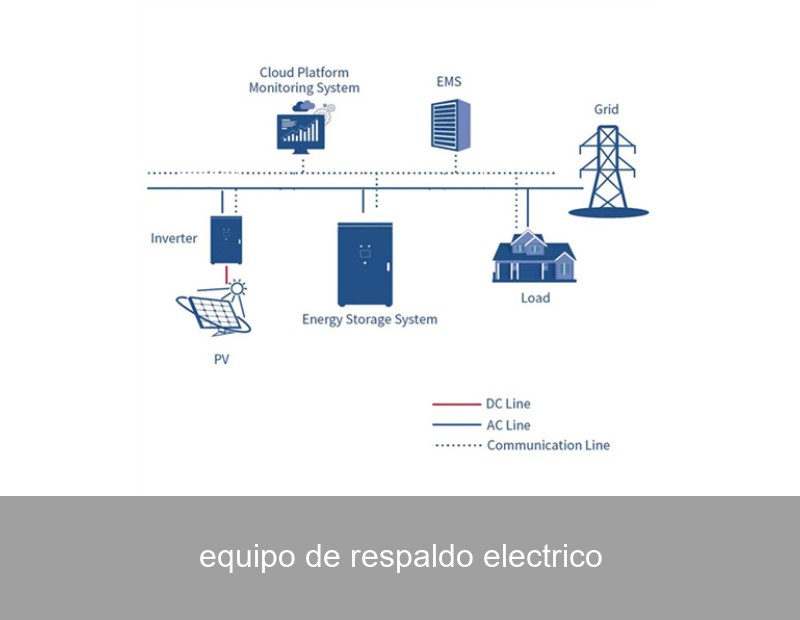
This is where the industry is headed. A modern equipo de respaldo eléctrico isn't just a panic button for blackouts; it's an intelligent energy manager. Companies like Highjoule are at the forefront of this shift. Our systems, such as the Highjoule HES Series for homes and the Highjoule CIB Series for commercial & industrial applications, are designed to be the heart of a resilient energy ecosystem.
How does it work? The system is permanently installed and wired to your home's critical load panel. When the grid fails, an automatic transfer switch disconnects your home in milliseconds, and the battery instantly takes over – no noise, no fumes, no manual intervention. But the magic happens even when the grid is up. These systems can:
- Shift Energy Usage: Charge with cheap off-peak electricity and power your home during expensive peak hours, slashing your bills.
- Integrate with Solar: Store excess solar energy produced during the day for use at night, maximizing your self-consumption.
- Provide Grid Services: In some markets, advanced systems can even support grid stability (a concept known as VPPs or Virtual Power Plants).
Highjoule's technology emphasizes not just storage capacity, but power output (how many appliances you can run at once) and intelligent software that learns and optimizes your energy flow. It's equipo de respaldo eléctrico that works for you 24/7/365, not just during emergencies.

Image: A sleek, modern battery storage unit like Highjoule's HES Series, providing quiet and clean backup power. Source: Unsplash
A Real-World Case: Resilience in California's Fire-Prone Zones
Let's move from theory to hard data. Consider the situation in Northern California, where Public Safety Power Shutoffs (PSPS) are a common utility tactic to prevent wildfires. These planned outages can last for days, crippling communities.
The Challenge: A small medical clinic in Sonoma County needed to ensure uninterrupted power for its vaccine refrigerators, diagnostic equipment, and basic lighting/network to serve patients during these extended outages. A generator was problematic due to noise ordinances, fuel logistics, and emissions.
The Highjoule Solution: The clinic installed a Highjoule CIB-30 commercial battery system, coupled with an existing solar array. The system was configured to prioritize the critical medical loads and HVAC for 24+ hours on a single charge.
The Results: During a 36-hour PSPS event in late 2023:
- 100% Uptime: Critical medical equipment and refrigeration remained operational without interruption.
- $0 Fuel Cost: The system ran solely on stored solar energy and pre-charged battery capacity.
- Silent Operation: The clinic could operate normally without disturbing the surrounding area.
- Additional Savings: Data from the system showed a 22% reduction in the clinic's overall electricity bill in the months following installation, thanks to daily peak shaving.
This case exemplifies how modern equipo de respaldo eléctrico solves the immediate crisis while delivering ongoing financial and operational benefits. It's a resilient investment, not just an expense.
Choosing the Right Backup Power System for Your Needs
So, how do you decide? Ask yourself these key questions:
- What are my critical loads? (Refrigerator, furnace blower, modem, medical device, sump pump?) Calculate the total wattage.
- How long do I need backup for? A few hours during storms, or multiple days for grid instability?
- What is my budget? Consider total cost of ownership: purchase, installation, fuel/maintenance, and potential energy savings.
- Do I have or want solar? If so, a battery storage system is the natural, synergistic choice.
- How important are noise, emissions, and automatic operation? For most residential applications, this is the deciding factor.
For a comprehensive assessment, partnering with an expert is crucial. Highjoule works with a certified network of installers across Europe and North America who can conduct a detailed energy audit, model your home's consumption, and design a system—whether a residential HES unit or a scalable commercial CIB solution—that meets your specific resilience and economic goals.

Image: A professional energy audit is key to designing the right backup power system. Source: Unsplash
The Future of Backup Power: Integrated and Intelligent
The evolution of equipo de respaldo eléctrico is moving towards full home and business energy integration. We're talking about systems that communicate with your EV charger, your smart appliances, and even the utility grid in real-time. The goal is a self-optimizing microgrid that prioritizes comfort, cost, and carbon footprint automatically.
Highjoule is actively developing these capabilities, with software platforms that allow users to customize their energy priorities (e.g., "maximize self-sufficiency," "minimize cost," "ensure maximum backup"). The line between a backup device and a home's primary energy manager is blurring. As renewable penetration grows, these distributed storage assets will become vital building blocks for a more stable and sustainable grid for everyone (International Renewable Energy Agency).
Your energy resilience is no longer just about weathering the next storm. It's about taking control of where your power comes from, how much you pay for it, and what footprint you leave behind. What will be the first step you take to secure your energy independence?
 Inquiry
 Online Chat