


Power Line Communication in the Smart Grid: The Invisible Backbone of Energy Intelligence
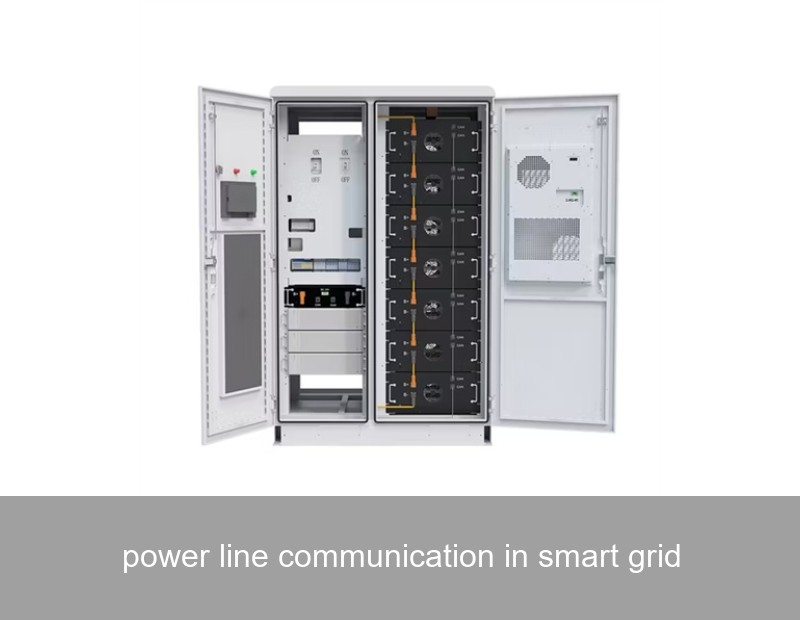
Imagine if every power line in your city could talk. Not in a metaphorical sense, but literally transmit data alongside electricity, turning the entire grid into a vast, self-aware nervous system. This isn't science fiction; it's the reality enabled by Power Line Communication (PLC) in the Smart Grid. As we integrate more volatile renewable energy and distributed storage, the need for real-time, two-way dialogue between utilities, assets, and consumers has never been greater. Let's explore how this unsung technology is quietly revolutionizing how we manage, distribute, and consume power, and how it synergizes with cutting-edge storage solutions from providers like Highjoule to create a truly resilient energy future.
Table of Contents
What is Power Line Communication (PLC)?
At its core, Power Line Communication is a technology that superimposes a modulated data signal onto the existing electrical wiring. Think of it like a sophisticated duet: the 50/60 Hz alternating current (AC) carries the power (the melody), while a higher-frequency signal (typically in the kHz to MHz range) carries the data (the harmony). Specialized modems at each end encode and decode these signals, enabling communication without requiring new dedicated data cables.
This concept has been around for decades—remember early home networking over power outlets? However, its application in the vast, noisy environment of the public electrical grid, known as Broadband over Power Line (BPL) or Narrowband PLC, is a cornerstone of smart grid infrastructure. It allows utilities to transform their passive, one-way distribution networks into interactive, intelligent platforms.
PLC's Critical Role in the Modern Smart Grid
The smart grid is about information as much as it is about electrons. PLC acts as its pervasive communication layer, enabling several transformative functions:
- Advanced Metering Infrastructure (AMI): This is the most widespread application. PLC enables two-way communication with smart meters, allowing for remote reading, real-time consumption data, dynamic pricing signals, and remote connect/disconnect services.
- Distribution Automation: PLC facilitates communication with sensors, reclosers, and switches along the distribution line. This enables rapid fault detection, isolation, and service restoration (FDIR), minimizing outage times.
- Demand Response (DR) Management: Utilities can send signals directly to smart appliances or energy management systems in homes and businesses to temporarily reduce load during peak periods, enhancing grid stability.
- Integration of Distributed Energy Resources (DERs): As rooftop solar, home batteries, and electric vehicles proliferate, PLC provides a cost-effective channel to monitor and control these assets, ensuring they support rather than destabilize the grid.
Key Benefits and Inherent Challenges
Why choose PLC over wireless or fiber? The advantages are compelling, but the path isn't without hurdles.
| Benefits | Challenges |
|---|---|
| Ubiquitous Infrastructure: Leverages the existing, extensive power line network, reducing deployment cost and time. | Signal Attenuation & Noise: Electrical noise from appliances, transformers, and the lines themselves can degrade the data signal, requiring robust modulation techniques. |
| Penetration & Reliability: Signals reach places wireless can't (e.g., basements, underground vaults) and are less susceptible to weather-related disruptions. | Bandwidth Limitations: Especially for narrowband PLC, data rates are lower compared to fiber or 5G, making it better suited for command/control than high-bandwidth video. |
| Enhanced Security: As a physically wired medium, it is inherently more difficult to intercept than broad-area wireless signals, though it still requires strong encryption. | Standardization: While standards like G3-PLC and PRIME exist, a fragmented landscape can complicate interoperability between different vendors' equipment. |
A Real-World Case: PLC in Action in Europe
Let's look at a concrete example. In the UK, a major Distribution Network Operator (DNO) faced challenges with an aging grid and increasing penetration of renewables. Their goal was to improve fault management and integrate low-carbon technologies without undertaking prohibitively expensive network reinforcement.
The Project: They deployed a large-scale Narrowband PLC network based on the G3-PLC standard across several rural and suburban substation service areas. The system connected thousands of smart meters, grid sensors, and several newly installed medium-scale solar farms.
- Fault Detection Time: Reduced from an average of 90 minutes (reliant on customer calls) to under 2 minutes (automated sensor alerts via PLC).
- Outage Duration: SAIDI (System Average Interruption Duration Index) improved by 35% in the pilot areas due to rapid remote switching and restoration.
- Solar Integration: The DNO gained real-time visibility into solar farm output. Using PLC signals, they could now issue gentle curtailment commands during periods of grid congestion, avoiding instability and utilizing more green energy than previously possible. (Ofgem, the UK energy regulator, publishes annual reports on grid innovation that contextualize such projects).
This case demonstrates PLC's tangible impact on reliability and renewable integration—a critical blueprint for grids worldwide.

Image Source: Unsplash (Representative image of smart grid management)
The Future: PLC and Advanced Energy Storage - A Symbiotic Relationship
This is where the story gets even more interesting. Power Line Communication in the Smart Grid finds its ultimate partner in advanced battery energy storage systems (BESS). Storage acts as the grid's "shock absorber" and "energy time-shifter," but to do so optimally, it needs constant, low-latency communication.
PLC provides the perfect channel for this dialogue. Imagine a Highjoule industrial BESS installed at a factory. Through the PLC connection:
- The utility can send a signal to dispatch stored energy during a regional peak, preventing the need to fire up a polluting peaker plant.
- The BESS can autonomously respond to local frequency fluctuations, providing grid-stabilizing services in milliseconds.
- The factory's energy manager can receive real-time data on tariff changes, optimizing when to draw from the grid, use solar, or discharge the battery for maximum savings.
How Highjoule Integrates This Grid Intelligence
At Highjoule, our philosophy is that an energy storage system is only as smart as its connection to the wider grid. Since 2005, we've designed our H-Series commercial & industrial storage solutions and Residential Energy Hub with advanced communication interoperability in mind.
Our systems come equipped with multi-protocol communication gateways that seamlessly interface with PLC networks, RF mesh, and cellular backhauls. This ensures that whether a utility in Germany uses G3-PLC or a microgrid operator in California uses a hybrid system, a Highjoule BESS can "speak the local language." Our AI-driven Energy Management System (EMS) uses this constant stream of grid data to make predictive decisions, not just reactive ones—protecting your equipment, maximizing your financial return, and actively supporting grid decarbonization.
For instance, our deployment at a manufacturing campus in Texas uses the existing power line communication infrastructure to participate in ERCOT's demand response programs automatically, generating significant revenue for the site owner while contributing to statewide grid reliability during heatwaves.

Image Source: Unsplash (Representative image of industrial battery storage system)
Looking Ahead: Your Role in the Intelligent Grid
The evolution of Power Line Communication in the Smart Grid is a testament to human ingenuity—making what we already have do more. It's the silent conductor orchestrating the symphony of renewable energy, flexible demand, and distributed storage. As a business leader, homeowner, or community planner, the question is no longer if you'll interact with this intelligent grid, but how proactively you'll engage with it.
Is your organization's energy infrastructure equipped to listen to the grid's signals and respond, turning operational costs into value streams? The conversation is happening right now, over the power lines themselves.
 Inquiry
 Online Chat