


Equipos de Energía Solar Térmica: Your Untapped Ally in the Energy Transition
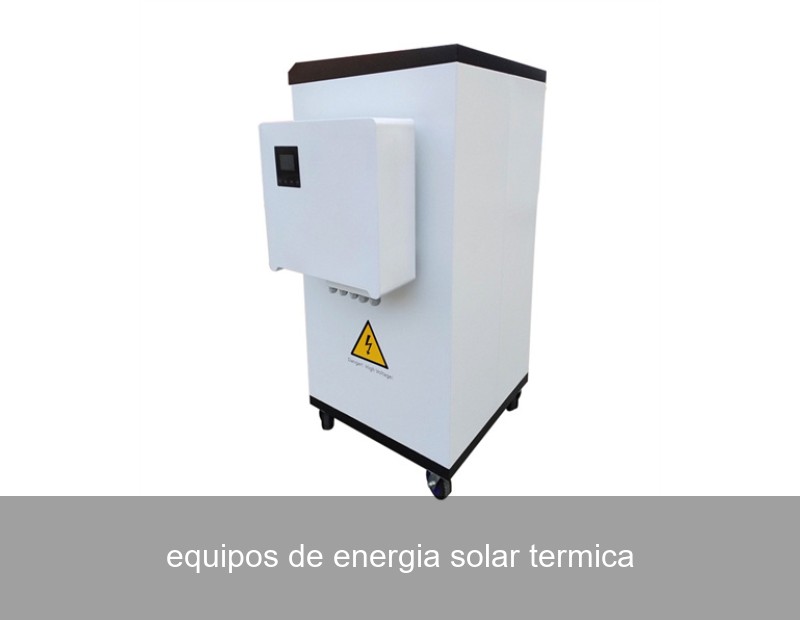
When we talk about solar energy, photovoltaic panels instantly come to mind. But what if I told you there's another powerful, mature, and incredibly efficient solar technology that's been quietly heating homes, businesses, and industrial processes for decades? Let's talk about equipos de energía solar térmica – solar thermal energy systems. While PV captures sunlight to make electricity, thermal systems capture the sun's heat directly, offering a potent solution for one of our biggest energy demands: heat. As energy prices remain volatile and decarbonization becomes urgent, understanding and integrating this technology is more relevant than ever.
Table of Contents
- What Are Solar Thermal Energy Systems?
- The Data Advantage: Efficiency and Savings
- Beyond Residential: Commercial & Industrial Power
- Case Study: A European Food Processing Plant
- The Perfect Synergy: Solar Thermal and Modern Energy Storage
- Highjoule's Role in a Comprehensive Energy Strategy
- Future Outlook and Your Next Step
What Are Solar Thermal Energy Systems?
In essence, equipos de energía solar térmica are designed to convert sunlight into usable heat. The core components are simple yet ingenious: solar collectors (often mounted on a roof or ground), a heat transfer fluid, a storage tank, and a distribution system. The collectors, which look different from PV panels, absorb solar radiation and transfer the heat to a fluid. This heated fluid then circulates to a storage tank, where it can be used directly for domestic hot water, fed into a building's space heating system (like radiators or underfloor heating), or even drive industrial processes.
There are two main types you'll encounter:
- Flat-Plate Collectors: The most common type, excellent for residential and commercial hot water.
- Evacuated Tube Collectors: More efficient, with a vacuum insulation that minimizes heat loss, making them ideal for higher temperature applications and colder climates like those in Northern Europe.

Image: Solar thermal collectors on a commercial roof. Source: Wikimedia Commons (CC)
The Data Advantage: Efficiency and Savings
Here’s where solar thermal truly shines. While a good PV panel might convert 20-22% of sunlight into electricity, a solar thermal collector can achieve thermal efficiencies of 60-70% or higher. Why? Because it's capturing a broader spectrum of solar energy for a simpler task—heating. This translates to a smaller footprint for the same energy yield when it comes to thermal demand.
Let's look at the numbers for a typical European household. According to the International Energy Agency (IEA), solar thermal systems for domestic hot water can typically cover 50-70% of a home's annual need. For a family of four, that's a direct reduction of 1,500 to 2,500 kWh of gas or electricity annually just for hot water. In a commercial setting, like a hotel or a sports center with high hot water demand, the savings and carbon reduction are multiplied dramatically.
Beyond Residential: Commercial & Industrial Power
The real untapped potential for equipos de energía solar térmica lies in the commercial and industrial (C&I) sector. Think about it: industries consume vast amounts of process heat, often at temperatures below 250°C. This "low-temperature" heat is a perfect match for advanced solar thermal systems. Applications are vast:
| Industry | Typical Thermal Application | Solar Thermal Solution |
|---|---|---|
| Food & Beverage | Pasteurization, washing, drying, cooking | Provides consistent process heat, reducing boiler fuel use. |
| Chemical | Pre-heating feedwater, separation processes | Integrates into existing steam or heat circuits. |
| Textiles | Dyeing, bleaching, drying | Supplies hot water and steam for production lines. |
| District Heating | Heating networks for communities | Large-scale solar thermal fields feed heat into the grid. |
For a factory manager, this isn't just about being green. It's about locking in long-term energy costs, hedging against fossil fuel volatility, and meeting stringent corporate sustainability targets.
Case Study: A European Food Processing Plant
A concrete example brings this to life. A mid-sized dairy processing plant in Bavaria, Germany, was facing rising natural gas costs and pressure to reduce its carbon footprint. In 2021, they installed a 1,500 m² field of evacuated tube solar thermal collectors to support their milk pasteurization and cleaning-in-place (CIP) processes.
The Results:
- Annual Energy Generation: The system produces approximately 750 MWh of thermal energy per year.
- Fossil Fuel Displacement: It covers over 30% of the plant's process heat demand during peak production months, saving an estimated 75,000 cubic meters of natural gas annually.
- Emission Reduction: This translates to a reduction of about 150 tonnes of CO₂ emissions each year.
- Financials: With government incentives and the high price of gas, the project achieved a payback period of just under 7 years, securing energy costs for decades to come.

Image: Industrial solar thermal field for process heat. Source: solarthermalworld.org
The Perfect Synergy: Solar Thermal and Modern Energy Storage
You might be thinking, "But the sun doesn't shine at night or during peak production hours." This is the critical piece of the puzzle. While many solar thermal systems include insulated hot water tanks for short-term storage (a few hours to a day), the full integration with the energy system requires advanced electrical storage. This is where companies like Highjoule become essential partners.
Imagine a factory running on a hybrid system: equipos de energía solar térmica handle the base-load process heat, while a rooftop PV system powers the electrical machinery. A Highjoule battery energy storage system (BESS) stores excess PV electricity. This stored electricity can then be used to power auxiliary pumps and controls for the thermal system, or to provide heat via electric boilers or heat pumps during cloudy periods, creating a resilient, renewable-powered thermal ecosystem. Our intelligent energy management systems seamlessly orchestrate these flows, maximizing self-consumption and minimizing grid reliance.
Highjoule's Role in a Comprehensive Energy Strategy
At Highjoule, we recognize that the path to energy independence isn't a single technology, but a smartly integrated system. While we specialize in advanced battery storage solutions for commercial, industrial, and microgrid applications, we view equipos de energía solar térmica as a powerful and complementary asset in our clients' energy portfolios.
Our expertise lies in designing and deploying the intelligent control and storage layer that binds different generation sources together. For a client implementing a solar thermal system, we can provide:
- Highjoule BESS: To store complementary PV energy, ensuring the electrical needs of the thermal system's operation are met with clean power.
- Advanced Energy Management Software (EMS): Our platform can integrate data from the thermal system, optimizing when to use direct solar heat, when to draw from thermal storage, and when to supplement with other sources, all based on weather forecasts and process schedules.
- System Design Support: Our technical experts work with thermal system installers to create a cohesive, future-proof energy system that delivers both thermal and electrical resilience.
By combining thermal and electrical solar harvesting with smart storage, businesses can achieve unprecedented levels of decarbonization and cost control.
Future Outlook and Your Next Step
The future of industrial and commercial heat is renewable. As technologies advance, we're seeing the development of high-temperature solar thermal systems and innovative seasonal thermal storage solutions, like large underground water pits or borehole storage, which can store summer heat for winter use. The integration of these systems with heat pumps and green hydrogen production further expands the possibilities.
The journey starts with an assessment. Have you audited your facility's thermal and electrical loads separately? Understanding the profile of your heat demand—its temperature, consistency, and timing—is the first step to uncovering if equipos de energía solar térmica are a viable cornerstone of your energy strategy. From there, how would you envision coupling that thermal resilience with electrical storage and intelligence to create a truly autonomous energy asset?
What specific process in your operation relies on heat, and have you calculated its true cost—both financial and environmental—over the next 15 years?
 Inquiry
 Online Chat