


ESS Energy Saving System: The Smart Path to Energy Independence and Cost Control
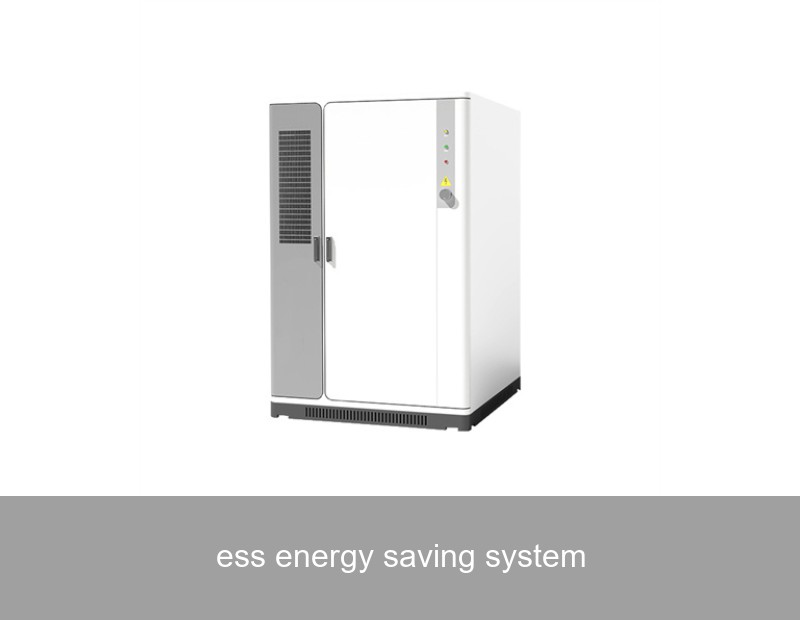
Have you ever opened your commercial electricity bill and felt a genuine shock? Or watched the news about grid instability with a growing sense of vulnerability for your home or business? You're not alone. Across Europe and the US, energy prices are volatile, and the push for decarbonization is reshaping how we power our lives. This is where the modern ESS Energy Saving System steps in—not just as a battery, but as an intelligent energy management hub. It's the key to turning your property from a passive energy consumer into an active, efficient, and resilient energy asset. Companies like Highjoule, a global leader in advanced energy storage since 2005, are at the forefront of this transformation, providing smart, integrated solutions that deliver tangible savings and sustainability.
Table of Contents
- The Problem: Rising Costs and an Unpredictable Grid
- The Data: Quantifying the Waste and the Opportunity
- The Solution: How a Modern ESS Works
- The Highjoule Approach: Intelligence Meets Resilience
- A Real-World Case Study: Supermarket Chain Cuts Bills by 34%
- Beyond Savings: Energy Resilience and Sustainability
- The Future of Energy is Decentralized and Smart
The Problem: Rising Costs and an Unpredictable Grid
Let's face it: our traditional relationship with the electrical grid is becoming increasingly one-sided and risky. For businesses, electricity is a major operational cost that fluctuates wildly, often with peak demand charges creating a significant portion of the bill. For homeowners, blackouts—whether from storms, heatwaves, or overloaded infrastructure—are more than an inconvenience; they can mean spoiled food, unsafe conditions, and lost productivity. The grid itself, while monumental, was built for a different era. It's largely one-directional and struggles with the integration of variable renewable sources like solar and wind. This mismatch creates inefficiency and vulnerability.
The Data: Quantifying the Waste and the Opportunity
The financial and environmental impact of this outdated model is staggering. According to the International Energy Agency (IEA), global electricity demand is set to surge, with peaks becoming sharper and more costly to manage. In the commercial sector, demand charges can account for up to 50% of a total electricity bill. Furthermore, the US Department of Energy estimates that power interruptions cost the US economy tens of billions of dollars annually. On the flip side, the opportunity is massive. An intelligently deployed ESS Energy Saving System can reduce a site's peak demand from the grid by 20-40%, directly slashing those demand charges. For sites with solar, adding storage can increase self-consumption of solar energy from a typical 30-40% to over 80%, maximizing the return on solar investment.
Key Financial Pain Points Addressed by ESS
| Pain Point | How ESS Provides a Solution | Typical Outcome |
|---|---|---|
| High Peak Demand Charges | Discharges stored energy during short periods of highest grid use, "shaving" the peak. | 20-40% reduction in demand charges. |
| Volatile Time-of-Use Rates | Stores cheap off-peak or solar energy for use during expensive peak periods (arbitrage). | Reduced overall energy cost per kWh. |
| Solar Energy Curtailment | Captures excess solar generation that would otherwise be sent to the grid for low credit. | Increases solar self-consumption to 80%+. |
| Cost of Power Interruptions | Provides seamless backup power during outages. | Prevents operational/financial losses from downtime. |
The Solution: How a Modern ESS Works
Think of a modern Energy Saving System as the brain and battery for your property's energy flow. It's a sophisticated ecosystem comprising:
- Battery Storage Units: Typically lithium-ion (like LFP for safety and longevity), these are the physical reservoirs of energy.
- Bi-Directional Inverters: The heart of the system, converting DC battery power to AC for your building, and vice-versa for charging.
- Energy Management System (EMS): This is the true intelligence. It's a software platform that continuously analyzes energy prices, consumption patterns, weather forecasts, and grid signals to make autonomous, cost-optimizing decisions on when to charge, discharge, or hold.
In practice, the system operates seamlessly. On a sunny day, it might store excess solar production in the afternoon. Then, as evening falls and grid prices spike, it powers your facility from the battery instead of the expensive grid. It does all this automatically, 24/7.
The Highjoule Approach: Intelligence Meets Resilience
At Highjoule, we've spent nearly two decades refining this concept. Our systems are built on the principle that true energy savings come from predictive intelligence, not just reaction. Our flagship product, the Highjoule Nexus Platform, integrates storage, advanced inverters, and a proprietary AI-driven EMS. What sets it apart?
- Predictive Grid Interaction: Our algorithms forecast grid congestion and price signals, pre-positioning your energy assets for maximum financial return.
- Seamless Solar Synergy: Designed from the ground up for solar+storage projects, our systems ensure not a single self-generated kilowatt-hour goes to waste.
- Scalable Architecture: From a single residential unit to a multi-megawatt industrial or microgrid installation, our modular design grows with your needs.
- Uncompromising Safety: We use Lithium Iron Phosphate (LFP) chemistry and multi-layer protection systems, making our units some of the safest and most durable on the market.
Our services extend beyond hardware. We provide comprehensive site assessment, system design, financing guidance, and ongoing performance monitoring, ensuring our clients achieve their promised savings and sustainability goals.

Image Source: Unsplash (Representative of a modern industrial ESS installation)
A Real-World Case Study: Supermarket Chain Cuts Bills by 34%
Let's move from theory to a concrete example. A major supermarket chain in Southern Germany faced steep demand charges and wanted to reduce its carbon footprint. They had rooftop solar, but much of its generation occurred mid-day, not aligning with their evening peak consumption.
The Challenge: High evening energy peaks, low solar self-consumption, and a desire for backup power for refrigeration cases.
The Highjoule Solution: We installed a 500 kWh Highjoule Nexus ESS at one of their flagship stores. The system was integrated with their existing solar PV and configured for peak shaving, solar self-consumption optimization, and backup power for critical loads.
The Results (12-month period):
- 34% Reduction in Overall Electricity Costs: Primarily through dramatic demand charge reduction.
- Solar Self-Consumption Rate Increased from 35% to 89%: Effectively doubling the value of their solar investment.
- Seamless Backup During Two Grid Outages: Preventing spoilage of tens of thousands of euros worth of refrigerated and frozen goods.
- Annual CO2 Emission Reduction: Estimated at 62 metric tons, equivalent to taking 14 cars off the road.
This case, documented in a Department of Energy report on commercial storage, exemplifies the multi-faceted ROI of a modern ESS: direct savings, asset optimization, and risk mitigation.
Beyond Savings: Energy Resilience and Sustainability
While the financial argument is powerful, the value of an ESS extends far beyond the balance sheet. For communities in California facing Public Safety Power Shutoffs (PSPS) or businesses in areas with aging grid infrastructure, an ESS provides energy resilience. It's the difference between a dark, closed facility and a safe, operational one. For the environmentally conscious, it's a cornerstone of sustainability. By maximizing self-consumption of renewables and reducing reliance on fossil-fuel peaker plants, you are directly contributing to grid decarbonization. An ESS turns your sustainability pledge into a measurable, operational reality.

Image Source: Unsplash (Representative of a residential solar-plus-storage system)
The Future of Energy is Decentralized and Smart
The trajectory is clear. The future energy landscape will be defined by decentralized, intelligent nodes—homes, businesses, and microgrids—that can generate, store, and manage their own energy while interacting dynamically with the main grid. This isn't just a trend; it's a necessary evolution for a stable, clean, and affordable energy system. The ESS is the enabling technology at the center of this shift.
So, the question isn't really if an ESS Energy Saving System makes sense, but when and how to integrate it into your energy strategy. What would a 30% reduction in your annual energy costs do for your operational budget? How much is guaranteed uptime worth to your business or peace of mind to your family? The power to decide is, quite literally, moving into your own hands.
 Inquiry
 Online Chat