


Estaciones de Carga Solares: The Ultimate Guide to Off-Grid EV Power
Imagine pulling into a parking lot, plugging your electric vehicle into a sleek charging post, and knowing the energy flowing into your battery is generated right there by the sun. This is the reality and promise of estaciones de carga solares (solar charging stations). As the demand for electric vehicles (EVs) skyrockets across Europe and the United States, a critical question emerges: how do we power this clean transportation revolution with equally clean energy? The answer is becoming increasingly clear—by integrating solar power generation directly with EV charging infrastructure. This isn't just a futuristic concept; it's a practical, scalable solution addressing grid strain, energy costs, and true carbon neutrality.
Table of Contents
What Are Solar Charging Stations?
At their core, estaciones de carga solares are EV charging points that are partially or fully powered by on-site photovoltaic (PV) panels. They range from simple canopies with a few charging ports to sophisticated, off-grid hubs with integrated battery storage. The most resilient and efficient systems combine three elements: solar generation, battery energy storage systems (BESS), and smart charging management. This triad ensures power is available even when the sun isn't shining, and it manages the flow of energy between the solar array, the battery, the grid, and the vehicles to optimize cost and performance.

Image: A solar carport charging station, combining shade, power generation, and EV charging. Source: Unsplash
The Key Drivers Behind the Growth
The surge in interest isn't accidental. Several powerful forces are converging:
- Grid Decarbonization: Charging an EV with fossil-fuel grid electricity simply shifts emissions. Solar charging provides genuine well-to-wheel decarbonization, a major goal for corporations and governments.
- Grid Constraints: In many urban areas and popular travel corridors, the local electrical grid is nearing capacity. Installing high-power charging stations can require expensive grid upgrades. Solar-plus-storage solutions can mitigate this "demand charge" and defer costly infrastructure investments.
- Energy Independence & Resilience: For businesses like logistics hubs or remote facilities, solar charging provides a reliable power source insulated from grid outages and volatile energy prices.
- Policy & Incentives: Programs like the EU's Alternative Fuels Infrastructure Regulation (AFIR) and the U.S. Inflation Reduction Act (IRA) offer significant tax credits and grants for both renewable energy and EV charging infrastructure, making combined projects highly attractive.
Key Components of a Solar-Powered EV Station
Building a functional and future-proof estación de carga solar requires careful integration of several technologies:
| Component | Role | Importance |
|---|---|---|
| Photovoltaic (PV) Array | Generates DC electricity from sunlight. | The primary energy source. Size determines generation potential. |
| Battery Energy Storage System (BESS) | Stores excess solar energy for use at night or during peak demand. | Critical for reliability, grid independence, and managing energy costs. |
| Bi-directional EV Chargers | Charges vehicles and can potentially feed energy from car batteries back to the building or grid (V2G). | Enables advanced energy management and potential revenue streams. |
| Energy Management System (EMS) | The "brain" that optimizes energy flow between solar, battery, grid, and chargers. | Maximizes self-consumption of solar energy and minimizes costs. |
Real-World Case Study: A German Supermarket Chain
Let's look at a concrete example from Southern Germany. A mid-sized supermarket chain wanted to install DC fast chargers for customers but faced two hurdles: high grid connection costs and a corporate mandate to reduce its carbon footprint.
- Solution Deployed: They installed a 120 kW solar canopy over 10 parking spaces, coupled with a 240 kWh containerized battery storage system and two 150 kW DC fast chargers.
- Smart Logic: The system's EMS was programmed to prioritize direct solar charging. Excess solar energy charged the battery. During high-demand charging sessions, the battery supplemented solar power to avoid drawing expensive peak power from the grid.
- Results After One Year:
- 85% of all charging energy came directly from the on-site solar + storage system.
- 40% reduction
- The station became a marketing asset, attracting eco-conscious customers and increasing dwell time in the store.
This case highlights how the right technology mix turns challenges into tangible financial and environmental benefits.
Highjoule's Integrated Solutions for Solar Charging Hubs
At Highjoule, we've been at the forefront of intelligent energy storage for nearly two decades. We understand that a successful estación de carga solar is more than just panels and plugs; it's a harmonized ecosystem. Our approach centers on our flagship product: the Highjoule HiveStack™ BESS.
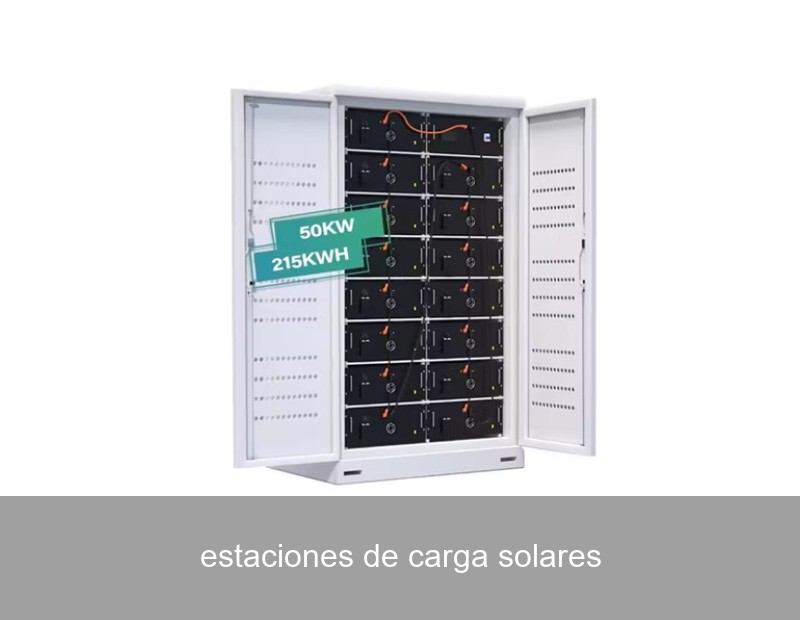
The HiveStack is a modular, containerized battery system designed specifically for commercial and industrial scale. When integrated into a solar charging project, it acts as the essential buffer and manager. Our proprietary Adaptive EMS software dynamically decides, in real-time, the most economical and efficient path for every kilowatt-hour—whether it should go directly to a charging car, be stored for the evening rush, or be used to power the adjacent building.
For developers and businesses, this means Highjoule provides a single, responsible point for the core energy storage and control layer. We ensure the solar generation, battery storage, and charging hardware work in perfect concert, maximizing return on investment and ensuring reliability. From initial design to ongoing optimization, our expertise makes deploying complex solar charging infrastructure a streamlined process.

Image: A modular battery energy storage system, the heart of a resilient solar charging hub. Source: Unsplash
Benefits and Practical Considerations
Embracing solar-powered charging offers compelling advantages, but requires planning.
Major Benefits:
- Reduced Operating Costs: "Free" solar energy and demand charge management slash electricity bills.
- Future-Proofing: Prepares infrastructure for upcoming V2G (Vehicle-to-Grid) applications, turning EV fleets into grid assets.
- Enhanced Sustainability Profile: Delivers verifiable green credentials that resonate with customers and stakeholders.
- Improved Grid Stability: By generating and consuming locally, these stations reduce strain on the public grid.
Key Considerations:
- Site Assessment: Solar potential, space for canopies/ground mounts, and existing electrical infrastructure must be evaluated.
- Financial Modeling: Upfront capital is higher, so modeling energy flows, incentives, and savings is crucial. The National Renewable Energy Laboratory (NREL) provides excellent tools and research on this topic.
- Technology Partner: Choosing an experienced integrator like Highjoule, who understands both storage and control software, is vital for long-term performance.
The Future Outlook: Where Do We Go From Here?
The evolution of estaciones de carga solares is tightly linked to advancements in battery technology and energy markets. We are moving towards "energy hubs" where a single site—a shopping center, a highway rest stop, or an apartment complex—generates, stores, manages, and dispatches energy for transportation, building operations, and even the surrounding community. The integration of bidirectional charging will be a game-changer, allowing EVs to stabilize the local microgrid during outages.
Furthermore, as noted by industry analysts like BloombergNEF, the continuing plummet in battery costs makes solar-plus-storage for EV charging not just an ecological choice, but an increasingly obvious economic one.
Is your business or community considering an EV charging project? Have you evaluated how integrating solar generation and battery storage could transform it from a cost center into a resilient, profitable, and truly sustainable energy asset?
 Inquiry
 Online Chat