


Understanding the DEYE 1MW Hybrid Energy Storage Cabinet: Powering the Future of Energy Resilience
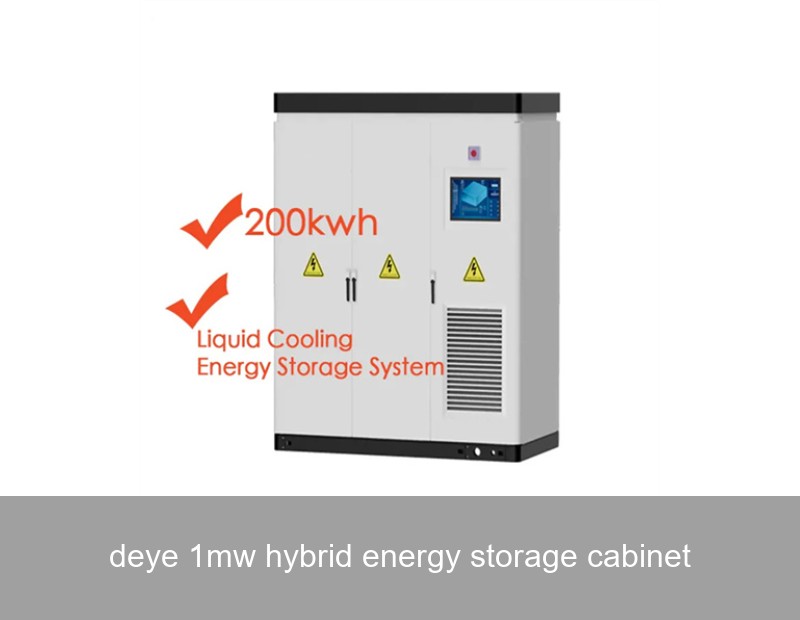
Have you ever wondered how large factories, data centers, or even entire neighborhoods can keep the lights on during grid outages while maximizing their use of solar power? The answer increasingly lies in a powerful, behind-the-scenes technology: the industrial-scale hybrid energy storage system. Today, we're diving into one of the most significant players in this space—the DEYE 1MW Hybrid Energy Storage Cabinet. This isn't just a big battery; it's a sophisticated energy management hub that is transforming how commercial and industrial entities approach power reliability, cost savings, and sustainability. As a global leader in advanced energy storage, Highjoule has been at the forefront of integrating and deploying such high-caliber solutions since 2005, helping businesses across Europe and the U.S. build a more resilient and intelligent energy infrastructure.
Table of Contents
- What is a DEYE 1MW Hybrid Energy Storage Cabinet?
- The Problem: Grid Instability and Rising Energy Costs
- The Data: Why Scale and Intelligence Matter
- Highjoule's Expertise: System Integration and Smart Control
- Case Study: A Manufacturing Plant in Germany
- Key Components and How They Work Together
- The Future of Megawatt-Scale Storage
What is a DEYE 1MW Hybrid Energy Storage Cabinet?
Let's break down the name. "1MW" signifies its power rating—one megawatt. In practical terms, this system can deliver a substantial amount of electricity, enough to power hundreds of homes or a mid-sized industrial facility. "Hybrid" is the crucial keyword here. Unlike simple battery banks, a hybrid system is designed to intelligently manage multiple energy sources simultaneously—typically solar PV arrays, the traditional electrical grid, and the stored energy in the batteries themselves. The "Cabinet" refers to its all-in-one, containerized design, housing the battery racks, power conversion systems (PCS), battery management system (BMS), and cooling in a single, often modular, unit.

Think of it as the ultimate energy conductor. It doesn't just store energy; it makes real-time decisions: Should it charge from the solar panels now? Should it discharge to avoid peak grid tariffs? Should it keep a reserve for a potential outage? This level of control is what makes solutions like the DEYE 1MW cabinet a game-changer.
The Problem: Grid Instability and Rising Energy Costs
Across Europe and the United States, businesses face a dual challenge. First, aging grid infrastructure and increasing extreme weather events lead to more frequent and costly power interruptions. For a factory, even a 15-minute outage can mean ruined products and millions in losses. Second, energy costs are volatile, with peak demand charges forming a significant portion of commercial electricity bills.
The traditional response—diesel generators—is becoming less viable due to carbon emission regulations, fuel price volatility, and noise pollution. There's a clear need for a cleaner, smarter, and more cost-effective buffer. This is the precise pain point that megawatt-scale hybrid storage addresses.
The Data: Why Scale and Intelligence Matter
The shift to large-scale storage isn't just theoretical; it's backed by compelling data. According to the International Energy Agency (IEA), global grid-scale battery storage capacity is set to multiply exponentially, driven by falling costs and policy support. A 1MW system represents the sweet spot for many commercial and industrial (C&I) applications, offering:
- Substantial Peak Shaving: Reducing peak demand from the grid by 70-90%, directly slashing demand charges.
- High Renewable Self-Consumption: Increasing the usage of on-site solar from 30-40% to over 70%, maximizing return on PV investment.
- Millisecond-Level Response: Providing backup power seamlessly, often within 20 milliseconds, ensuring operational continuity.
This is where Highjoule's role becomes critical. We don't just supply hardware. Our value lies in designing the complete system architecture, integrating the DEYE 1MW Hybrid Energy Storage Cabinet with your existing energy assets, and providing the intelligent software platform that orchestrates it all for optimal financial and operational outcomes.
Highjoule's Integrated Solution: Beyond the Cabinet
At Highjoule, we view the storage cabinet as the heart of a broader energy ecosystem. Our service wraps around this core technology:
- Custom Feasibility Analysis: We model your load profile, solar generation, and tariff structure to precisely size the system for the best ROI.
- Seamless Integration: Our engineers ensure flawless integration with your medium-voltage (MV) or low-voltage (LV) switchgear, solar inverters, and generator sets.
- Highjoule Energy Management System (EMS): This is the "brain." Our proprietary EMS uses AI-driven algorithms to forecast energy usage and market prices, automatically deciding the most economical and resilient operating mode every minute of the day.
- Ongoing Performance Monitoring & Support: Our 24/7 global monitoring center ensures your system performs at its peak, with proactive maintenance and remote troubleshooting.
Case Study: A Manufacturing Plant in Bavaria, Germany
Let's look at a real-world application. A major automotive parts manufacturer near Munich was struggling with high peak demand charges and wanted to secure operations against grid fluctuations. They had a 2.5MW rooftop solar array but were exporting a large surplus to the grid at low feed-in tariffs.
The Solution: Highjoule designed and deployed a system centered around two DEYE 1MW Hybrid Energy Storage Cabinets, creating a 2MWh/1MW storage system. The system was integrated with their existing solar infrastructure and main distribution panel.
| Metric | Before Highjoule System | After Highjoule System |
|---|---|---|
| Peak Demand from Grid | 1.8 MW | 0.5 MW (72% reduction) |
| Solar Self-Consumption | 35% | 82% |
| Annual Energy Cost Savings | Baseline | €210,000 |
| Backup Runtime for Critical Loads | 15 mins (diesel gen) | >2 hours (silent, automatic) |
The Outcome: The system paid for itself in under 5 years. Beyond savings, it provided the plant manager with unparalleled peace of mind during several regional grid disturbances, where production continued uninterrupted. This case exemplifies the tangible benefits of a well-integrated, megawatt-scale hybrid storage solution.

Key Components and How They Work Together
To appreciate the sophistication, understanding the core components inside and around the cabinet is helpful.
1. The Battery Rack (The Energy Reservoir)
Typically using Lithium Iron Phosphate (LFP) chemistry for safety and long cycle life, these are the core storage units. The 1MW cabinet configuration determines the total energy capacity (e.g., 1MWh, 2MWh).
2. The Power Conversion System - PCS (The Translator)
This bidirectional inverter is the workhorse. It converts DC electricity from the batteries or solar panels to AC for the facility, and vice-versa for charging. Its speed and efficiency are paramount.
3. The Battery Management System - BMS (The Guardian)
This electronic system constantly monitors each battery cell for voltage, temperature, and state of charge, ensuring safety, longevity, and performance.
4. The Thermal Management System (The Climate Control)
Precise liquid or air cooling maintains the batteries at their ideal operating temperature, which is critical for performance and lifespan, especially in demanding environments.
5. Highjoule EMS (The Strategist)
Sitting above all this hardware, our software platform pulls in weather forecasts, utility rate schedules, and real-time load data. It executes strategies like arbitrage, peak shaving, and backup preparation automatically.
The Future of Megawatt-Scale Storage
The trajectory is clear. As noted by the Energy Storage News industry portal, C&I storage is one of the fastest-growing market segments. We're moving towards systems that don't just save costs but also participate in grid services like frequency regulation, creating new revenue streams for businesses. The DEYE 1MW Hybrid Energy Storage Cabinet, especially when empowered by an intelligent platform like Highjoule's, is a foundational technology for this future.
It enables businesses to become active participants in the energy transition, transforming from passive consumers into proactive "prosumers" with a resilient, cost-optimized, and sustainable energy footprint. The question is no longer if such systems are viable, but how quickly they can be deployed to secure a competitive advantage.

Is your organization ready to analyze how a megawatt-scale energy storage system could harden your operations against uncertainty and turn your energy bill into a strategic asset? What would a 70% reduction in your peak demand charges mean for your bottom line this year?
 Inquiry
 Online Chat