


EU Solar Energy: How Much Power Can You Really Generate and Save?
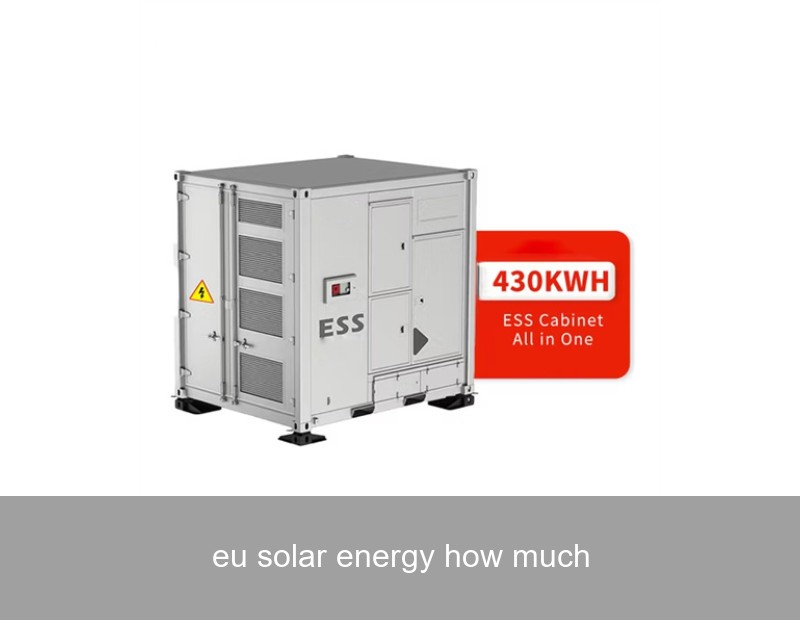
As energy prices remain volatile and climate goals become more urgent, a single question is on the minds of countless homeowners and businesses across Europe: EU solar energy, how much can it actually do for me? How much power can my roof generate, how much can I save on bills, and crucially, how much of my energy independence can I reclaim? The curiosity is justified. With solar technology more efficient and affordable than ever, understanding the real potential is the first step toward a smarter, more sustainable energy future. This article will break down the numbers, explore the factors at play, and show how pairing solar with intelligent storage is the key to maximizing your investment.
Table of Contents
- The Phenomenon: Solar's Rise in Europe
- The Data: How Much Can You Generate?
- The Case Study: A German Business Maximizing Solar ROI
- The Key Insight: Generation is Only Half the Story
- The Highjoule Solution: Intelligent Storage for True Energy Autonomy
- What's Your Solar Potential?
The Phenomenon: Solar's Unstoppable Ascent in Europe
Europe has wholeheartedly embraced the solar revolution. Driven by the REPowerEU plan aiming to accelerate renewable rollout and reduce dependence on fossil fuels, solar photovoltaic (PV) capacity is soaring. In 2023 alone, the EU added a staggering 56 GW of new solar capacity, making it one of the fastest-growing energy sources. But behind these macro numbers lies a very personal calculation for energy consumers. The initial question, "EU solar energy, how much can I benefit?" evolves into more specifics: How much of my daytime consumption can it cover? What happens when the sun isn't shining? This is where the conversation moves from simple generation to intelligent energy management.

Credit: Unsplash / Photo of solar panels on a roof. Modern solar installations are designed to maximize capture from available sunlight.
The Data: How Much Can You Generate? The Key Factors
Calculating your potential solar yield isn't guesswork; it's a science based on clear variables. Let's demystify them.
1. Your Location (Solar Irradiation)
Not all sunlight is equal. A kilowatt-hour (kWh) of solar generation depends heavily on your geographic location. Southern Europe naturally enjoys more peak sun hours than Northern regions.
| Region (Example) | Average Annual Sun Hours (Full Load) | Estimated Annual Yield per 1 kWp System* |
|---|---|---|
| Southern Spain / Italy | 1,600 - 1,800 | 1,600 - 1,800 kWh |
| Germany / France | 950 - 1,200 | 950 - 1,200 kWh |
| United Kingdom / Benelux | 850 - 1,000 | 850 - 1,000 kWh |
*kWp = kilowatt-peak, the rated power of the system under standard test conditions.
2. Your Roof's Characteristics
- Orientation & Tilt: A south-facing roof (in the Northern Hemisphere) at a 30-35 degree angle is ideal. East/West facing roofs can still achieve 80-90% of optimal yield.
- Shading: Chimneys, trees, or neighboring buildings can significantly reduce output. Modern optimizers can mitigate partial shading.
- Size: A typical residential system in Europe ranges from 4 kWp to 10 kWp, requiring 25-60 sqm of roof space.
3. System Efficiency & Technology
Modern monocrystalline panels offer efficiencies above 22%, meaning they convert more sunlight into electricity in the same space compared to older models. High-quality inverters and proper installation also minimize energy losses.
So, for a typical 6 kWp system in central Germany, you could generate approximately: 6 kWp * 1,100 sun hours = ~6,600 kWh per year. For an average household consuming 4,000 kWh annually, this could theoretically cover 165% of needs! But here's the catch: you don't consume all that power the moment it's produced. Without storage, excess energy is fed back to the grid, often at a lower price than you buy it for later. This leads us to the critical next question.
The Case Study: A German Mittelstand Business Takes Control
Let's look at a real-world example to see how the numbers play out. A mid-sized manufacturing company in Bavaria, Germany, was facing annual electricity costs of over €85,000. Their operations ran mostly during daylight, but energy-intensive processes caused significant demand peaks, resulting in high grid charges.
Their Solution & Results:
In 2022, they installed a 250 kWp solar array on their factory roof. Alone, this reduced their grid consumption by 40%. However, the real transformation came with the integration of a Highjoule Industrial Battery Storage System (HIBSS 500). This system was configured to:
- Store excess solar generation from midday.
- Discharge during evening operational hours and morning peak demand periods.
- Provide grid services to stabilize local voltage.
The Data-Driven Outcome: After one year, their combined solar + storage system achieved:
- 72% reduction in electricity drawn from the grid.
- €62,000 saved in annual energy costs.
- Payback period projected at under 6 years.
- Enhanced power quality and backup capability for critical loads.
This case clearly shows that asking "EU solar energy, how much" is just the starting point. The true value is unlocked by asking, "How much of the energy I generate can I use on my own terms?"
The Key Insight: Generation Without Control is an Incomplete Answer
The solar panels themselves are only the source. The real intelligence lies in how you manage that energy. The traditional model of exporting surplus solar to the grid is becoming less economically attractive as feed-in tariffs decrease across Europe. The modern approach is self-consumption optimization.
Think of it this way: your solar array is a spring of fresh water. Without a reservoir (a battery), you can only drink when the sun is shining, and the overflow is lost. A battery storage system is that reservoir, allowing you to store the clean water for when you're actually thirsty—in the evening, on cloudy days, or during a grid outage. This shift transforms solar from a supplementary power source into the cornerstone of your personal or commercial energy resilience.

Credit: Unsplash / Photo of a home battery system. Intelligent storage is the enabling technology for energy independence.
The Highjoule Solution: Intelligent Storage for True Energy Autonomy
At Highjoule, we've been answering the "how much" question with holistic solutions since 2005. We understand that the goal isn't just to generate kilowatt-hours, but to deliver predictable, controllable, and cost-effective power. Our integrated systems are designed to maximize the utility of every photon your panels capture.
Highjoule Product Ecosystem
- For Homes (Residential Series): Our HelioCore Home Battery systems, like the HC-10 model, feature scalable capacity from 10 kWh upwards, seamless integration with any solar inverter, and an intuitive app for monitoring and control. They allow homeowners to increase self-consumption to 70% or more, shield themselves from peak tariffs, and maintain essential power during outages.
- For Businesses & Industry (Commercial & Industrial Series): The HIBSS line offers modular, containerized solutions that can scale into the megawatt-hour range. These systems are engineered for peak shaving, load shifting, and providing grid stability services, delivering a rapid return on investment through direct cost savings and revenue streams.
- For Microgrids & Utilities: Our GridMax platform provides large-scale storage solutions that enable renewable integration, frequency regulation, and deferred grid infrastructure upgrades.
All Highjoule systems are built with our proprietary Adaptive Energy Operating System (AEOS), which uses AI-driven forecasting to learn your consumption patterns, predict solar yield, and optimize charge/discharge cycles for maximum financial and operational benefit. We don't just sell hardware; we deliver a guaranteed energy outcome.
Beyond the Battery: Highjoule's Full-Service Approach
Our service includes detailed energy yield and savings assessments. We analyze your historical consumption, roof potential, local weather patterns, and energy tariffs to provide a precise projection—answering "EU solar energy, how much" with a clear, data-backed financial model for your specific case. Our team handles design, permitting, installation, and ongoing performance monitoring, ensuring your system delivers its promised potential for decades.
What's Your Solar Potential? The Next Step is Yours
The journey to energy independence begins with a precise calculation. We've moved from the general phenomenon of solar growth to the specific data that determines your yield, and seen through a real case how storage multiplies the value. The technology is proven, the economics are compelling, and the need for resilient, clean power has never been greater.
So, instead of just wondering "EU solar energy, how much," what if you asked a more powerful question: What would it mean for your home or business to have predictable energy costs for the next 25 years, insulated from market volatility and power disruptions?
 Inquiry
 Online Chat