


Exide Solar Tubular Battery: The Workhorse for Reliable Off-Grid and Hybrid Solar Systems
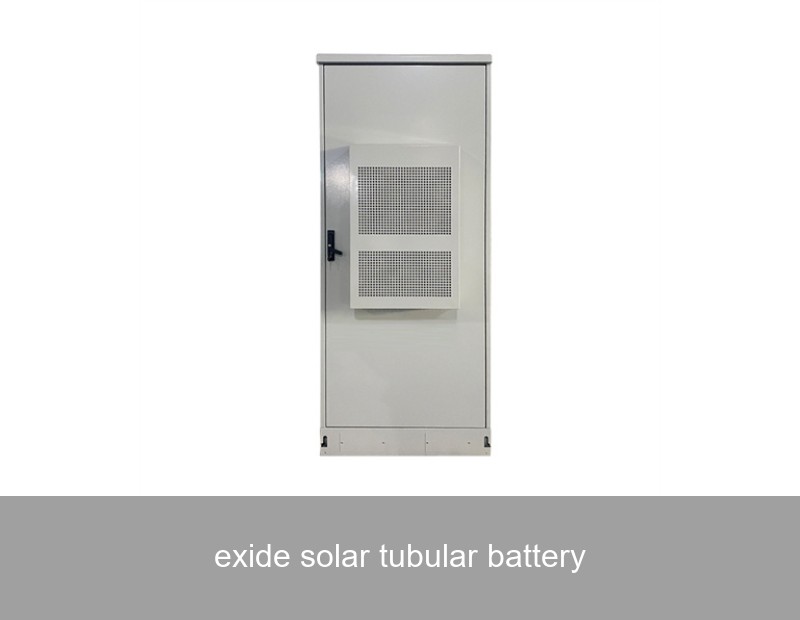
Have you ever wondered what makes a solar power system truly dependable when the sun isn't shining? For homeowners and businesses across Europe and the US investing in energy independence, the choice of battery is often the deciding factor between a system that's merely good and one that's truly resilient. A name that frequently comes up in these conversations, especially for robust off-grid and hybrid setups, is the Exide solar tubular battery. Renowned for their deep-cycle durability, these batteries have been a trusted component in renewable energy systems for years. But as technology advances, the entire landscape of energy storage is transforming. Today, it's not just about a single battery type; it's about intelligent, integrated systems that maximize efficiency, lifespan, and return on investment. This is where understanding the role of traditional workhorses like tubular batteries within a modern, smart energy ecosystem becomes crucial.
Table of Contents
- What Are Tubular Batteries and Why Are They Used in Solar?
- The Phenomenon: The Demand for Dependable Deep-Cycle Storage
- The Data & Reality: Tubular Battery Performance vs. Modern Needs
- A Real-World Case: The Off-Grid Dairy Farm in Bavaria
- The Modern Solution: Integrating Robust Batteries with Smart Systems
- The Highjoule Approach: Beyond the Battery to Holistic Storage
- What Does the Future Hold for Solar Energy Storage?
What Are Tubular Batteries and Why Are They Used in Solar?
Let's break it down. An Exide solar tubular battery is a type of lead-acid battery, specifically a flooded or "wet" lead-acid battery. Its key differentiator is in the positive plate design: the active material (lead oxide) is held within vertical polyester tubes, rather than a flat pasted grid. This tubular plate construction is the secret to its strength. It minimizes shedding of the active material, allowing the battery to withstand repeated, deep discharges and subsequent recharges—a process known as "deep cycling" that's fundamental to solar applications where energy is drawn down nightly and replenished daily.
For decades, this design has made tubular batteries a preferred choice for demanding applications like solar home systems, telecom towers, and rural electrification projects, particularly in regions with less stable grids. Their advantages are clear: proven technology, high cycle life compared to other lead-acid types, and generally lower upfront cost per Ah than some advanced alternatives. However, they do require regular maintenance (like topping up with distilled water), have a lower energy density (meaning they take up more space), and their depth of discharge must be carefully managed to achieve the advertised lifespan.
The Phenomenon: The Demand for Dependable Deep-Cycle Storage
The global shift towards renewables is undeniable. In Europe and the US, homeowners and businesses are not just adopting solar panels; they are seeking complete energy security. This is especially true in areas prone to grid outages or for remote properties where connection to the main grid is impractical or prohibitively expensive. Here, the solar-plus-storage system becomes the primary power source. The core demand is no longer just for any storage, but for storage that is provenly reliable over many years of daily use. This is the environment where products like the Exide solar tubular battery built its reputation—as a dependable, deep-cycle workhorse.

Image Source: Unsplash - Representative image of battery bank maintenance
The Data & Reality: Tubular Battery Performance vs. Modern Needs
To make an informed decision, we must look at the numbers. A typical high-quality Exide solar tubular battery might offer a cycle life of 1500+ cycles at 50% Depth of Discharge (DoD) and require maintenance every 3-6 months. Its round-trip efficiency (the energy you get out vs. the energy you put in) typically ranges from 75% to 85%. These are solid figures for its class.
However, let's contrast this with the evolving expectations of a modern commercial or residential energy user:
| Feature | Traditional Tubular Lead-Acid | Modern Li-ion / Smart ESS |
|---|---|---|
| Energy Density | Lower (bulkier) | High (compact) |
| Maintenance | Regular watering & cleaning required | Virtually maintenance-free |
| DoD for Rated Life | Often limited to ~50% | Can be 80-90%+ routinely |
| Round-Trip Efficiency | ~75-85% | ~90-95% |
| System Intelligence | Basic or external | Integrated, adaptive, software-driven |
As you can see, while tubular batteries excel in certain rugged applications, the market is increasingly valuing compactness, set-and-forget operation, and higher usable energy capacity—areas where Lithium-ion (Li-ion) based systems have advanced significantly. According to a U.S. Department of Energy report, the cost of lithium-ion batteries has fallen by nearly 90% over the past decade, making advanced storage more accessible than ever.
A Real-World Case: The Off-Grid Dairy Farm in Bavaria
Consider a real example: a medium-sized dairy farm in Bavaria, Germany, decided to go fully off-grid in 2018. Their initial setup included a 50 kWp solar array and a large bank of 80 tubular lead-acid batteries (48V system) with a nominal capacity of 80 kWh. The system worked, but the farm manager noted significant challenges: the battery room required constant ventilation due to off-gassing, monthly specific gravity checks and watering were labor-intensive, and to preserve battery life, they could only safely use about 40 kWh of the stored energy. After 4 years, the batteries were nearing end-of-life, requiring a complex and costly replacement.
In 2022, for their retrofit, they evaluated a modern alternative. They chose a solution that integrated a new solar array with a Highjoule HI-Cube 48V commercial energy storage system. This Li-ion based system provided 82 kWh of usable capacity in a single, compact, outdoor-rated enclosure. The built-in Battery Management System (BMS) and cloud-connected monitoring eliminated manual maintenance. Crucially, the system's high efficiency (96%) meant more of their harvested solar power was available for use, reducing their backup generator runtime by over 70%. The farm now operates with greater predictability and far lower operational overhead.
The Modern Solution: Integrating Robust Batteries with Smart Systems
So, does this mean tubular batteries are obsolete? Not at all. It means they are a component whose application is now more specific. The modern solution is about system intelligence. Whether the storage medium is advanced lead-acid or lithium-ion, the true value is unlocked by smart energy management. This involves:
- Advanced Battery Management Systems (BMS): Continuously monitoring cell voltage, temperature, and state of charge to optimize performance and safety.
- AI-Driven Energy Predictors: Using weather forecasts and usage patterns to schedule charging and discharging for maximum self-consumption and cost savings.
- Seamless Grid Interaction: For hybrid systems, intelligently deciding when to draw from the grid, feed into it, or island completely during an outage.
This layered intelligence can even extend the life and performance of robust battery chemistries like tubular plates, by ensuring they are never over-discharged or improperly charged. The question evolves from "Which battery should I buy?" to "Which intelligent energy ecosystem will deliver the highest reliability and return for my specific needs?"
The Highjoule Approach: Beyond the Battery to Holistic Storage
At Highjoule, with nearly two decades of experience since 2005, we've witnessed this evolution firsthand. We understand that every project has unique constraints—whether it's budget, space, load profile, or reliability requirements. While we specialize in cutting-edge lithium-ion based solutions like our HI-Power series for residential applications and scalable HI-Grid solutions for commercial & industrial use, our core expertise lies in designing the right system.
For instance, in a large-scale microgrid project for a remote community where initial capital cost is the primary driver and maintenance crews are present, a correctly sized and intelligently managed flooded lead-acid system might be the most appropriate technical solution. Our role is to provide the master control, power conversion, and system design that ensures optimal performance, regardless of the underlying storage chemistry. Conversely, for a suburban home in California or a small factory in Italy seeking hands-off operation, peak shaving, and V2G readiness, our integrated Li-ion systems are the clear choice. You can explore the technical pathways for different storage types in resources like this journal article on energy storage tech.

Image Source: Unsplash - Modern home solar and storage installation
What Does the Future Hold for Solar Energy Storage?
The landscape is dynamic. While lithium-ion currently dominates new installations in Europe and the US, research into next-generation chemistries like solid-state, flow batteries, and even improved lead-acid formulations continues. The constant, however, is the move towards smarter, more software-defined energy storage that acts as the brain of your power system.
So, whether you're currently maintaining a bank of Exide solar tubular batteries and planning an upgrade, or designing a new system from scratch, the critical step is to look at the total cost of ownership over 10-15 years, not just the upfront price tag. Consider the value of your time for maintenance, the real usable energy, and the intelligence to adapt to changing tariffs and needs.
What specific energy challenge—be it unpredictable outages, rising energy costs, or a sustainability goal—is driving you to evaluate your storage options today, and how can a system designed not just with components, but with intelligence, address it?
 Inquiry
 Online Chat