


What is the Price of Solar Panels in South Africa? A 2024 Guide for Savvy Energy Users
If you're in South Africa, looking at your rising electricity bill and the increasing load-shedding schedules, one question inevitably comes to mind: what is the price of solar panels in South Africa? It's a crucial starting point, but the answer is more nuanced than a simple Rand-per-watt figure. The real story is about understanding the value of energy independence and how the right technology transforms that upfront cost into long-term savings and resilience. As a global leader in advanced energy storage, Highjoule sees this question not just as a matter of price tags, but as the first step in a strategic energy investment.
Table of Contents
The Price Breakdown: Beyond the Panel Itself
Asking for the price of a solar panel is like asking for the price of a car engine—it's essential, but you need the whole system to get anywhere. A functional solar power system for a home or business consists of several key components, each contributing to the total cost.
| System Component | Approximate Cost Share | Purpose & Importance |
|---|---|---|
| Solar Panels (PV Modules) | 25-35% | Converts sunlight into direct current (DC) electricity. Efficiency and durability vary. |
| Inverter(s) | 20-25% | The "brain" of the system. Converts DC power to usable AC power for your appliances. |
| Battery Storage System | 30-40% | Critical for load-shedding backup and maximizing self-use. Stores excess solar energy for use at night or during outages. |
| Balance of System (Mounting, Cabling, Protection) | 10-15% | Installation hardware, electrical components, and safety apparatus. |
As of mid-2024, for a typical residential system without battery storage, you could be looking at a range of R80,000 to R150,000 for a 5kW system, depending on component quality and installation complexity. However, a system with battery storage—which is now considered essential for true energy security in South Africa—typically starts from R150,000 and can go up to R350,000+ for larger, more sophisticated setups. The price per watt for panels alone has decreased globally, but the strategic value of a complete, resilient system has increased dramatically.
Key Factors Influencing Your Solar Panel Cost
Why such a wide range? Several factors directly impact the final quote you'll receive:
- System Size & Energy Needs: A detailed analysis of your consumption patterns is the first step. Oversizing wastes capital; undersizing leaves you reliant on the grid.
- Panel Quality & Efficiency: Higher-efficiency monocrystalline panels cost more but produce more power in limited roof space.
- Inverter Type: String inverters are cost-effective for simple roofs, while microinverters optimize performance for shaded areas but at a higher cost.
- The Storage Solution: This is the largest variable. The choice between basic lead-acid and advanced lithium-ion (like LiFePO4) batteries affects cost, lifespan, and performance. Intelligent battery management systems, like those in Highjoule products, add significant value by optimizing cycle life and efficiency.
- Installation Company: Expertise matters. Certified, experienced installers ensure system safety, performance, and compliance with local regulations (like NRS 097-2-1 for grid-tied systems).

Professional installation is key for long-term performance. (Image Source: Unsplash)
From Cost to Value: A South African Case Study
Let's move from abstract prices to real-world value. Consider a mid-sized manufacturing workshop in Gauteng, facing 4-6 hours of load-shedding daily. Their monthly electricity bill was averaging R85,000, with production halts costing an additional R50,000+ in lost revenue.
In 2023, they invested in a 100kW solar PV system coupled with a 240kWh Highjoule Industrial Energy Storage System (IESS). The total project cost was significant. However, let's look at the data one year later:
- Grid Electricity Purchases: Reduced by 82%.
- Load-Shedding Impact: Eliminated. The Highjoule system provides seamless backup, maintaining critical operations.
- Payback Period: Calculated at under 5 years due to high Eskom tariffs and avoided loss of production.
- ROI: The system now delivers "negative cost" energy, effectively printing money for the business by locking in low solar energy costs for the next 15+ years.
This case illustrates that the relevant metric isn't just "price of solar panels," but Total Cost of Ownership (TCO) and Return on Energy Investment (ROEI).
The Critical Role of Intelligent Storage
Without storage, your solar panels shut off during load-shedding (for safety), and any excess energy you produce during the day is fed back to the grid at a low feed-in tariff, if available. Storage is what unlocks true independence. But not all storage is created equal. The market offers everything from basic battery packs to integrated smart systems. Advanced systems, such as those developed by Highjoule, feature:
- LiFePO4 Chemistry: Safer, longer-lasting (6,000+ cycles), and better suited to the daily charge/discharge cycles of solar backup.
- Advanced Battery Management Systems (BMS): Continuously monitors cell health, ensuring safety and maximizing battery lifespan.
- Smart Energy Management Software: This is the game-changer. It learns your consumption patterns, predicts solar production, and intelligently decides when to charge from solar, when to discharge, and when to potentially draw from the grid during off-peak times to optimize costs.
The Highjoule Solution: Smart Storage for Maximum ROI
At Highjoule, with nearly two decades of experience powering commercial, industrial, and residential projects worldwide, we've seen the evolution from simple solar to smart energy ecosystems. Our answer to the complex price-value equation in South Africa is not just a battery, but an intelligent energy platform.
Our H-Series Residential Storage and IESS Commercial Systems are designed to be the core of your solar investment. They integrate seamlessly with major inverter brands and are built with our proprietary Adaptive Storage Management technology. This means your system doesn't just store energy—it actively manages it to reduce your payback period. For a homeowner, this might mean automatically using stored power during peak tariff periods (like 18:00-20:00). For a business, it can mean peak shaving to avoid costly demand charges from the utility.

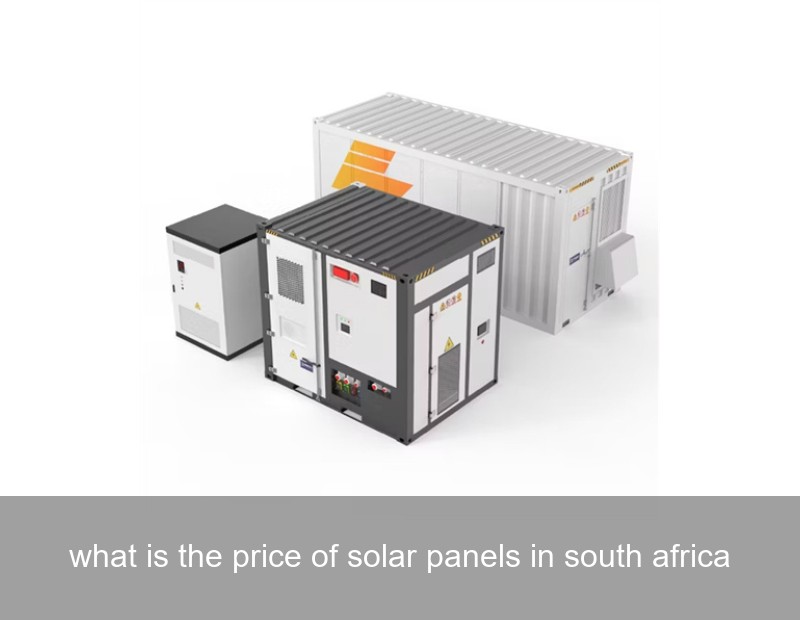
Advanced battery storage systems form the heart of a resilient energy setup. (Image Source: Unsplash)
By focusing on system-level intelligence and durability, Highjoule ensures that the significant investment in solar panels and storage delivers its promised financial and operational returns for decades. We provide more than hardware; we provide a long-term partnership for energy resilience.
Your Next Step Towards Energy Independence
So, while the price of solar panels in South Africa is a foundational piece of data, the conversation you need to have is broader. It's about designing a system that matches your specific load profile, risk tolerance during outages, and financial goals. The most expensive system is the one that doesn't meet your needs or fails prematurely.
We encourage you to shift the question from "What does it cost?" to "What is it worth to have predictable energy costs and uninterrupted power for my home or business for the next 20 years?"
What specific energy challenge—be it a particular load-shedding stage, a high-time-of-use bill, or a critical process that cannot fail—would you want a tailored solar-plus-storage solution to solve first?
 Inquiry
 Online Chat