


The External Solar Battery Charger: Your Key to Uninterrupted, Sustainable Power
you're on a weekend camping trip, miles from the grid, or perhaps a storm has knocked out power in your neighborhood. Your phone, your lights, your essential devices are running out of juice. This common modern anxiety is precisely where the external solar battery charger shines—not just as a gadget, but as a cornerstone of personal and residential energy resilience. More than a portable accessory, it represents a scalable idea: harnessing the sun to charge a dedicated battery bank, which then powers your life. For homeowners and businesses alike, this concept is evolving into sophisticated solar-plus-storage systems that ensure clean, reliable, and independent power. As a leader in this field, Highjoule has been at the forefront, transforming this simple concept into intelligent, integrated energy solutions since 2005.
Table of Contents
- What Exactly is an External Solar Battery Charger?
- The Growing Need: Beyond Grid Uncertainty
- The Numbers: Why Solar Charging is Now Unavoidable
- Real-World Application: A Case Study from California
- Highjoule's Integrated Approach: From Portable to Whole-Home Power
- How to Choose the Right System for Your Needs
- The Future is Decentralized and Smart
What Exactly is an External Solar Battery Charger?
At its core, an external solar battery charger is a system comprising two main components: photovoltaic (PV) panels that capture sunlight, and a separate, standalone battery unit that stores that energy for later use. Unlike a solar panel directly plugged into a device, this setup decouples generation from consumption. The solar panels work during the day to fill the battery "bank," and you then draw power from that bank whenever you need it—day or night, sunny or cloudy.
This simple principle scales remarkably. While a small version can charge a phone, a larger system can power a refrigerator, medical equipment, or an entire household. The true magic happens when this system is integrated with intelligent energy management, which is where companies like Highjoule specialize, moving beyond simple charging to creating autonomous energy ecosystems.

Image Source: Unsplash - Illustrating the core concept of an external solar charging setup.
The Growing Need: Beyond Grid Uncertainty
The phenomenon is clear across our target markets. In Europe and the United States, homeowners and businesses are facing a dual challenge: the desire to reduce carbon footprints and the increasing frequency of grid instability. From rolling blackouts in California due to wildfire prevention to volatile energy prices in Europe exacerbated by geopolitical tensions, reliance on a centralized grid is becoming a tangible risk.
The external solar battery charger model addresses this directly. It's no longer just for the eco-conscious off-gridder; it's for the suburban family wanting to keep the lights on during an outage, or the small business aiming to lock in energy costs. The question has shifted from "Why would I need one?" to "How can I afford not to have a backup plan?"
The Numbers: Why Solar Charging is Now Unavoidable
Let's look at the data. The U.S. Energy Information Administration (EIA) reports that the average U.S. customer experienced just over 8 hours of power interruptions in 2020, with major events driving the number even higher. Economically, the case strengthens when you consider the levelized cost of solar PV, which has fallen by nearly 90% over the past decade. Pair this with rising retail electricity rates, and the payback period for a solar-plus-storage system is shorter than ever.
For the environmentally minded, the math is just as compelling. A robust external battery system charged by solar can offset a significant portion of a household's carbon emissions. When you scale this to commercial or microgrid applications, the impact on sustainability goals is substantial.
Real-World Application: A Case Study from California
Let's ground this in a real example. A small winery in Sonoma County, California, faced annual threats from Public Safety Power Shutoffs (PSPS), where utilities preemptively cut power to prevent wildfires. A day without power during fermentation could ruin an entire batch, representing tens of thousands of dollars in losses.
Their Solution: They installed a 50kW solar array paired not with a simple external battery bank, but with a commercial-grade, integrated battery energy storage system (BESS). This system was designed to provide critical backup for 48+ hours and perform daily "energy arbitrage"—storing cheap solar energy and using it during peak, expensive rate periods.
The Results:
- Zero Production Losses: Successfully rode through multiple grid outages.
- Cost Savings: Reduced their monthly energy bill by approximately 40% through peak shaving.
- Sustainability: Increased their on-site renewable consumption to over 85%.
This case perfectly illustrates the evolution from the basic concept of an external solar battery charger to a strategic, business-critical energy asset. This is the level of sophistication Highjoule brings to its commercial and industrial clients.
Highjoule's Integrated Approach: From Portable to Whole-Home Power
At Highjoule, we understand that the principle of the external solar battery charger is the seed of a much larger solution. Our expertise lies in building upon this foundation to create seamless, intelligent, and scalable power systems.
For residential customers, our HomeHub ESS (Energy Storage System) is the ultimate expression of this idea. It's not just a battery; it's the brain of your home energy network. Compatible with both new and existing solar panel installations, the HomeHub intelligently decides when to store solar energy, when to power your home, and when to send excess back to the grid—all optimized for your comfort, savings, and resilience.
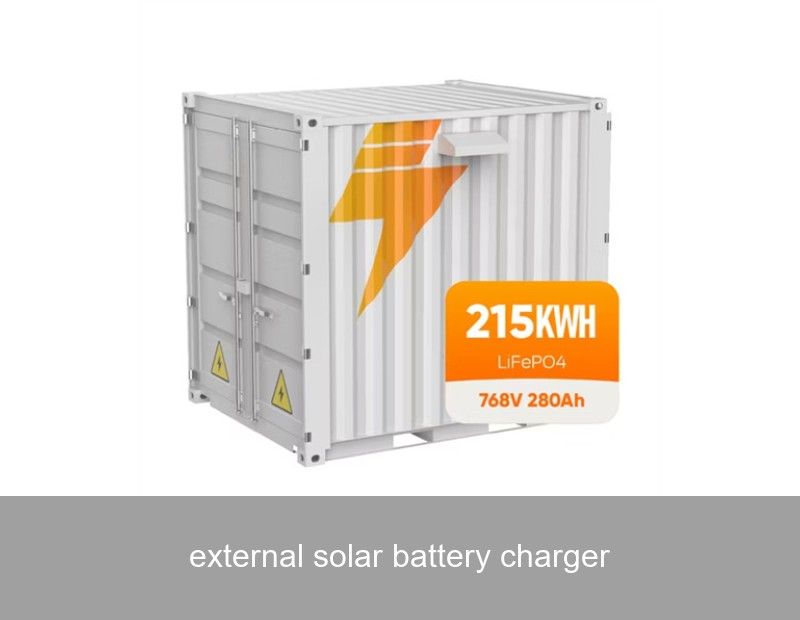
For commercial, industrial, and microgrid applications, Highjoule's GridMax BESS solutions take this further. These modular, containerized or skid-mounted systems provide large-scale energy shifting, demand charge reduction, and black-start capability. They are the industrial-grade answer to the "external charger," ensuring operations continue smoothly and sustainably, regardless of grid conditions.

Image Source: Unsplash - Representing a commercial-scale battery storage system.
How to Choose the Right System for Your Needs
Selecting the right system is more than just buying a solar panel and a battery. Here are key considerations:
| Consideration | Portable/Gadget | Residential ESS (e.g., Highjoule HomeHub) | Commercial BESS (e.g., Highjoule GridMax) |
|---|---|---|---|
| Primary Use | Camping, phone charging, emergencies | Whole-home backup, bill savings, self-consumption | Business continuity, demand charge management, microgrids |
| Capacity | 0.1 - 1 kWh | 5 - 30+ kWh | 100 kWh - 10+ MWh |
| Integration | Standalone | Integrated with home solar & grid | Integrated with commercial PV, grid, and generators |
| Intelligence | Basic | Advanced AI for energy optimization | Grid-interactive, programmable for complex tariffs |
The most critical step is a professional energy assessment. Highjoule's experts begin by analyzing your historical energy usage, local weather patterns, and utility rate structure to design a system that delivers maximum return on investment and peace of mind.
The Future is Decentralized and Smart
The trajectory is unmistakable. The future of energy is not just renewable; it is decentralized, digitized, and democratized. The humble external solar battery charger is a symbol of this shift—putting the power of generation and storage literally in the hands of the consumer. As vehicle-to-grid (V2G) technology matures, even your electric car will become part of this dynamic, responsive energy network.
Innovations in battery chemistry, like solid-state batteries, promise even greater safety and energy density. Meanwhile, smart software platforms, like the one that powers all Highjoule systems, will become increasingly adept at predicting energy needs and market prices, making autonomous, cost-optimal decisions for the system owner. You can explore the latest research on next-gen storage via the National Renewable Energy Laboratory.

Image Source: Unsplash - Depicting integrated home energy storage and management.
Ready to Take Control of Your Energy Future?
The journey from worrying about a dead phone battery to achieving true energy independence starts with a single step. Whether you're intrigued by the concept of an external solar battery charger for your adventures or are seriously considering a resilient, money-saving system for your home or business, the technology is here and proven.
What would you power first if you had a personal, sun-filled reservoir of energy at your disposal, and how could that change your relationship with the grid?
 Inquiry
 Online Chat