


The Knox 4kW Hybrid Inverter: Your Gateway to True Energy Independence
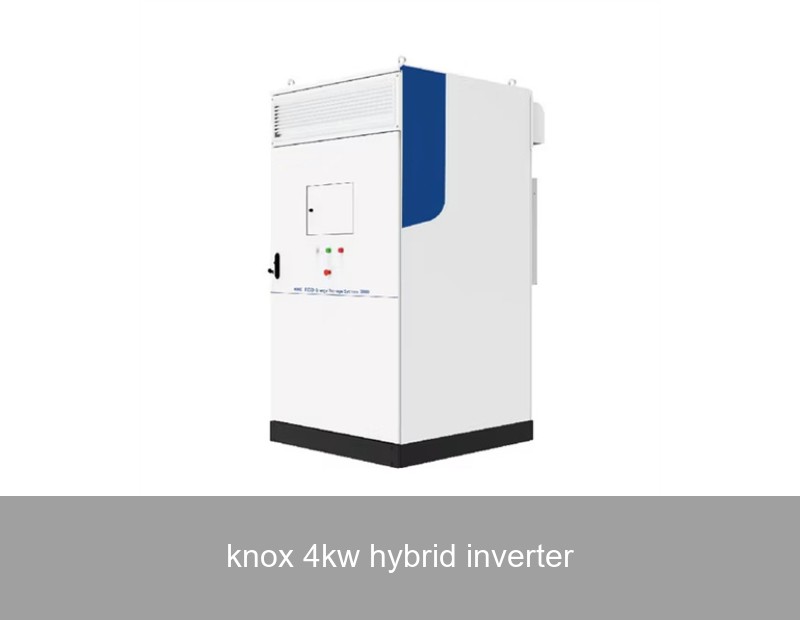
your solar panels are soaking up the midday sun, but you're at work. The excess energy they produce flows back to the grid for a modest feed-in tariff. Later that evening, as you cook dinner and the sun has set, you're drawing expensive power from the utility. This mismatch between solar production and household consumption is the classic challenge for any solar homeowner. But what if your system could intelligently store that daytime surplus for your own use at night? This isn't a future concept—it's the reality enabled by a hybrid inverter, and devices like the Knox 4kW hybrid inverter are making it more accessible and efficient than ever.
For homeowners in Europe and the US, rising electricity costs and a growing desire for sustainability are driving a massive shift. According to the International Energy Agency (IEA), global renewable capacity additions soared by almost 50% in 2023, with solar PV accounting for three-quarters of this growth. However, to maximize the value of these rooftop installations, energy storage is no longer a luxury—it's a necessity. This is where hybrid inverters come in, acting as the intelligent brain of a solar-plus-storage system, managing energy flow between panels, batteries, the home, and the grid.
The Knox 4kW Hybrid Inverter: A Deep Dive into Its Capabilities
So, what makes a specific model like the Knox 4kW hybrid inverter stand out in a crowded market? Let's break down its key features and how they translate into real benefits for your home.
Intelligent Energy Management at Its Core
The primary job of the Knox 4kW inverter is to convert the direct current (DC) from your solar panels into the alternating current (AC) that powers your home. But its "hybrid" nature means it has a second, equally important DC connection for a battery. This integrated design is more efficient and compact than using separate solar and battery inverters.
- Seamless Mode Switching: It automatically operates in different modes—solar-only, battery charging/discharging, grid backup—without you ever noticing a switch.
- Maximized Self-Consumption: Its algorithms prioritize using your solar generation to power your home first, then charge your battery, and only then export to the grid.
- Backup Power Ready: In the event of a grid outage, many hybrid inverters, including advanced models, can isolate your home from the grid (forming a "microgrid") and continue to power critical loads from the solar and battery.

Image Source: Unsplash. A modern hybrid energy system like those enabled by Highjoule solutions.
Why Highjoule Trusts and Enhances Advanced Hybrid Technology
At Highjoule, with nearly two decades of experience since 2005, we don't just supply components; we provide integrated, intelligent power solutions. While we offer a range of cutting-edge inverters with capabilities similar to the Knox 4kW hybrid inverter, our value lies in the complete ecosystem. Our systems are designed for commercial, industrial, residential, and microgrid applications, focusing on longevity, safety, and system-level intelligence.
For the residential market, our approach involves pairing robust hybrid inverter technology with our high-cycle life, lithium iron phosphate (LiFePO4) battery systems. This chemistry is renowned for its safety and longevity, often exceeding 6,000 cycles. Furthermore, our proprietary energy management software provides homeowners with intuitive monitoring and control, allowing them to set preferences, track savings, and even respond to grid signals in regions with smart tariff structures.
Real-World Impact: A Case Study from a German Household
Data sheets are one thing, but let's look at how this technology performs in a real home. Consider the Müller family in Bavaria, Germany. They installed a 4.8kW solar array coupled with a 4kW hybrid inverter and a 10kWh battery system (similar in scale to a Knox 4kW-based setup) in early 2023.
| Metric | Before Installation (Grid Reliant) | After 12 Months with Hybrid System |
|---|---|---|
| Grid Electricity Purchased | 4,200 kWh/year | 580 kWh/year |
| Self-Consumption of Solar | ~30% (with solar only) | ~85% (with solar + battery) |
| Annual Electricity Bill | €1,680 (at €0.40/kWh) | €232 |
| System Autonomy (Hours/Year off-grid) | 0 | Nearly 100% of nighttime & low-sun hours |
The data speaks volumes. The family's grid dependence dropped by over 85%, transforming their energy bill. Their energy independence skyrocketed, and they now use the vast majority of the clean power they produce. As noted by the Fraunhofer Institute for Solar Energy Systems, increasing self-consumption is the key economic driver for new PV installations in Germany, a trend mirrored across Europe and the US.
Choosing the Right System: Beyond the Inverter
While the hybrid inverter is the command center, its performance is dependent on the entire system. Here’s what to consider for a future-proof installation:
- Battery Compatibility & Chemistry: Ensure the inverter seamlessly communicates with your chosen battery. Highjoule systems use LiFePO4 chemistry for its superior thermal stability and cycle life.
- Scalability: Can you add more battery capacity later if your needs change (e.g., with an electric vehicle)? A modular design is crucial.
- Grid Services & Software: Advanced systems can participate in virtual power plants or optimize for time-of-use rates. The software platform is your window into system health and performance.
- Professional Installation & Support: This is not a DIY project. Partnering with an expert provider like Highjoule ensures proper design, safe installation, commissioning, and long-term warranty support.

Image Source: Unsplash. Monitoring your hybrid system's performance is key to maximizing savings.
The Future of Home Energy is Hybrid and Intelligent
The evolution from simple grid-tied solar to integrated hybrid systems marks a fundamental shift. We're moving from just generating electricity to actively managing a personal energy asset. The technology exemplified by the Knox 4kW hybrid inverter and the comprehensive solutions built by companies like Highjoule puts unprecedented control in the hands of consumers. It enhances resilience against outages, insulates against rising energy costs, and contributes directly to grid stability by flattening demand peaks.
As you contemplate your home's energy future, what role do you see it playing—not just as a consumer, but as a proactive manager of your own clean power production and storage?
 Inquiry
 Online Chat