


Lithium Battery Fabrication: The Engine Powering Our Clean Energy Future
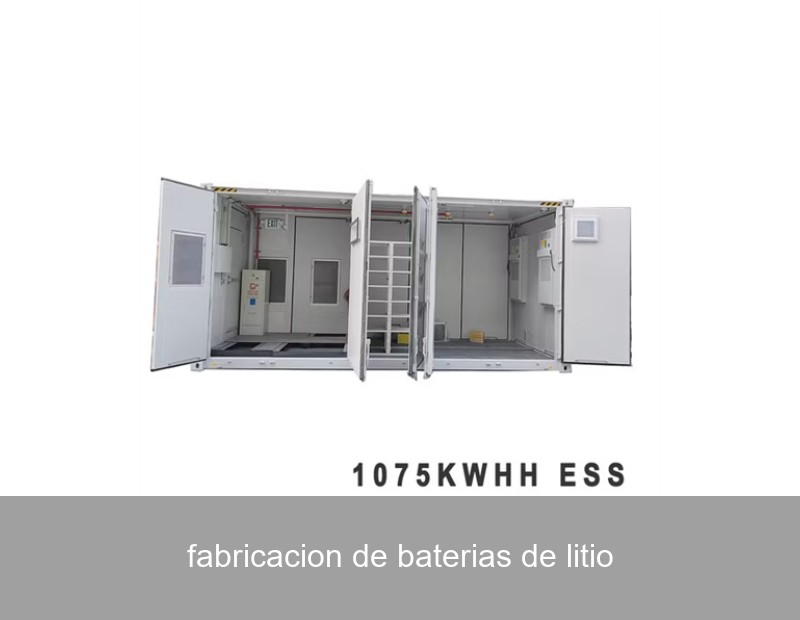
You've likely heard about the global push towards renewable energy and electric vehicles. But have you ever stopped to wonder what's at the very heart of this monumental shift? The answer lies in the sophisticated process of lithium battery fabrication. This isn't just about assembling parts; it's the precise, high-tech engineering that transforms raw materials into the powerful, efficient, and safe energy storage units enabling solar homes, resilient businesses, and cleaner transportation. As demand soars, understanding how these batteries are made—and by whom—becomes crucial for anyone investing in a sustainable energy solution.
Table of Contents
- The Core of the Matter: Why Lithium Battery Fabrication is Critical
- Inside the Process: Key Stages of Modern Battery Fabrication
- The Quality vs. Cost Dilemma in Manufacturing
- Case Study: How Superior Fabrication Powers a German Industrial Park
- Highjoule's Approach: Intelligent Design from Cell to System
- Future Horizons: Sustainability and Innovation in Fabrication
The Core of the Matter: Why Lithium Battery Fabrication is Critical
Think of a lithium-ion battery as a sophisticated energy ecosystem. Its performance, lifespan, and safety aren't accidental; they are meticulously engineered during fabrication. A poorly made battery can lead to reduced energy capacity, faster degradation, and in extreme cases, safety hazards. For a homeowner with solar panels, this means a battery that might not store enough sun for the evening. For a factory, it could mean an unreliable backup during a grid outage, leading to costly downtime.
The fabrication process directly dictates key metrics:
- Energy Density: How much power can be stored in a given space.
- Cycle Life: The number of charge/discharge cycles before significant capacity loss.
- Thermal Stability: The battery's ability to operate safely under stress or high temperatures.
- Efficiency: How much energy put in is actually available for use.
At Highjoule, we've seen that cutting corners in fabrication is a false economy. Since 2005, we've built our reputation on sourcing and integrating battery cells from fabricators who prioritize these metrics, ensuring our commercial and industrial energy storage systems deliver predictable, long-term value.
Inside the Process: Key Stages of Modern Battery Fabrication
Lithium battery fabrication is a multi-stage marvel of chemical and mechanical engineering. Here’s a simplified breakdown of the journey from powder to power.
| Stage | Process | Impact on Final Product |
|---|---|---|
| 1. Electrode Manufacturing | Active materials (like Lithium Iron Phosphate or NMC) are coated onto metal foils (copper for anode, aluminum for cathode) and dried. | Determines the fundamental energy capacity and power capability of the cell. |
| 2. Cell Assembly | Electrode sheets are separated by a thin membrane, wound or stacked, and placed in a casing (cylindrical, prismatic, or pouch). | Affects the physical robustness, energy density, and thermal management of the cell. |
| 3. Filling & Sealing | The cell is filled with a precise amount of liquid electrolyte and hermetically sealed in a dry room. | Critical for ion conductivity and long-term cycle life. Any moisture ruins the cell. |
| 4. Formation & Aging | The cell is charged and discharged for the first time, activating the materials. It then rests for stabilization. | Perhaps the most crucial quality step. It screens for infant failures and establishes stable performance. |
Each step requires pristine environments (dry rooms can have <1% humidity), nanometer-level precision in coating, and rigorous quality control. As the U.S. Department of Energy notes, advancing these manufacturing techniques is key to reducing costs and improving reliability (source: DOE Vehicle Technologies Office).

Image: Precision and automation are hallmarks of advanced lithium battery fabrication. (Photo by Unsplash)
The Quality vs. Cost Dilemma in Manufacturing
The market is flooded with batteries at wildly different price points. Often, the difference lies in fabrication choices. Using lower-grade raw materials, shortening the critical formation and aging process, or relaxing quality control standards can lower upfront cost but at a severe long-term penalty.
For example, a battery with inadequate formation may seem fine initially but could lose 20-30% of its capacity within the first year, negating any initial savings. This is why Highjoule partners with tier-one fabricators and subjects incoming cells to our own stringent validation tests. We build this quality into our residential storage solutions, like the Helios Home Battery, ensuring homeowners get every kilowatt-hour they paid for over a 15+ year lifespan.
Case Study: How Superior Fabrication Powers a German Industrial Park
Let's look at a real-world example from Bavaria, Germany. A mid-sized manufacturing park with rooftop solar faced a dual challenge: maximizing self-consumption of their solar energy and providing fail-safe backup power for sensitive CNC machinery.
They initially opted for a low-cost storage system using generically sourced battery cells. Within 18 months, they observed:
- A 22% decline in usable storage capacity.
- Increased system downtime due to unbalanced modules.
- Failure to meet backup runtime guarantees during a grid test.
The park then partnered with Highjoule to deploy a customized Industrial PowerPack solution. Our system uses automotive-grade, prismatic LFP (Lithium Iron Phosphate) cells known for their long cycle life and stable chemistry. The key was the cell fabricator's rigorous formation process and Highjoule's proprietary Battery Management System (BMS), which precisely monitors and manages each cell.
- Capacity Retention: >98% of original capacity.
- Solar Self-Consumption: Increased from 35% to 78%.
- Reliability: Zero downtime due to the storage system, including through multiple grid outages.
- ROI: Projected payback period reduced to under 7 years thanks to durability.
This case underscores that in energy storage, the true cost isn't the purchase price—it's the cost per reliable cycle over the system's lifetime. Quality fabrication makes all the difference.
Highjoule's Approach: Intelligent Design from Cell to System
At Highjoule, our expertise goes beyond simply buying good cells. We act as the "central nervous system" for the battery. We understand that even the best-fabricated cells need intelligent management to thrive in the real world. This is our core value proposition.
Our Sentinel AI BMS is a masterpiece of system-level engineering. It doesn't just read voltages; it uses adaptive algorithms to:
- Balance cell voltages with minimal energy loss, extending pack life.
- Predict performance degradation based on usage patterns and temperature history.
- Optimize charge/discharge rates in real-time to prevent stress.

Image: Highjoule's systems integrate superior cells with intelligent management for seamless operation. (Photo by Unsplash)
For microgrid applications, this intelligence is paramount. Our systems can seamlessly island from the grid, prioritize critical loads, and integrate diverse generation sources—all relying on the dependable power foundation provided by expertly fabricated batteries. You can explore our integrated approach for microgrid solutions here.
Future Horizons: Sustainability and Innovation in Fabrication
The future of lithium battery fabrication isn't just about performance; it's about responsibility. The industry is actively tackling challenges like reducing cobalt content, improving energy efficiency of manufacturing plants, and establishing robust recycling loops. The European Union's new battery regulations are a major driver, demanding transparency on carbon footprint and recycled content (source: European Commission).
Innovations like solid-state batteries promise even greater energy density and safety, but they will require a complete re-imagining of fabrication lines. At Highjoule, we are committed to this evolution. We actively seek partners who are innovating in sustainable material sourcing and cell design, ensuring our product roadmap leads to not only smarter but also greener energy storage.
Your Next Step
Whether you're a homeowner looking to maximize solar independence, a business manager aiming to cut energy costs and ensure resilience, or a community planner designing a microgrid, the foundation of your success rests on the quality of the battery at the heart of your system.
As you evaluate your options, what specific questions will you ask your provider about the origin, fabrication standards, and long-term management of the batteries they use?
 Inquiry
 Online Chat