


Flashfish Portable Power Station: Your Ultimate Guide to Portable Power
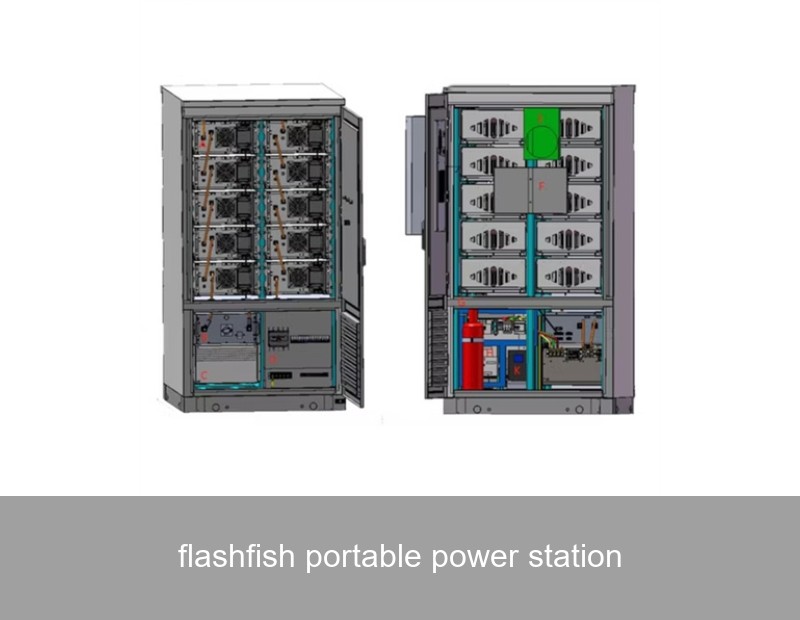
Have you ever been on a camping trip when your phone died just as you were about to capture that perfect sunset? Or perhaps you've worked at a remote site where a reliable outlet was just a dream? This modern frustration of needing power where the grid doesn't reach is more common than you think. Enter the Flashfish portable power station – a category of compact, battery-powered generators that are revolutionizing how we access electricity on the go. But with so many options, how do you choose the right one, and what should you know about the technology inside? As a leader in advanced energy storage, Highjoule is here to illuminate the world of portable power. While our core expertise lies in large-scale commercial and residential battery storage systems, the principles of safe, efficient, and intelligent energy management apply equally to the portable devices you might take on your next adventure.
Table of Contents
What is a Flashfish Portable Power Station?
Let's clear up the name first. "Flashfish" is a popular brand name in the portable power station market, often synonymous with affordable, entry-level units. In a broader sense, when people search for a Flashfish portable power station, they're looking for a portable power station, period. Unlike noisy gas generators, these are silent, fume-free units that store electricity in a built-in lithium-ion or LiFePO4 battery. You charge them at home (from a wall outlet, car, or ideally, solar panels), and then they provide clean AC (household-style) and DC (USB, car-socket) power wherever you need it.
Think of it as a giant, sophisticated power bank for your entire life, not just your phone. The core components are:
- Battery: The heart of the unit, measured in watt-hours (Wh). This is its fuel tank.
- Inverter: Converts the battery's DC power to AC power for your laptops and appliances.
- Charge Controller: Manages incoming power from solar panels or wall outlets to safely charge the battery.
- Output Ports: The variety of outlets (AC, USB-A, USB-C, 12V carport) that let you plug in your gear.

Image Source: Unsplash - Portable power enables connectivity anywhere.
How to Choose the Right Portable Power Station
Faced with dozens of models boasting different numbers, choosing can be overwhelming. Follow this simple logic ladder:
Phenomenon: "I need power for my weekend camping trip and my home during a short outage."
Data & Calculation: The key is to calculate your total watt-hour needs. First, list the devices you'll power and their wattage (find this on the label). Then, use this formula: Device Wattage × Hours of Use = Watt-Hours Needed.
| Device | Wattage (approx.) | Hours of Use | Watt-Hours Required |
|---|---|---|---|
| LED Camping Light | 10W | 5 hours | 50 Wh |
| Smartphone Charger | 10W | 3 hours | 30 Wh |
| Mini Fridge (cooling) | 50W | 12 hours | 600 Wh |
| Laptop | 60W | 4 hours | 240 Wh |
| TOTAL | ~920 Wh |
For this scenario (~920 Wh), you'd need a station rated at least 1000Wh to have a comfortable buffer. Always choose a unit with a capacity 20% higher than your calculated need.
Insight: Don't just buy the biggest capacity. Consider weight (if portable), recharge options (solar compatibility is a game-changer), and output wave type. A pure sine wave inverter is safer for sensitive electronics like medical devices or premium audio gear. For more on battery fundamentals, the U.S. Department of Energy provides an excellent resource.
Essential Safety and Maintenance Tips
Portable power stations are generally very safe, but they are sophisticated electro-chemical devices. Here’s how to ensure longevity and safety:
- Temperature Matters: Never charge or use your station in extreme heat (above 104°F/40°C) or cold (below 32°F/0°C). It can damage the battery cells.
- Storage Charge: If storing for months, charge it to about 50-60%. Storing fully charged or fully depleted stresses the battery.
- Know Your Limits: Respect the unit's maximum load (in watts). Plugging in a device that exceeds it will cause the station to shut off.
- Use Official Cables: Use the provided charging cable or a high-quality replacement. Cheap cables can overheat and pose a fire risk.
These best practices mirror the core engineering principles we apply at Highjoule for our industrial-scale Battery Energy Storage Systems (BESS) – thermal management, state-of-charge optimization, and rigorous safety protocols are paramount at any scale.
A Real-World Case Study: Powering a Small Business Off-Grid
Let's move beyond recreation. In 2022, a small, family-owned organic farm in rural Oregon, USA, faced a challenge. Their roadside farm stand, located far from utility lines, needed reliable power for a payment terminal, a small refrigerator for cold-pressed juices, and lighting. Running a gas generator was noisy, expensive, and against their sustainable ethos.
Solution & Data: They deployed two 1500Wh-class portable power stations (similar in capacity to high-end Flashfish portable power station models), paired with 400W of foldable solar panels. The system was simple:
- The stations were rotated – one in use at the stand, one charging via solar at the farmhouse.
- Daily power needs averaged 1,200 Wh.
- The solar panels provided 1,600-2,000 Wh on a sunny day, fully recharging the spare unit.
Result: The farm eliminated $85/month in gas costs and reduced their carbon footprint. The silent operation improved the customer experience, and they reported zero failed transactions due to power loss over the entire summer season. This microgrid example showcases the scalable logic of renewable energy storage – a principle Highjoule leverages for much larger commercial and microgrid applications worldwide.

Image Source: Unsplash - Solar panels are the perfect partner for portable power.
Beyond Portable: The Highjoule Connection to Reliable Energy
While a Flashfish portable power station empowers your weekend, Highjoule's technology empowers your home, business, and community. The same lithium-ion chemistry, but engineered for decades of service, sits inside our Highjoule H-Series residential storage systems. These units integrate seamlessly with home solar, storing excess energy to power your home at night or during grid outages automatically.
For our commercial and industrial clients, Highjoule's containerized BESS solutions provide megawatt-scale power, enabling factories to reduce demand charges, integrate renewable energy, and ensure critical operations never stop. Whether it's a 300Wh portable device or a 300MWh grid-scale project, the mission is identical: to provide intelligent, efficient, and sustainable power where and when it's needed.
So, the next time you use a portable power station, think of it as a tiny window into the future of energy – decentralized, clean, and user-controlled. What would you power if you could take clean, reliable energy anywhere?
 Inquiry
 Online Chat