


Flexible Solar Panels in Kenya: Unlocking Energy Access and Innovation
When you think of solar power in Kenya, you likely envision the vast photovoltaic farms or the classic rigid panels on rooftops. But a quiet revolution is unfolding, powered by a more adaptable technology: flexible solar panels. These lightweight, durable sheets are transforming how Kenyans, from urban Nairobi to remote Maasai communities, capture the abundant sun. Their unique properties are not just an alternative; they are solving fundamental challenges of terrain, infrastructure, and cost, making clean energy more accessible than ever. This article explores the rise of flexible solar in Kenya, the data behind its growth, real-world applications, and how advanced energy storage systems like those from Highjoule are the critical next step in maximizing their potential.
Table of Contents
The Phenomenon: Why Flexibility Matters in Kenya
Kenya's energy landscape is a study in contrasts. While grid connectivity is growing, over 20% of the population, particularly in rural and peri-urban areas, still lacks reliable access. Traditional solar panels, though effective, come with logistical hurdles: they require sturdy mounting structures, are susceptible to damage during transport on rough roads, and aren't suitable for all roof types, such as the curved or corrugated iron sheets common in many areas.
Enter flexible solar panels. Typically made with thin-film photovoltaic materials like CIGS (Copper Indium Gallium Selenide) or advanced mono-crystalline silicon cells on a polymer base, these panels are:
- Lightweight & Portable: Weighing up to 80% less than glass panels, they are easy to transport and handle.
- Durable: Many are waterproof, hail-resistant, and can withstand minor flexing without performance loss.
- Versatile: They can be bonded directly to curved metal roofs, installed on vehicles like safari vans and boats, or deployed as temporary power for events and fieldwork.
This flexibility directly addresses Kenya's geographical and infrastructural realities, opening up solar power to nomadic pastoralists, mobile businesses, and homeowners with non-ideal roofs.

Installation of flexible solar on a curved roof. Source: Unsplash
The Data: Market Growth and Performance
The global market for flexible solar panels is projected for significant growth, and Kenya is a key emerging hotspot. According to the International Energy Agency (IEA), Africa’s solar PV capacity is set to expand dramatically, with decentralized solutions like mini-grids and stand-alone systems leading in remote areas. While specific national data on flexible panel sales is still coalescing, industry reports indicate a compound annual growth rate (CAGR) of over 15% for East Africa's advanced PV segment, heavily driven by off-grid applications.
Performance data is equally compelling. Modern flexible panels now offer efficiencies of 17-22%, a significant leap from earlier models. In Kenya's high-irradiation environment (averaging 4-6 kWh/m²/day), even a 200-watt flexible panel can generate close to 1 kWh per day—enough to power LED lighting, charge phones and laptops, and run a small, efficient refrigerator for hours.
| Panel Type | Avg. Weight (for 300W) | Typical Efficiency | Ideal Application in Kenya |
|---|---|---|---|
| Traditional Rigid (Glass) | 20-25 kg | 18-22% | Permanent ground-mount or strong roof structures |
| Flexible Thin-Film | 3-6 kg | 17-20% | Curved roofs, vehicles, portable kits, temporary setups |
Case Study: Powering a Mobile Clinic in Laikipia County
Let's move from theory to a tangible impact story. In the vast Laikipia region, a mobile health clinic operated by a local NGO serves semi-nomadic communities. Their challenge was twofold: powering medical refrigeration for vaccines and providing light for evening consultations, all while moving across terrain inaccessible to the national grid.
The Solution: In 2023, the clinic deployed a custom system featuring:
- Four 180-watt flexible solar panels, bonded directly to the clinic truck's reinforced roof.
- A 2.4 kWh lithium-ion phosphate (LiFePO4) battery storage system.
- An integrated charge controller and inverter.
- 100% Vaccine Viability: Consistent refrigeration temperature maintained, with zero cold-chain breaches.
- Extended Service Hours: Clinic operation extended by 3 hours daily, serving 40% more patients.
- Cost Savings: Complete elimination of diesel generator costs (previously ~$150/month), leading to a projected system payback period of under 3 years.
- Reliability: The flexible panels survived over 5,000 km of travel on rough roads without a single crack or failure.
This case underscores that the technology's value isn't just in the panel itself, but in its integration into a resilient, off-grid power system.
The Insight: Beyond the Panel - The Role of Smart Storage
Here's a critical insight often overlooked: a solar panel, flexible or rigid, is only as good as the system that stores and manages its energy. The Kenyan sun is predictable in its daily cycle, but energy demand is not. Without adequate storage, the power generated at noon is wasted if not used instantly. This is where advanced Battery Energy Storage Systems (BESS) become the linchpin of a truly effective solar solution.
For flexible solar systems, which are often chosen for their adaptability, pairing them with a smart, compact, and equally robust storage system is non-negotiable. The storage system must:
- Efficiently capture variable solar input.
- Provide stable, clean power for sensitive devices (like medical equipment).
- Be thermally stable and safe in diverse environments, from hot, arid climates to cooler highlands.
- Offer remote monitoring and management, crucial for maintaining systems spread across remote locations.
Highjoule's Role: Integrating Innovation with Reliability
At Highjoule, we understand that energy innovation is holistic. While we don't manufacture solar panels, our expertise lies in creating the intelligent storage and management systems that make technologies like flexible solar panels truly powerful and reliable. For the Kenyan market and similar off-grid environments globally, our products offer the perfect complement.
Our HES (Highjoule Energy Stack) series, for example, is a modular lithium-ion battery system designed for commercial, industrial, and demanding residential applications. Its features align perfectly with the needs of flexible solar deployments:
- Compact & Scalable Design: Much like the panels themselves, our storage units are space-efficient and can be scaled from a few kWh to MWh, fitting into mobile clinics, safari lodges, or small workshops.
- Robust & Safe: Built with LiFePO4 chemistry, known for its thermal stability and long cycle life—essential for Kenya's climate and for ensuring system longevity.
- Smart Energy Management: Our integrated EMS (Energy Management System) optimizes charging from variable solar input, prioritizes loads, and provides real-time monitoring via a cloud platform. This means a clinic administrator in Nairobi can check the battery health and solar yield of a mobile unit in Laikipia.
- Seamless Integration: Highjoule systems are designed to work seamlessly with a wide range of solar inverters and charge controllers, giving installers the freedom to choose the best flexible panels for the job.
By pairing durable, flexible solar generation with Highjoule's resilient storage, businesses and communities in Kenya are not just installing power systems—they are building future-proof, intelligent microgrids that can grow with their needs.

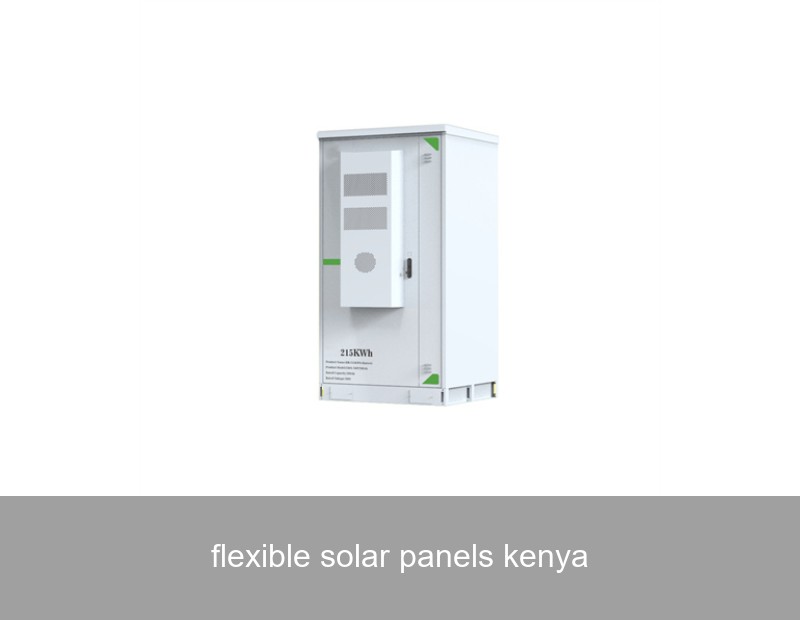
Modern modular battery energy storage system. Source: Unsplash
The Future: Questions and Possibilities
The trajectory for flexible solar in Kenya is incredibly promising. As technology advances, we can expect even higher efficiencies, lower costs, and integration into building materials (like solar tents for tourism or solar shades for buildings). However, the key to unlocking this potential at scale lies in systemic thinking.
So, the question we should be asking is no longer just "Which solar panel is best?" but rather: "How do we design a complete, intelligent, and sustainable energy ecosystem that leverages the unique advantages of technologies like flexible solar, ensuring every kilowatt-hour generated is captured, stored, and used efficiently?"
What unique application for flexible, mobile solar power do you see transforming a sector in Kenya—be it agriculture, tourism, education, or healthcare?
 Inquiry
 Online Chat