


Foldable Container House: The Ultimate Off-Grid and Sustainable Living Solution
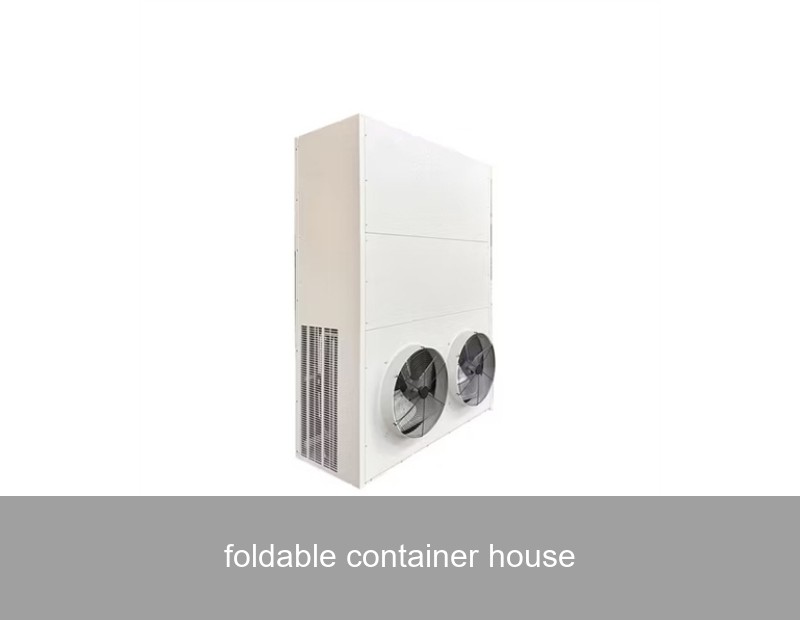
Imagine a home that arrives on a truck, unfolds into a spacious dwelling in a matter of hours, and powers itself completely with the sun. This isn't science fiction; it's the reality of the modern foldable container house. As the demand for flexible, sustainable, and rapidly deployable housing surges across Europe and the U.S., these innovative structures are emerging as a game-changer. But their true potential is unlocked not just by their clever design, but by what powers them: a reliable, independent energy system. Let's explore how the marriage of foldable architecture and advanced energy storage is redefining modern living.
The Rise of the Foldable Container House
Born from the principles of modular construction and shipping container architecture, the foldable container house takes efficiency to a new level. Its core appeal lies in its transformative logistics: a compact, transport-friendly module that expands on-site to offer double or triple the livable space. This makes it ideal for a variety of applications:
- Remote & Off-Grid Living: Cabins, research stations, or agricultural homesteads in locations without established grid infrastructure.
- Rapid Deployment Housing: Emergency shelters, workforce accommodations, or disaster relief units that can be set up within a day.
- Sustainable & Temporary Installations: Eco-tourism lodges, pop-up retail spaces, or auxiliary guest houses with a low environmental footprint.
However, this very advantage—being placed anywhere—introduces its most significant challenge: achieving reliable, sustainable, and autonomous power.

Image: A modern off-grid container home relies on solar and storage. Credit: Unsplash
The Critical Power Problem: More Than Just an Outlet
The promise of a foldable container house falls flat without a robust energy strategy. Traditional generator-based solutions are noisy, polluting, require constant fuel supply, and are costly to maintain. While solar panels are an obvious partner, they present a fundamental mismatch: they generate power only during the day, while our energy needs peak in the morning and evening.
This mismatch creates an energy gap. Without a way to store the sun's abundance, residents face unreliable power, inability to use essential appliances (like refrigeration, heating, or water pumps), and a dependence on unsustainable backups. The energy system, therefore, becomes the most critical "utility" in an off-grid setup, determining its true livability and sustainability.
The Indispensable Solution: Integrated Battery Energy Storage
This is where Battery Energy Storage Systems (BESS) become the indispensable heart of a self-sufficient foldable container house. Think of BESS as a high-capacity, intelligent power bank for your entire home. It seamlessly bridges the gap between solar production and consumption.
- Energy Time-Shifting: Stores excess solar energy generated at noon for use at night or on cloudy days.
- Grid Independence & Resilience: For off-grid setups, it provides the sole source of stored power. For grid-tied homes, it offers backup during outages.
- System Stability: Provides clean, stable power (pure sine wave) that protects sensitive electronics, unlike erratic generator output.
According to data from the International Energy Agency (IEA), behind-the-meter storage (like in homes) is a key driver of global storage growth, crucial for integrating renewables. For a container home, a properly sized and integrated BESS isn't an add-on; it's the cornerstone of its functionality.
Case Study: Disaster Relief Community in Florida, USA
Following Hurricane Ian in 2022, a non-profit initiative in Southwest Florida deployed a community of 20 foldable container houses to provide semi-permanent housing for displaced families. The challenge was to provide immediate, reliable power in an area with a damaged grid and frequent subsequent outages.
The Solution: Each unit was fitted with a 6 kW rooftop solar array paired with a 15 kWh integrated lithium-ion battery storage system. The systems were designed for complete off-grid operation but could also synchronize with the grid when available to reduce cycling.
The Data-Driven Outcome (6-month monitoring period):
| Metric | Result | Implication |
|---|---|---|
| Energy Self-Sufficiency | >98% | Near-total independence from the unstable local grid. |
| Fuel Cost Savings | $180/household/month | Compared to estimated generator running costs. |
| Uninterrupted Power Supply | Maintained during 12 grid outages | Critical for medical devices, comms, and refrigeration. |
This case, documented in part by the National Renewable Energy Lab (NREL) in broader resilience studies, highlights how the combination of portable housing and smart storage creates resilient communities. The foldable container house provided shelter, but the energy storage system provided dignity, safety, and normalcy.
Highjoule's Role: Powering Sustainable, Independent Living
At Highjoule, we understand that the energy system for a foldable container house must be as robust, compact, and intelligent as the home itself. Since 2005, we've specialized in designing seamless power solutions for the most demanding applications, from industrial microgrids to remote residential setups.
Our product suite is ideally suited for the unique needs of container-based living:
- HelioCore+ Residential ESS: Our flagship all-in-one storage system combines a high-density lithium iron phosphate (LiFePO4) battery, hybrid inverter, and smart energy management in one sleek, wall-mounted unit. Its compact form factor saves crucial space in a container home, while its hybrid capability allows for flexible solar, grid, and generator integration.
- IntelliBMS Software: The brain of the system. It learns your energy habits, optimizes solar self-consumption, and allows for remote monitoring and control via a smartphone app—essential for managing a secondary or remote property.
- Custom Design & Integration: We work with architects, builders, and homeowners to pre-design the complete energy system for the container unit. This includes load calculation, optimal solar array sizing, and ensuring all components fit within the transport and unfolded dimensions of the home.

Image: Compact, integrated storage is key for space-conscious homes. Credit: Unsplash
For a developer creating a community of foldable container houses or a homeowner placing a single unit on a rural plot, Highjoule provides the certainty of a resilient, silent, and zero-emission power supply that matches the innovative spirit of the dwelling.
Choosing the Right Energy System for Your Container Home
Selecting a BESS is a critical decision. Here are key factors to consider for your foldable container house project:
- Capacity & Power Rating: Calculate your daily kWh consumption (appliances, heating/cooling, etc.) to determine battery capacity (kWh). Ensure the inverter's power rating (kW) can handle simultaneous peak loads (e.g., water heater + microwave).
- Battery Chemistry: LiFePO4 (like in Highjoule systems) is superior for safety, longevity (10+ years, 6000+ cycles), and performance across a wide temperature range compared to older lithium-ion types.
- All-in-One vs. Modular: All-in-one systems simplify installation and save space—a major advantage in compact homes. Modular systems offer easier capacity expansion later.
- Smart Management & Warranty: Prioritize systems with intelligent software and strong, long-term warranties that cover both performance and capacity retention.
Looking Ahead: The Integrated Future
The future of the foldable container house lies in deeper integration. We envision factory-installed, pre-wired energy systems where solar panels, storage, and even energy-efficient appliances are part of the standard package. This "plug-and-play" sustainability will further reduce costs, complexity, and deployment time, making resilient, off-grid living accessible to even more people.
As you envision your foldable container project—whether it's a serene retreat, a pragmatic worksite solution, or a rapid-response housing unit—what role will energy independence play in defining its success and sustainability for you?
 Inquiry
 Online Chat