


Understanding Battery Life: How Much Power (kW) Do You Really Need?
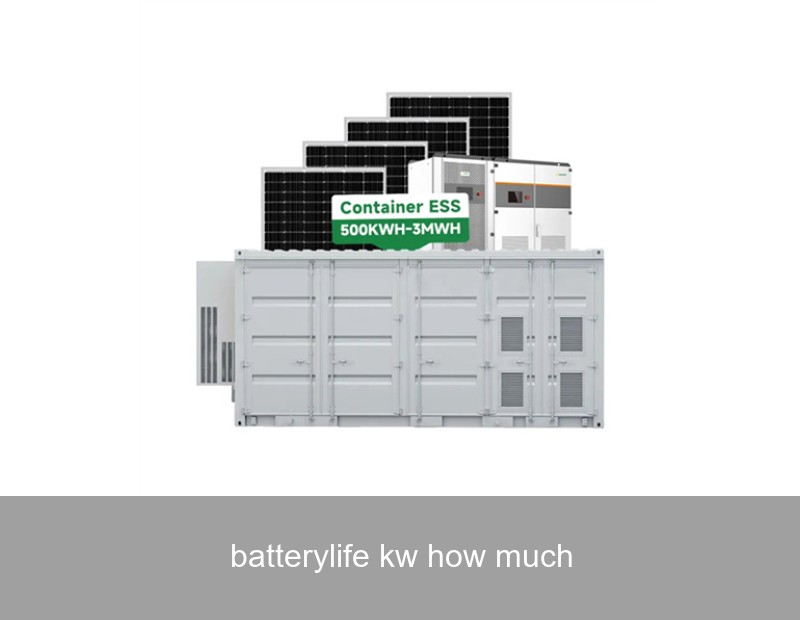
You're considering a battery storage system for your home or business. You've heard about energy independence, backup power, and saving on electricity bills. But one question keeps popping up: "battery life kW how much?" It sounds simple, yet the answer is crucial and surprisingly personal. It's not just about picking the biggest battery. It's about matching the system's power (kilowatts, or kW) and capacity (kilowatt-hours, or kWh) to your unique energy life. Let's demystify this and find your perfect power match.
Table of Contents
- The kW Confusion: Power vs. Energy
- The "Why" Behind the Watt: What's Driving Your Decision?
- Calculating Your Need: A Step-by-Step Guide
- Case Study: A Berlin Bakery's Recipe for Resilience
- Beyond the Basics: Technology & Longevity
- Your Energy Future: The Next Step
The kW Confusion: Power vs. Energy
First, let's clear up a common mix-up. When people ask about "battery life kW," they're often blending two different concepts.
- Power (kW - Kilowatts): This is the rate at which energy is delivered. Think of it as the size of a pipe. A high kW rating means your battery can deliver a lot of power at once, essential for starting large motors or running many appliances simultaneously.
- Energy (kWh - Kilowatt-hours): This is the total amount of energy stored. Using our water analogy, this is the volume of water in the tank. It determines how long you can run your devices.
So, "How much kW?" is really two questions: 1) How much power do my appliances need at once (kW)? and 2) How much total energy do I use over time (kWh)? A system with high kW but low kWh will run powerful equipment for only a short time. A system with high kWh but low kW will run many small devices for a long time, but not your large heating system.

Image Source: Unsplash (Representative image of a residential battery system)
The "Why" Behind the Watt: What's Driving Your Decision?
Your primary goal dramatically shapes the "kW how much" answer. Let's break it down using the PAS (Problem, Agitation, Solution) framework.
Problem Scenario 1: Backup Power During Outages
Agitation: A grid outage hits. Do you just want to keep the lights and fridge on, or do you need to maintain full business operations? The frustration of a spoiled inventory or halted production is real.
Solution: You need enough kW to start and run your critical loads (e.g., well pump, refrigeration compressor). You need enough kWh to last the typical duration of outages in your area. For a home, a 5-10 kW power output with 10-20 kWh of storage is common. For critical commercial loads, requirements can start at 50kW+.
Problem Scenario 2: Maximizing Solar Self-Consumption
Agitation: You have solar panels that produce a surplus at noon, but you're buying expensive grid power in the evening. You're not maximizing your investment or your independence.
Solution: Here, kWh is king. You need a battery with enough capacity to store your daily excess solar production for use later. The "kW" power rating needs to handle your home's average evening load (typically 3-8 kW). Smart, integrated systems are key. Highjoule's Home Energy Hub, for instance, intelligently manages this flow, storing excess solar and dispatching it precisely when needed, seamlessly shifting your home's energy profile.
Problem Scenario 3: Commercial Load Shaving & Demand Charge Reduction
Agitation: For businesses, utility bills often include "demand charges" based on your peak power draw (kW) each month. A single spike in usage can lead to staggering costs.
Solution: This is all about kW control. A battery system with a high power rating (e.g., 100kW+) can discharge rapidly to "shave" peaks when your facility's demand spikes, dramatically reducing charges. The Highjoule C&I PowerStack series is engineered specifically for this, offering scalable power modules to cap facility demand and provide seamless backup.
Calculating Your Need: A Step-by-Step Guide
Let's get practical. Here’s a simple methodology to estimate your requirements.
- List Critical Loads: Identify appliances you must power (e.g., refrigerator, furnace blower, medical equipment, servers).
- Find Their Power Ratings (in Watts/kW): Check nameplate labels or manuals. Sum the starting (surge) watts for motor-driven devices and the running watts for all.
- Estimate Runtime: How many hours do you need to run them during an outage? Multiply each appliance's running kW by the hours needed.
- Calculate Totals:
- Your required system Power (kW) ≈ Total running kW of simultaneous loads + margin for surge.
- Your required system Energy (kWh) ≈ Sum of (kW load * hours of runtime) for all loads.
| Appliance | Running Watts (W) | Starting/Surge Watts (W) | Estimated Runtime (Hrs) | Energy Needed (Wh) |
|---|---|---|---|---|
| Refrigerator | 200 | 600 | 12 | 2400 |
| Furnace Blower | 800 | 1400 | 8 | 6400 |
| LED Lighting (10 bulbs) | 100 | 100 | 6 | 600 |
| Wi-Fi & Modem | 20 | 20 | 12 | 240 |
| Totals (Example) | ~1120W (1.12 kW) | ~2120W (2.12 kW) | - | ~9.64 kWh |
This example suggests a system capable of at least 2.5 kW continuous power (with surge capability higher) and about 10 kWh of usable energy. A product like the Highjoule Home Energy Hub 12, with its 12 kWh usable capacity and 5 kW continuous power output, would be a suitable match, offering headroom for future needs.
Case Study: A Berlin Bakery's Recipe for Resilience
Let's look at real data. A family-run bakery in Berlin, Germany, faced two problems: unpredictable grid outages risking dough proofers and freezers, and high demand charges from their intensive morning operation.
The Goal: Ensure 4 hours of backup for critical refrigeration and proofing cabinets, and shave peak demand by 30kW.
The Solution: Highjoule designed a system using a PowerStack 50 unit. With a power rating of 50 kW and 100 kWh of energy, it met both needs.
- Backup Performance: During a 2-hour winter outage, the system seamlessly took over, maintaining all critical loads at a steady 22 kW draw. The bakery lost zero product.
- Financial Performance: By discharging the battery during their morning peak (5 AM - 9 AM), the bakery reduced its peak grid draw by an average of 32 kW. This led to a 22% reduction in monthly demand charges, translating to annual savings of over €4,800. The system also optimized their solar self-consumption.
"For us, it wasn't just about backup; it was about business continuity and predictable costs," the owner noted. "The 'kW' question was answered by our ovens and proofers. The 'kWh' question was answered by our need to get through a typical interruption."

Image Source: Unsplash (Representative image of a commercial/industrial battery installation)
Beyond the Basics: Technology & Longevity
When sizing a system, consider the technology that dictates its real-world "life." Not all kW/kWh ratings are equal over time.
Battery Chemistry & Depth of Discharge (DoD)
Most modern systems use Lithium Iron Phosphate (LFP) chemistry, known for safety and long cycle life. A key spec is the Depth of Discharge (DoD). If a 10 kWh battery has a recommended 90% DoD, you should only regularly use 9 kWh of it to preserve its lifespan. Highjoule systems are engineered with a conservative DoD and advanced thermal management to ensure the rated capacity and power are delivered consistently for thousands of cycles.
The Role of the Inverter
The inverter is the heart that converts battery DC to usable AC power. Its continuous power rating (kW) is your system's limiting factor. A battery might store 20 kWh, but a 5 kW inverter can only deliver 5 kW at any moment. Highjoule's integrated systems ensure perfect harmony between inverter power, battery capacity, and management software, avoiding costly undersizing or oversizing.
Future-Proofing & Scalability
Your energy needs may grow. Maybe you'll add an EV charger or expand your business. Modular systems are the answer. The scalable architecture of Highjoule products allows for power (kW) and energy (kWh) to be expanded relatively easily, protecting your initial investment. This flexibility is a core part of our design philosophy, ensuring our solutions evolve with your needs.
Your Energy Future: The Next Step
Answering "battery life kW how much?" is the first, vital step in your energy independence journey. It moves you from a place of uncertainty to a foundation of clarity. It's about understanding the rhythm of your own energy consumption and marrying it with technology that fits like a glove.
We've discussed the difference between kW and kWh, walked through a calculation, and seen a real business transform its energy profile. But your situation is unique. What does your energy fingerprint look like? What combination of resilience, savings, and sustainability are you aiming to achieve?
What's the one energy-intensive appliance or process in your home or business that would most define your required battery power (kW) if the grid went down tomorrow?
 Inquiry
 Online Chat