


What is a Solar Energy Provider? Your Guide to Modern Energy Independence
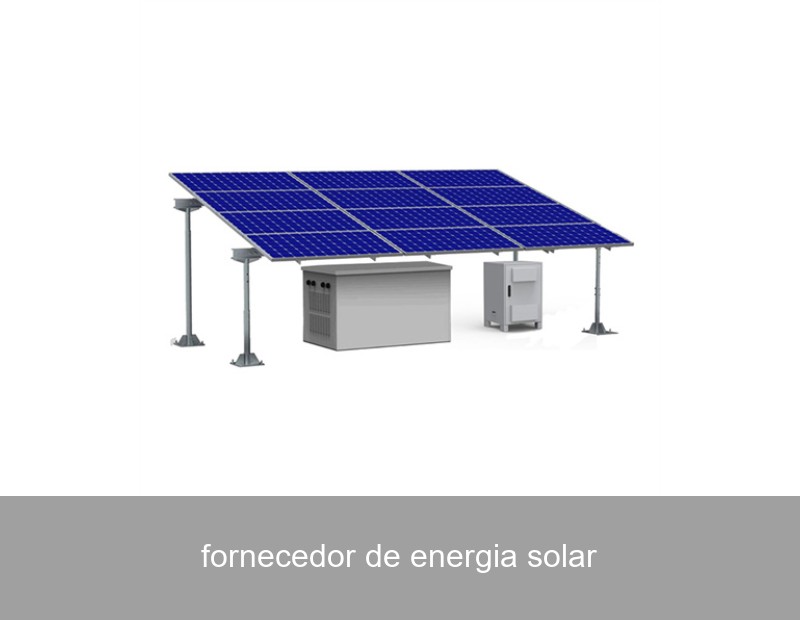
So, you're thinking about going solar. You've seen the panels on rooftops and heard about reducing electricity bills. But when you start researching, you quickly encounter a key term: fornecedor de energia solar, or solar energy provider. What does this really mean in today's energy landscape? Is it just the company that installs panels on your roof? The answer has evolved dramatically, and understanding this shift is crucial for anyone in Europe or the US looking to make a smart, future-proof investment. A modern solar energy provider is no longer just an installer; it's your partner in designing, integrating, and managing a complete, intelligent power system for your home or business.
The global push for renewables is undeniable. In the EU, renewable energy accounted for 23% of total energy consumption in 2022, with solar PV leading growth. In the U.S., solar is one of the fastest-growing electricity sources. This surge isn't just about environmental consciousness; it's driven by hard economics and a desire for energy security. However, the initial excitement of generating your own power can be dampened by a stark reality: the sun doesn't shine 24/7. This fundamental challenge separates basic panel installers from true, comprehensive solar energy providers.

Image: A modern solar-plus-storage setup, essential for true energy independence. Credit: Unsplash.
Beyond Panels: The Critical Role of Storage and Management
Think of a traditional solar setup without storage like a rainwater collection barrel with a large hole in the bottom. You collect water (energy) during the rain (daylight), but it drains away when you need it most at night or during a drought (cloudy period). This is where the old model falls short. A leading solar energy provider today addresses this by integrating three core pillars:
- Generation: High-efficiency photovoltaic (PV) panels.
- Storage: Advanced battery energy storage systems (BESS) to capture surplus energy.
- Management: Intelligent software that optimizes energy flow, consumption, and grid interaction.
This integrated approach transforms your property into a resilient microgrid. For instance, during a grid outage, a system with storage keeps your lights on and critical appliances running. More strategically, it allows you to use stored solar energy during peak evening hours when grid electricity is most expensive, maximizing your savings. The value proposition shifts from simply "offsetting your bill" to "controlling your energy cost and reliability."
The Data Behind the Shift
Let's look at the numbers. According to the U.S. Energy Information Administration, the levelized cost of solar PV has dropped nearly 70% over the last decade. Meanwhile, electricity prices for households in the Euro area have increased significantly. This creates a powerful financial incentive. But the real game-changer is storage cost reduction. BloombergNEF reports that the price of lithium-ion battery packs has fallen by over 90% since 2010. This convergence makes solar-plus-storage not just a green choice, but an increasingly obvious economic one.
Case Study: A Portuguese Winery's Journey to Energy Independence
Let's make this concrete with a real example from Europe. A renowned family-owned winery in the Alentejo region of Portugal faced a dual challenge: unpredictable energy costs cutting into margins and a commitment to sustainable production. Their refrigeration, irrigation, and bottling lines were energy-intensive. They partnered with a forward-thinking fornecedor de energia solar who designed a solution far beyond panels.
| Component | Specification | Business Impact |
|---|---|---|
| Solar PV Array | 250 kWp rooftop and ground-mounted | Covered 65% of daytime load directly |
| Battery Storage | 180 kWh lithium-ion system | Stored excess solar for night use & peak shaving |
| Energy Management System | AI-driven predictive software | Optimized cooling cycles using stored energy |
The Results (18 months post-installation):
- Energy Cost Reduction: 72% decrease in grid electricity purchases.
- ROI Timeline: Projected payback period of 5.2 years.
- Resilience: Critical cold storage remains operational during any grid instability.
- Sustainability: Carbon footprint of production reduced by an estimated 85 tonnes CO2e annually.
This winery's story exemplifies the modern provider's role: a consultant and technologist who delivers a tailored system solving specific business problems.
Choosing the Right Solar Energy Provider: Key Questions to Ask
With the market expanding, how do you select a partner, not just a vendor? Here are essential questions based on the EEAT (Experience, Expertise, Authoritativeness, Trustworthiness) framework:
- Experience: "Can you show me case studies for projects similar in scale and complexity to mine?"
- Expertise: "Do you offer integrated storage and energy management software, or just panel installation?"
- Authoritativeness: "What certifications do your engineers hold (e.g., NABCEP in the US, MCS in the UK)?"
- Trustworthiness: "What is the long-term service and performance guarantee for the entire system, including batteries?"
Highjoule: Your Partner in Intelligent Solar Energy Solutions
This is where Highjoule's mission comes into clear focus. Since 2005, we have evolved from a battery technology innovator into a global advanced energy storage systems provider. We understand that a true solar energy provider must deliver a seamless, intelligent ecosystem. For our residential and commercial clients across Europe and North America, we provide the critical "brain and battery" for solar installations.
Our HPS (Highjoule PowerStack) residential battery systems are designed for seamless integration with leading solar inverters, turning a standard solar array into a 24/7 power plant. For commercial and industrial applications, our HCS (Highjoule Commercial Suite) offers scalable, containerized or rack-mounted storage solutions paired with our proprietary JouleMind AI energy management platform. JouleMind doesn't just monitor; it learns your consumption patterns, weather forecasts, and utility rate schedules to autonomously optimize when to store, use, or even sell back energy, maximizing your financial return.

Image: Utility-scale battery storage is key to grid stability. Credit: Unsplash.
We partner with certified solar installers, equipping them with the storage and intelligence needed to become premier providers. Think of us as the technology backbone, enabling our partners to offer complete, turnkey energy independence solutions. Whether it's a home in California seeking backup power and time-of-use savings, or a factory in Germany aiming for industrial load-shifting and carbon compliance, Highjoule's systems are the enabling force.
The Future of Solar is Integrated and Intelligent
The trajectory is clear. The next decade will see the rise of the prosumer—entities that both produce and consume energy—as active participants in a decentralized grid. Technologies like vehicle-to-grid (V2G) and virtual power plants (VPPs) will become commonplace. In this future, your solar and storage system won't just save you money; it could generate revenue by providing grid services.
The essential question is no longer just "How many panels do I need?" but "What is the complete energy strategy for my home or business, and who has the expertise to design and maintain it for the next 20 years?" The right fornecedor de energia solar will have a compelling answer, built on integrated technology, deep expertise, and a commitment to your long-term energy resilience.
Is your current solar quote missing the critical piece that would unlock true energy independence and maximum savings?
 Inquiry
 Online Chat