


Fourth Power Energy Storage: The Next Frontier in Grid Stability and Renewable Integration
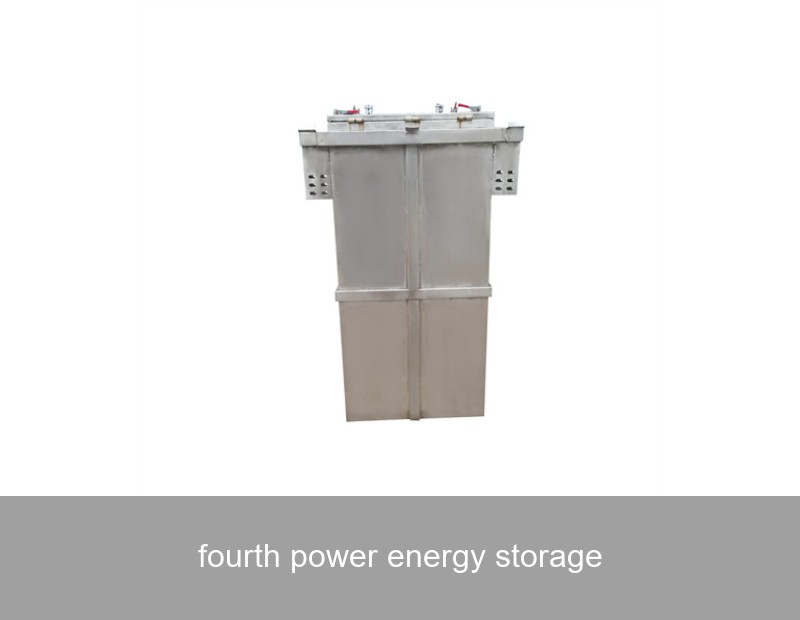
Imagine a world where solar and wind power aren't just clean energy sources, but the unshakable foundation of our entire electricity grid. This isn't a distant dream; it's the driving goal behind the most exciting innovation in our industry: fourth power energy storage. For over a decade, the conversation has centered on capacity (how many hours of energy) and power (how fast you can discharge it). But as we push towards grids powered by 80% or more renewables, a new critical metric emerges: resilience over extreme durations and through volatile, multi-day weather events. This is the realm of fourth power storage—solutions designed not for hourly shifts, but for seasonal arbitrage, week-long calms, and ensuring energy security when the sun doesn't shine and the wind doesn't blow for extended periods. As a technical expert at Highjoule, I see this evolution firsthand. Since 2005, we've progressed from providing backup power to engineering intelligent systems that manage energy complexity, and fourth power concepts are now shaping our roadmap for the future grid.
Table of Contents
- The Problem: Beyond the Duck Curve
- What is Fourth Power Energy Storage?
- Key Technologies Enabling Fourth Power Storage
- Highjoule's Approach to Long-Duration Resilience
- Case Study: Navigating a European "Dark Doldrums"
- The Future Grid: A Multi-Layered Storage Architecture
- What's Your Storage Strategy?
The Problem: Beyond the Duck Curve
Grid operators in California famously grappled with the "duck curve"—the midday solar surplus. Today, the challenge is more profound. We're facing the "**post-frontal calm**" or "**dark doldrums**"—multi-day periods where low wind, low solar, and high demand converge. A 2022 study by the National Renewable Energy Laboratory (NREL) found that future grids with high renewable penetration could experience **100+ hour periods** where renewable generation meets less than 30% of demand. This isn't a gap; it's a chasm. Traditional lithium-ion batteries, excellent for 2-4 hour discharges, become economically challenging at durations beyond 8-12 hours. The grid needs a new class of storage: one where the cost is decoupled from power and optimized for sheer, massive energy delivery over days or even weeks.
What is Fourth Power Energy Storage?
Let's break down the "power" evolution:
| Storage "Power" | Primary Metric | Typical Duration | Use Case |
|---|---|---|---|
| First (Power Quality) | Seconds | Milliseconds to Seconds | Frequency regulation, voltage support |
| Second (Bridging Power) | Minutes | Seconds to 30 Minutes | Ramping, contingency reserves |
| Third (Energy Shifting) | Hours | 1-8 Hours | Daily solar shifting, peak shaving |
| Fourth (Long-Duration & Seasonal) | Days to Months | 10+ Hours to Seasons | Multi-day resilience, seasonal arbitrage, portfolio firming |
Fourth power energy storage, therefore, refers to technologies and system architectures capable of cost-effectively storing and discharging energy over very long durations. The goal is **ultra-low cost per stored megawatt-hour (MWh)**, even if the power rating (MW) is moderate. Think of it as the difference between a sprinter (high power, short burst) and an ultramarathon runner (sustained energy, incredible endurance). Both are athletes, but they train for fundamentally different events. Our future grid needs both.
Key Technologies Enabling Fourth Power Storage
No single technology holds the monopoly here. The future is a portfolio:
- Advanced Flow Batteries (e.g., Vanadium, Zinc-Bromine): Their energy is stored in liquid electrolytes in external tanks. To get more duration, you simply add more electrolyte, making them inherently scalable for long durations. They offer excellent cycle life with minimal degradation.
- Compressed Air Energy Storage (CAES): Uses excess electricity to compress air into underground caverns. For discharge, the air is heated and expanded through a turbine. Projects like the McIntosh CAES facility in Alabama have provided 2,600 MWh of storage for over 25 years.
- Green Hydrogen (Power-to-Gas-to-Power): Electrolyzers use surplus renewable power to produce hydrogen, which can be stored seasonally in salt caverns and later used in fuel cells or turbines. While the round-trip efficiency is lower, the storage duration potential is virtually unlimited.
- Thermal Energy Storage: Storing energy as heat (or cold) in materials like molten salt, stones, or phase-change materials. This is particularly effective for industrial heat applications and can be integrated with concentrating solar power (CSP).

Molten salt thermal storage, like at Crescent Dunes, is an example of long-duration storage technology. (Image: Solar Reserve, Wikimedia Commons)
Highjoule's Approach to Long-Duration Resilience
At Highjoule, we view fourth power capabilities not as a single product, but as an integrated system intelligence layered onto robust hardware. Our current focus is on optimizing what we call the "**storage cascade**" for commercial, industrial, and microgrid clients.
Our H-IQ Energy Management Platform is the brain. It doesn't just see a battery; it sees an entire energy ecosystem—rooftop solar, on-site wind, grid imports, real-time pricing, and most critically, weather forecasts spanning days ahead. Using predictive algorithms, it can strategically conserve shorter-duration lithium-ion storage (our high-power H-Cell series) for daily peaks, while orchestrating the discharge of longer-duration assets (like a flow battery system or a hydrogen-ready interface) for the anticipated multi-day shortfall.
For instance, our H-Cell Max+ commercial battery system can be configured with an extended duration focus, but its real power lies in its communication with the H-IQ platform. If the platform's forecast models detect a coming week of cloudy weather, it can begin a controlled, pre-emptive charging strategy days in advance, leveraging cheaper off-peak power to "stockpile" energy at the site. This is fourth power thinking applied with today's technology. Furthermore, our systems are designed with future tech in mind, featuring standardized interfaces that allow for the future integration of dedicated long-duration storage modules as those technologies reach commercial maturity.
Case Study: Navigating a European "Dark Doldrums"
Let's look at a real-world scenario. In January 2023, a high-pressure system settled over much of Western Europe, leading to **a prolonged period of low wind generation coinciding with short winter days**. German wind power output fell below 10% of its installed capacity for nearly 120 consecutive hours, while solar was minimal.
A German industrial manufacturing plant, a Highjoule client operating with a 2 MW solar carport and a **Highjoule H-Cell Max+ 1.5 MW / 6 MWh storage system**, faced this exact test. Relying on the standard 4-hour duration would have left them exposed.
Here's how our H-IQ platform created a fourth power response:
- Day 1-2 (Forecast Trigger): H-IQ ingested long-range weather forecasts flagging the wind drought. Instead of performing its usual daily cycle, the system shifted to a **strategic reserve mode**.
- Day 2-3 (Strategic Charging): The system used limited solar and selectively purchased grid power during two low-price windows (overnight) to charge the battery to 95% capacity, building a "reserve tank."
- Day 4-6 (Managed Discharge): As solar output remained low and grid prices spiked, H-IQ switched to a **conservative discharge protocol**. It blended stored battery power with a minimal, optimized grid draw to cover the site's baseload, reducing discharge power to stretch the stored 6 MWh over nearly **16 hours of critical load coverage** across three days. This prevented costly demand charges and provided price certainty.
The result? The plant avoided an estimated **€18,000 in peak grid charges** during the event and maintained critical processes without interruption. This is a practical example of using intelligent software to extract fourth power behavior from third power hardware.
The Future Grid: A Multi-Layered Storage Architecture
The ultimate grid will feature a harmonious blend of all storage "powers." Fast-responding batteries will handle second-by-second balance. Four-hour systems will manage the daily duck curve. And fourth power assets—whether massive flow battery arrays, underground hydrogen storage, or advanced compressed air—will act as the **strategic energy reserve**, filling the long-duration gaps.
Regulatory frameworks are catching up. In the US, the Department of Energy's Long Duration Storage Shot initiative aims to reduce costs by 90% for systems that deliver 10+ hours of duration. In Europe, network development plans are increasingly modeling seasonal storage needs. The business model is evolving from simple energy arbitrage to **capacity contracts and resilience-as-a-service**.

Future grid control rooms will need to orchestrate storage assets across multiple durations and technologies. (Image: Unsplash)
What's Your Storage Strategy?
The transition to fourth power energy storage isn't an overnight switch; it's a strategic pathway. It begins with a clear assessment of your site's load profile, your renewable generation patterns, and most importantly, your **tolerance for risk during extended low-generation periods**. Are you prepared for the next week-long calm? Does your current storage plan look ahead 48 hours or only the next 4?
At Highjoule, we partner with forward-thinking businesses and communities to build this resilience step-by-step. The conversation starts not with a product catalog, but with a question: What level of energy independence does your operation need to thrive in the coming decade, and how can we build a system today that is ready for the fourth power challenges of tomorrow?
 Inquiry
 Online Chat