


Fuel Cells for Residential Use: A Quiet Revolution in Home Energy
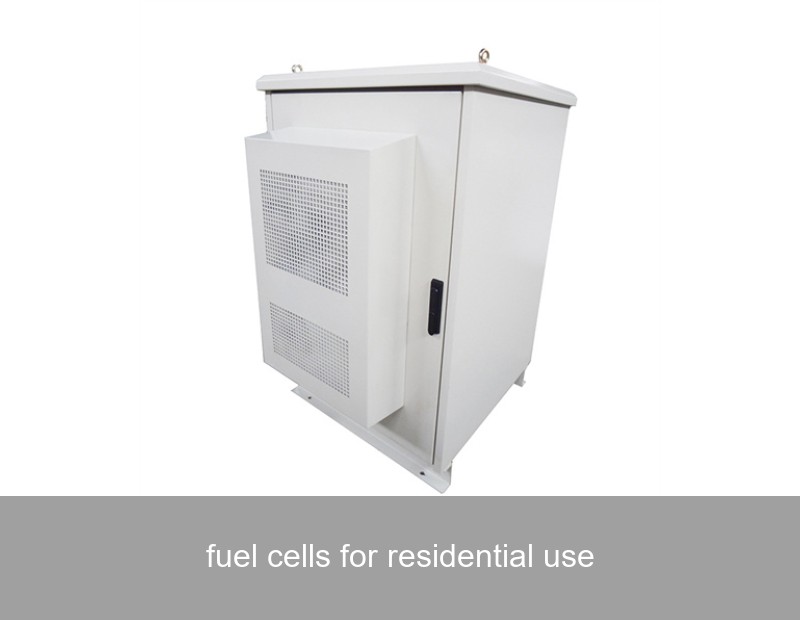
Imagine your home generating its own electricity and heat, not with noisy generators or intermittent solar panels alone, but with a clean, efficient system that runs day and night. This is the promise of fuel cells for residential use. While the concept of fuel cell technology often brings to mind futuristic cars or space missions, a significant and practical application is quietly powering homes, particularly in energy-forward regions like Europe and North America. For homeowners seeking true energy independence, lower carbon footprints, and resilience against grid instability, residential fuel cells represent a compelling, on-site power solution.
Table of Contents
What Are Residential Fuel Cells? Your Personal Power Plant
At its core, a residential fuel cell system is a compact power plant for your home. It typically uses a chemical process called combined heat and power (CHP) or micro-CHP. Most systems available today, like the popular PEM (Proton Exchange Membrane) fuel cells, convert natural gas or biogas into hydrogen, which then reacts with oxygen from the air. This reaction produces three valuable things: electricity to run your appliances, heat to warm your home and water, and water vapor as the only emission. Unlike a backup generator, it's designed for continuous, primary power generation, working in tandem with the grid or other renewable sources.
The Core Components of a Home Fuel Cell System
- Fuel Cell Stack: The heart of the system where the electrochemical reaction occurs.
- Fuel Reformer: Converts natural gas into hydrogen-rich gas for the stack.
- Power Conditioner: Converts the generated DC electricity into usable AC power for your home.
- Heat Recovery Unit: Captures waste heat from the process for domestic heating.
Why Consider a Home Fuel Cell Now? The Data Behind the Trend
The push for fuel cells for residential use is no longer just theoretical. Several converging factors make this technology increasingly attractive:
Phenomenon: Homeowners face rising electricity costs, increasing grid unreliability due to extreme weather, and growing pressure to reduce personal carbon emissions.
Data: According to the U.S. Department of Energy, CHP systems, including fuel cells, can achieve overall efficiencies of 80-95%, compared to about 50% for typical separate heat and grid power production. This dramatic efficiency gain translates directly into lower energy bills and reduced primary energy consumption. In markets like Germany and Japan, government subsidies have been instrumental. For instance, Japan's Ene-Farm program has seen over 400,000 units installed since 2009, demonstrating significant market validation.
Insight: The real value proposition isn't just in replacing grid power. It's in creating a resilient, efficient energy hub at the point of consumption. This is where the story gets even more interesting for modern energy-conscious households.
A Real-World Case: The German *Ene-Farm* Success Story
Let's look at a concrete example. Germany has been a pioneer in adopting residential fuel cells, supported by the KfW development bank's "Energy-efficient Construction and Refurbishment" subsidy program. A typical case study involves a single-family home in Hesse, Germany.
The household installed a 1 kW micro-CHP PEM fuel cell unit. Here’s what the data showed after one year of operation:
| Metric | Result |
|---|---|
| Annual Electricity Generation | ~8,500 kWh |
| Household's Self-Consumption of Generated Power | ~50% (used directly in the home) |
| Excess Power Fed to Grid | ~4,250 kWh (providing an additional income stream) |
| Heat Generated for Home & Water | ~11,000 kWh |
| Estimated Primary Energy Savings | Approximately 30% compared to conventional supply |
| CO2 Emissions Reduction | Approximately 4.5 tonnes per year |
This case, documented by the Clean Energy Wire, highlights the triple win: lower bills, higher efficiency, and tangible carbon reduction. The homeowner achieved a significant degree of energy autonomy while remaining connected to the grid for backup and surplus export.
The Key to Success: Integration with Modern Storage Systems
You might be wondering: "A fuel cell generates power continuously, but my electricity demand peaks in the morning and evening. What about the mismatch?" This is the critical piece of the puzzle. A standalone fuel cell is powerful, but an integrated energy system is transformative.
This is precisely where Highjoule excels. As a global leader in advanced energy storage since 2005, we see fuel cells not as competitors to battery storage, but as perfect partners. Our Highjoule HES Series intelligent battery storage systems are designed to seamlessly integrate with various generation sources, including residential fuel cells and solar PV.
Here’s how the integration works:
- Optimized Self-Consumption: The fuel cell produces power at a steady rate. During low consumption periods (e.g., midday), the excess electricity charges the Highjoule battery instead of being sold to the grid at lower rates.
- Peak Shaving & Resilience: When home demand spikes in the evening, energy is drawn from the battery, avoiding expensive grid power imports. In a grid outage, the combined system can form a microgrid, keeping critical loads powered for extended periods.
- Intelligent Energy Management: Highjoule's Smart Energy Hub software acts as the brain, dynamically deciding the most economical and efficient flow of energy—whether to store it, use it immediately, or heat water—based on real-time consumption, weather forecasts, and tariff structures.

Image: A modern home energy management setup, similar to an integrated fuel cell and battery storage system. (Source: Unsplash)
For commercial and industrial applications, Highjoule's Containerized Megawatt-scale BESS provides the same principle of integration and optimization at a larger scale, ensuring that fuel cell investments deliver maximum financial and operational returns.
Practical Considerations for Homeowners
If you're intrigued by fuel cells for residential use, here are key factors to evaluate:
Upfront Cost and Incentives
The initial investment is significant, though decreasing. Crucially, check for local, state, and federal incentives. In the U.S., the Investment Tax Credit (ITC) now applies to qualified fuel cell properties. In Europe, country-specific programs like Germany's KfW or the UK's Renewable Heat Incentive (RHI) have supported adoption.
Fuel Source and Long-Term Outlook
Most systems currently run on natural gas, offering immediate emissions benefits. The exciting prospect is the transition to "green hydrogen" produced from renewable sources. As this infrastructure develops, your fuel cell could become a 100% carbon-neutral power source. Highjoule's systems are designed to be future-proof, ready to adapt to these evolving fuel pathways.
Installation and Maintenance
Professional installation by certified technicians is mandatory. Systems require scheduled maintenance, typically annually, which is often covered by a service contract. Reliability has improved dramatically, with leading manufacturers offering warranties of 10 years or 60,000+ hours of operation.
The Future of Home Energy: A Hybrid, Intelligent Model
The home of the future is unlikely to rely on a single energy source. Instead, it will harness a hybrid mix: solar PV on the roof, a fuel cell in the basement or utility room, and an intelligent battery like Highjoule's in the garage—all managed by sophisticated software. This combination provides resilience, efficiency, and autonomy that no single technology can match alone.
As grid dynamics change and the value of local, dispatchable power increases, the economic case for such integrated systems strengthens. The journey towards a decentralized, robust, and clean energy grid starts at the individual building level.

Image: A technician performing maintenance on a clean, compact residential energy unit. (Source: Unsplash)
Is your home ready to become an active participant in the new energy landscape, moving beyond mere consumption to becoming a controlled center of generation and storage? What would true energy independence mean for your household's budget, security, and environmental goals?
 Inquiry
 Online Chat