


Your Complete Guide to a Full Off Grid Solar System: Energy Independence Explained
Imagine a home, farm, or business completely untouched by power outages, rising utility rates, and the constraints of the traditional electrical grid. This isn't a futuristic dream; it's the reality made possible by a full off grid solar system. For homeowners in remote locations, eco-conscious communities, or anyone seeking true energy autonomy, going fully off-grid represents the ultimate step in renewable energy adoption. But what does it truly take to disconnect? This guide will walk you through the components, considerations, and real-world viability of a full off-grid power solution, blending essential knowledge with insights from Highjoule, a global leader in advanced energy storage since 2005.
Table of Contents
- What is a Full Off Grid Solar System?
- Key Components: More Than Just Panels
- A Real-World Case Study: Off-Grid Living in the Swedish Highlands
- The Highjoule Advantage: Intelligent Storage for Off-Grid Resilience
- Is a Full Off Grid System Right for You?
What is a Full Off Grid Solar System?
A full off grid solar system, often called a standalone power system (SAPS), is designed to generate, store, and manage 100% of a property's electricity consumption without any connection to the public utility grid. Unlike grid-tied systems that send excess power back to the utility, an off-grid system must be self-sufficient every hour of every day, handling everything from charging your phone to running heavy appliances. This independence requires a meticulously engineered combination of components working in harmony.
Key Components: More Than Just Panels
While solar panels are the most visible element, they are just the beginning. A robust off-grid system is built on four pillars:
- Solar Photovoltaic (PV) Array: The primary energy generator. Size is critical and is calculated based on your location's solar irradiance and your total energy needs.
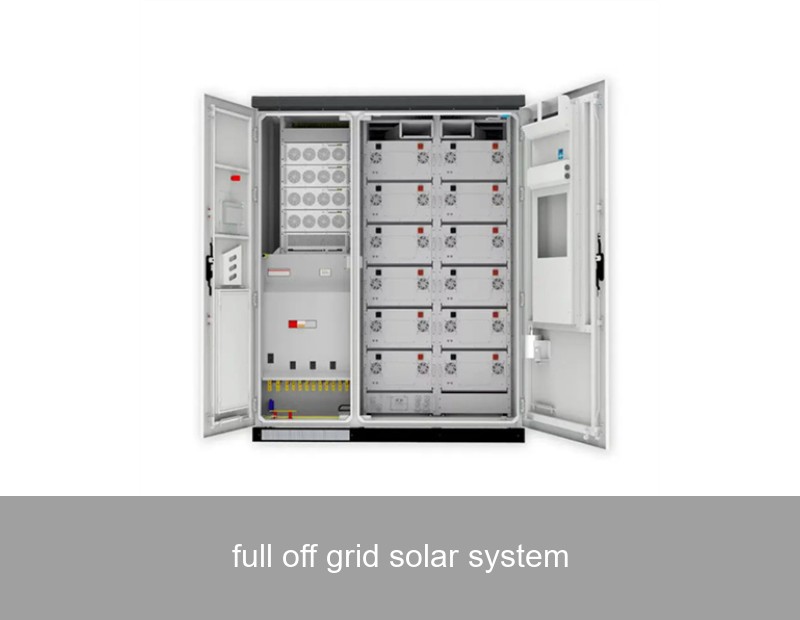
- Battery Energy Storage System (BESS): The heart of the system. Batteries store surplus solar energy generated during the day for use at night and during periods of low sunlight. Their capacity and depth of discharge are paramount.
- Charge Controller: Acts as a regulator, protecting batteries from overcharging during peak production and optimizing the charging cycle.
- Inverter: Converts the direct current (DC) electricity from the panels and batteries into the alternating current (AC) used by household appliances. For off-grid, a specific off-grid inverter is required.
- Backup Generator (Optional but Recommended): A fossil-fuel or biofuel generator serves as a critical backup during extended periods of poor weather, ensuring reliability.

Image: A typical off-grid solar installation requires both panels and robust storage. Source: Unsplash
The Core Challenge: Balancing Energy Supply and Demand
The fundamental principle of off-grid living is energy balance. You must design a system where Energy Generation ≥ Energy Consumption. This sounds simple, but it's a complex equation involving variable weather, seasonal changes, and daily usage patterns. Under-sizing your battery bank can lead to "blackouts" on cloudy days, while over-sizing can lead to unnecessary upfront costs. This is where professional design and smart technology become non-negotiable. According to the National Renewable Energy Laboratory (NREL), successful off-grid design hinges on detailed load profiling and climate data analysis to avoid costly failures.
Data-Driven Design is Non-Negotiable
Before installing a single panel, experts will analyze your historical energy use (if available) and meticulously catalog every appliance, its wattage, and hours of use. This "load list" is then simulated against local weather patterns to determine the necessary size of the PV array and, most importantly, the battery storage. For example, a home in sunny Arizona will need a different configuration than a cabin in frequently cloudy Scotland for the same energy usage.
A Real-World Case Study: Off-Grid Living in the Swedish Highlands
Let's look at a concrete example. The Eriksson family runs a year-round eco-lodge in the remote Swedish highlands, 15 kilometers from the nearest grid connection. Their goal was 100% renewable operation with zero guest comfort compromise.
- Challenge: Extreme seasonal variation. Nearly 24 hours of sunlight in summer, but very limited solar gain in dark, cold winters. High heating and hot water demand.
- Solution: A large, ground-mounted PV array (25 kW) paired with a massive 60 kWh lithium-ion battery storage system. A wood-pellet boiler integrated for heating and a propane generator for emergency backup during the polar night period.
- Outcome & Data: The system provides 95% of annual electricity directly from solar. The generator runs for less than 200 hours per year, primarily in December and January. Their energy cost is now predictable, insulating them from volatile market prices, and their carbon footprint is drastically reduced. This case highlights that a full off grid solar system often works best as part of a hybrid renewable setup in challenging climates.
The Highjoule Advantage: Intelligent Storage for Off-Grid Resilience
This is where Highjoule's expertise transforms a basic off-grid setup into a resilient, intelligent power ecosystem. For nearly two decades, Highjoule has specialized in advanced battery storage systems (BESS) that are ideal for the demanding requirements of off-grid living. Our products address the very challenges discussed above.
Highjoule's EverMax Series of residential and commercial battery systems is engineered for off-grid and microgrid applications. What sets them apart?
- Ultra-Deep Cycle & Long Lifespan: Built with premium LiFePO4 cells, they can withstand daily deep discharges without significant degradation, ensuring reliable power through countless cycles.
- Integrated Smart Energy Management: The built-in inverter and Highjoule EnergyOS platform don't just store power—they manage it. The system intelligently prioritizes loads, can automatically start a backup generator when needed, and provides real-time monitoring and control via a user-friendly app.
- Scalable Design: Starting from a modular 10 kWh unit, the system can be scaled up to over 100 kWh, allowing you to expand your storage capacity as your needs grow, a crucial feature for future-proofing your investment.
For a larger commercial or microgrid application, Highjoule's GridMax Utility-Scale BESS provides the grid-forming capabilities needed to create a stable "island grid," managing the complex interplay between multiple power sources and loads seamlessly.

Image: Modern lithium-ion battery storage is the cornerstone of a reliable off-grid system. Source: Unsplash
Is a Full Off Grid System Right for You?
Going fully off-grid is a significant but rewarding commitment. It's not just a technology purchase; it's a shift in how you view and use energy. To help you decide, ask these questions:
| Consideration | Questions to Ask |
|---|---|
| Location & Grid Access | Is grid connection unavailable or prohibitively expensive (often over $50,000)? |
| Energy Consumption | Are you willing to audit and potentially optimize your energy use (e.g., using efficient appliances, LED lighting)? |
| Budget | Are you prepared for the higher upfront cost compared to grid-tied, with the payoff being decades of free, independent power? |
| Mindset | Are you comfortable with monitoring your system and being an active manager of your energy resources? |
For many, a hybrid approach—a grid-tied system with battery backup—offers a middle ground. However, for true independence in remote areas, a full off grid solar system remains the only viable solution. As battery technology continues to advance, with costs falling and efficiencies rising as noted by the International Energy Agency (IEA), the economic and practical case for off-grid living only grows stronger.
What's the first step you would take to understand if your home or project could truly be powered by its own sun?
 Inquiry
 Online Chat