


Powering Your Kenyan Home: The Ultimate Guide to Choosing a Full Solar Kit
Imagine a home in Kenya where the lights never flicker off during a blackout, the electricity bill is a fraction of what it used to be, and the power source is as clean as the African sun. This isn't a distant dream; it's the reality made possible by a full solar kit for home in Kenya. For homeowners across the country, from Nairobi's suburbs to rural homesteads, these all-in-one systems are transforming energy access. But with so many options, how do you navigate the choice? This guide will illuminate the path, blending global expertise with local context to help you harness the sun's power reliably and efficiently.
Table of Contents
The Rise of Home Solar in Kenya: More Than Just Panels
Kenya's relationship with solar energy is unique. Blessed with exceptional solar irradiance—averaging 4 to 6 peak sun hours daily—the country is a natural powerhouse for photovoltaic (PV) technology. Yet, the driver for adopting a full solar kit for home in Kenya often goes beyond environmental consciousness. It's fundamentally about energy security and economic predictability.
The phenomenon: frequent grid instability and the high cost of reliance on diesel generators. The data: According to the World Bank, over 70% of Kenya's population had access to electricity in 2020, but the quality and reliability of that supply can vary dramatically. For a growing middle class and agricultural businesses, this unpredictability hits the wallet and productivity hard.
This is where a complete, grid-tied or hybrid solar system shifts from a "nice-to-have" to a critical investment. A true full solar kit for home solves this by not just generating power during the day but storing it for use anytime—night, cloudy days, or during grid outages.
Anatomy of a Full Solar Kit: Breaking Down the Essentials
Let's demystify what's inside a robust solar kit. Think of it as a team where every player has a vital role.
- Solar Panels (PV Modules): The frontline workers, converting sunlight into direct current (DC) electricity. Monocrystalline panels are often preferred for their higher efficiency in varying light conditions.
- Solar Inverter: The brain and translator. It converts the DC electricity from the panels and batteries into the alternating current (AC) that powers your home appliances. For kits with storage, a hybrid inverter is essential.
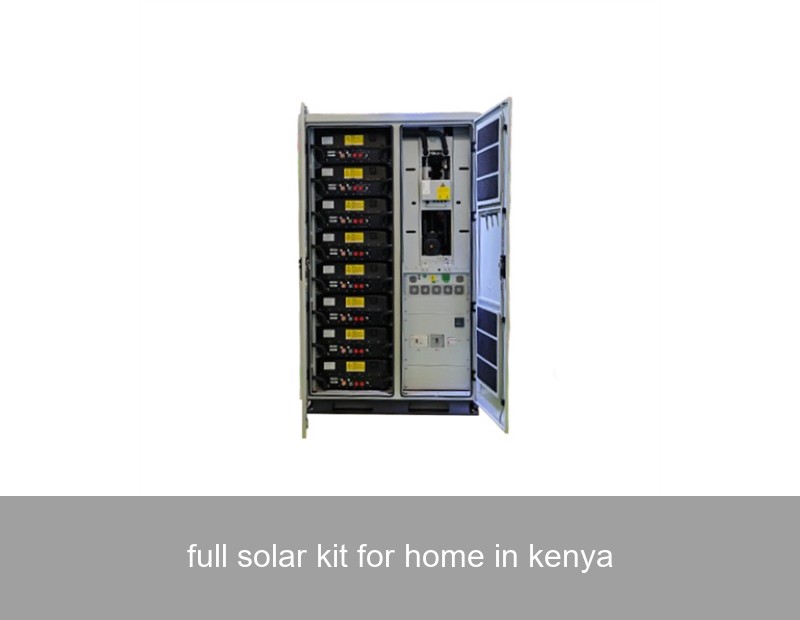
- Battery Storage System (BESS): The heart of energy independence. This is where surplus solar energy is stored for later use. The choice of battery chemistry—lead-acid vs. lithium-ion—is crucial.
- Mounting Structure & Balance of System (BOS): The skeleton and nervous system. This includes racks, cabling, conduits, safety disconnects, and monitoring systems.
While many suppliers offer basic bundles, the quality, integration, and intelligence of these components separate a merely functional system from a high-performance, durable asset for your home. This is where global expertise in system design becomes invaluable.
Why Lithium-Ion is the Game-Changer
For a full solar kit for home in Kenya that promises long-term value, lithium-ion (Li-ion) batteries, particularly Lithium Iron Phosphate (LFP), are becoming the standard. Compared to traditional lead-acid, they offer:
| Feature | Lithium-Ion (LFP) | Traditional Lead-Acid |
|---|---|---|
| Cycle Life | 4,000 - 6,000 cycles | 300 - 1,000 cycles |
| Depth of Discharge | 80-90% | ~50% |
| Space & Weight | Compact, Light | Bulky, Heavy |
| Maintenance | Virtually None | Regular Required |
This means more usable energy, a system that lasts decades, and less hassle—critical factors for a homeowner seeking a definitive solution.
A Kenyan Case Study: Data-Driven Results from a Real Home
Let's move from theory to practice. Consider the Omondi family residence in Kitengela, a solar-powered home monitored over 12 months.
- System Size: 8kW solar array, 15kWh lithium-ion battery, 7kW hybrid inverter.
- Previous State: Reliant on the grid with 8-10 hour monthly blackouts, spending an average of KES 8,000 monthly on electricity + KES 5,000 on diesel for a backup generator.
- Post-Installation Results:
- Grid electricity bill reduced by over 95%, to an average of KES 400 monthly (mostly grid-connection fees).
- Generator usage eliminated entirely, saving KES 60,000 annually in fuel and maintenance.
- System provided uninterrupted power during all grid outages, powering essentials and partial HVAC.
- Estimated payback period: 4-5 years, based on total energy cost savings.
Image Source: Unsplash - Representative image of a modern solar-powered home.

The key insight from this case? The true value of a high-quality full solar kit for home in Kenya isn't just in the solar panels; it's in the integrated storage and smart management that turns a capital expense into a powerful financial and lifestyle asset.
Beyond the Basics: The Highjoule Difference in Smart Energy Storage
As a global leader in advanced energy storage since 2005, Highjoule understands that the core of modern solar kit is intelligent storage. For homeowners in Kenya and worldwide, our approach elevates the standard kit.
While a typical kit provides components, Highjoule's technology provides a seamlessly integrated ecosystem. Our residential battery storage systems, like the Highjoule HES Series, are built with LFP chemistry for unparalleled safety and longevity. They are designed for easy integration into new or existing solar installations, offering scalable capacity to grow with your energy needs.
What truly sets our solution apart is the software intelligence. Our systems feature advanced energy management that learns your consumption patterns, automatically optimizes when to draw from solar, battery, or grid, and allows for remote monitoring and control via a user-friendly app. This means your full solar kit for home isn't just a passive system; it's an active tool for maximizing your energy independence and savings. For the Kenyan market, partnering with certified local installers who have access to Highjoule's global engineering support and robust products ensures a solution built to last in the local climate and usage conditions.
Image Source: Unsplash - Representative image of a modern home battery storage unit.

Making the Right Choice: Key Considerations for Your Home
Selecting your ideal full solar kit for home in Kenya requires careful thought. Here’s a practical checklist:
- Audit Your Energy Profile: Review your past electricity bills to determine your average daily kWh consumption. Identify your critical loads (refrigeration, lighting, etc.) and desired backup duration.
- Prioritize Quality & Warranty: Opt for tier-1 solar panels and inverters from reputable brands. For batteries, insist on Li-ion with a clear warranty on both performance (e.g., 70% capacity after 10 years) and cycles.
- Demand Smart Integration: Ensure the inverter, battery, and monitoring system are designed to work together seamlessly, not as disparate components pieced together.
- Choose the Right Partner: Work with an installer who provides detailed site assessments, clear proposals, and after-sales service. They should be able to explain system design and show proven installations.
- Understand the Standards: Verify that the proposed system and installer comply with local regulations and safety standards, including those from the Energy and Petroleum Regulatory Authority (EPRA).
Remember, the cheapest upfront cost often leads to higher long-term expenses. Investing in a quality, integrated system from experienced providers like Highjoule and our network of partners ensures reliability, safety, and the peace of mind that your home will be powered for years to come.
Ready to Transform Your Home's Energy Future?
The journey to energy independence starts with a question: What would uninterrupted, clean, and predictable power do for your home, your family's comfort, and your monthly budget? As you explore the possibilities for your own full solar kit for home in Kenya, we invite you to consider not just the components, but the intelligence and integration behind them. What energy goal is most important for you to achieve in the next year?
 Inquiry
 Online Chat