


Generate Your Own Electricity: The Ultimate Guide to Energy Independence
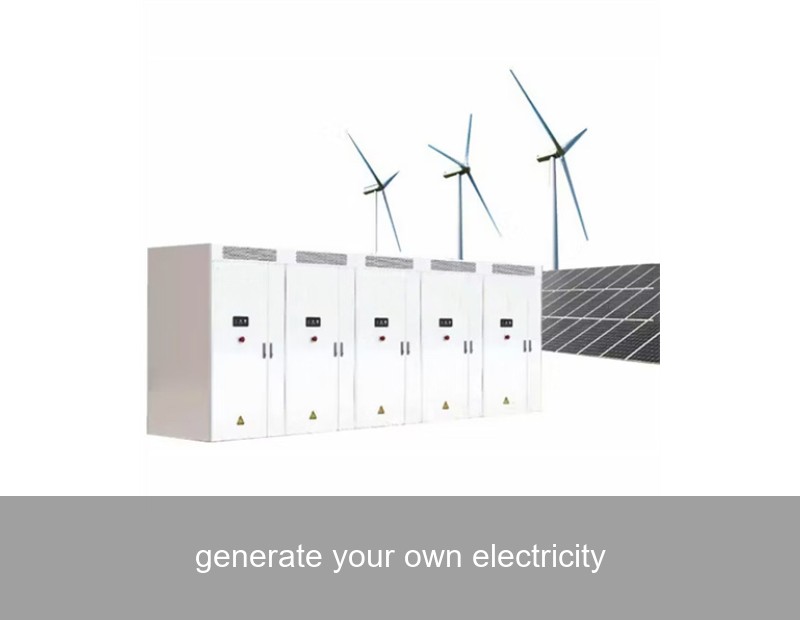
Have you ever opened your monthly utility bill and wished there was a way to take control? You're not alone. Across Europe and the United States, homeowners and business leaders are increasingly asking: "What if I could generate my own electricity?" This isn't just a daydream about off-grid living; it's a powerful, practical shift towards energy resilience, cost savings, and sustainability. The technology to become your own power producer is here, and it's more accessible than you might think. This guide will walk you through the why, the how, and the real-world impact of creating your personal or commercial energy supply.
Table of Contents
The Rise of Prosumers: From Consumer to Producer
The traditional, one-way flow of electricity—from a distant power plant to your home—is being transformed. Today, you can be a "prosumer": both a producer and consumer of energy. The primary drivers are clear: volatile energy prices, increasing grid instability in some regions, and a strong desire to reduce carbon footprints. According to the International Energy Agency (IEA), renewable capacity additions grew by almost 50% in 2023, with solar PV accounting for three-quarters of this expansion, much of it from distributed systems on homes and businesses. This data shows a global movement, not just a niche trend.

The phenomenon is simple: instead of just paying for power, you install a system that creates it. Any excess electricity you generate can often be fed back to the grid (through schemes like net metering) or stored for later use, turning your property into a mini power station.
Core Components to Generate Your Own Electricity
A complete system to generate your own electricity typically involves three key technologies working in harmony:
- Generation (Solar PV): Solar panels on your roof or property are the most common and efficient starting point. They convert sunlight into direct current (DC) electricity silently and with zero emissions.
- Conversion (Inverter): An inverter is the brain of the operation. It converts the DC electricity from your panels into the alternating current (AC) that powers your appliances and the grid.
- Storage (Battery): This is the game-changer. A battery energy storage system (BESS) allows you to save the solar power you generate during the day for use at night, during peak rate periods, or during a grid outage. It's what turns a solar system into a true 24/7 power solution.
Beyond Savings: The Tangible Benefits
While reducing your electricity bill is a major incentive, the benefits of generating your own power extend much further:
| Benefit | Description | Impact |
|---|---|---|
| Energy Resilience | With a battery backup, your power stays on during grid blackouts. | Protects homes and businesses from disruptions, crucial for critical operations and comfort. |
| Price Stability | You lock in a large portion of your energy cost at the "price" of your system's upfront investment. | Insulates you from future utility rate hikes and market volatility. |
| Environmental Contribution | Every kilowatt-hour you generate cleanly displaces fossil-fuel-based grid power. | Directly reduces your carbon footprint and supports decarbonization goals. |
| Grid Support | Advanced systems can provide services to stabilize the local grid. | Contributes to community-wide energy reliability and efficiency. |
A Real-World Case Study: Independence in Action
Let's look at a concrete example from Southern California, a region with high electricity rates and abundant sunshine. A medium-sized winery was facing annual electricity costs exceeding $85,000, with critical refrigeration and processing loads. Their goal was to reduce costs, ensure production continuity during Public Safety Power Shutoffs (wildfire-related blackouts), and bolster their sustainability branding.
The Solution: They installed a 250 kW solar PV array coupled with a 500 kWh containerized battery storage system. The system was designed to manage their load, prioritize solar self-consumption, and provide backup power to essential circuits for over 10 hours.
The Data-Driven Results (Year 1):
- Utility Bill Reduction: 92% decrease, saving approximately $78,000 annually.
- Energy Self-Sufficiency: The system met 98% of the facility's total energy needs.
- ROI Timeline: Projected payback period of 4.8 years, factoring in state incentives.
- Reliability: Successfully rode through 3 extended grid outages with zero operational impact.
This case, documented in part by the National Renewable Energy Laboratory (NREL), illustrates the multi-faceted value proposition. It's not just about savings; it's about business continuity and operational control.

Making It Work for You: Key Considerations
Thinking about taking the leap? Here’s a logical step-by-step approach:
- Assess Your Energy Profile: Analyze your past utility bills. What's your average consumption? When is your peak usage? This determines the size of the system you need.
- Evaluate Your Site: For solar, roof orientation, shading, and structural integrity are key. For storage, a cool, dry, and accessible location is ideal.
- Understand Incentives: Research federal, state, and local incentives. In the US, the federal Investment Tax Credit (ITC) significantly reduces the net cost. European countries have various feed-in tariffs and grants.
- Choose the Right Partner: This is critical. Look for a provider with deep system integration expertise, proven technology, and long-term service support.
How Highjoule Powers Your Energy Independence
This is where Highjoule's 19 years of expertise come into play. We don't just sell components; we deliver integrated, intelligent energy solutions. For a homeowner looking to generate your own electricity, our Residential Energy Hub combines high-efficiency solar panels with our award-winning H-Joule Cube battery storage and a smart energy manager. The system learns your habits, automatically optimizes when to draw from solar, battery, or the grid, and gives you full control via a simple app.
For commercial and industrial clients, like the winery in our case study, our Industrial Microgrid Solutions are scalable and robust. We provide everything from initial feasibility studies and financial modeling to engineering, installation, and 24/7 monitoring. Our containerized battery systems, like the H-Joule MegaPack, are pre-assembled and tested for rapid, reliable deployment. At Highjoule, we believe in creating power systems that are not only smart and efficient but are built to last and adapt to your evolving needs.

Ready to Take the First Step?
The journey to generating your own electricity starts with a question. What is the one critical load or cost center in your home or business that you would want to secure first against rising prices and grid uncertainty?
 Inquiry
 Online Chat