


Generator Backup for Solar Power: Your Complete Guide to Uninterrupted Energy
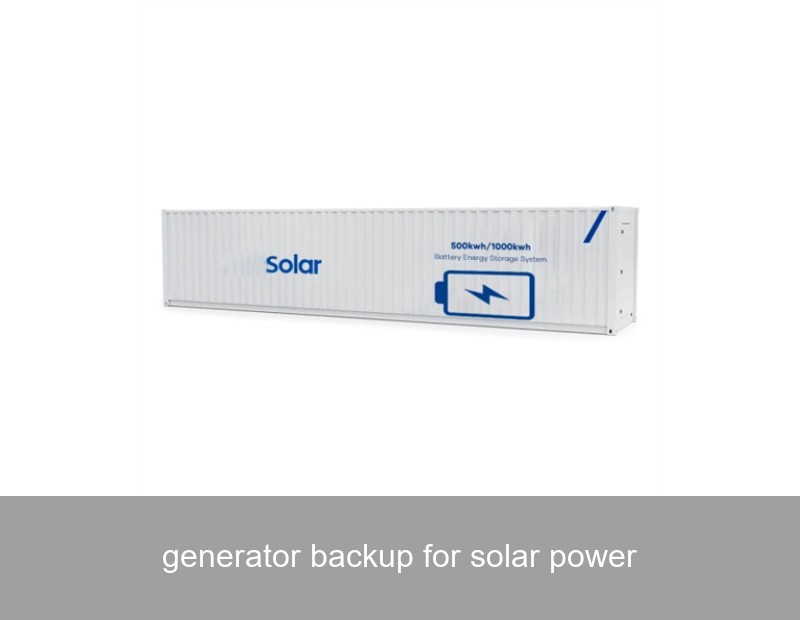
Imagine this: a storm rolls in, the grid goes down, and your solar panels sit silently on the roof. This frustrating scenario is a common reality for many solar homeowners and businesses. While solar power is fantastic for reducing bills and your carbon footprint, it has a well-known limitation: most standard grid-tied systems shut off during a blackout for safety reasons. This is where the critical concept of generator backup for solar power comes into play. It's the robust solution that ensures your lights stay on, your food stays cold, and your operations continue, no matter what happens outside. In this guide, we'll explore why pairing a generator with your solar installation isn't just a backup plan—it's a strategic move towards complete energy independence and resilience, especially in regions prone to extreme weather.
Table of Contents
The Problem: Solar's Standstill During Blackouts
It seems counterintuitive, doesn't it? You have a power plant on your roof, yet you're left in the dark. The reason is rooted in safety. Grid-tied solar inverters are designed to automatically shut down if they detect a grid failure. This "anti-islanding" feature protects utility workers who might be repairing downed lines, preventing your system from sending electricity back onto what should be a de-energized grid. So, when the grid fails, your solar system does too, leaving you vulnerable unless you have a separate backup system.

Image Source: Unsplash - Solar panels need a backup plan for stormy days and grid outages.
The Solution: Integrating Generator Backup with Solar
A traditional fossil-fuel generator provides a proven, immediate source of backup power. When integrated correctly with a solar photovoltaic (PV) system, it creates a powerful duo. Here’s how it typically works:
- Automatic Transfer Switch (ATS): This is the brains of the operation. The moment the ATS detects a grid failure, it signals your backup generator to start.
- Generator Runtime: The generator powers your critical loads, keeping essential appliances and systems running.
- Solar Coordination: With proper system design and controls, your solar PV system can be configured to either shut down or, in more advanced setups, continue operating to supplement the generator, reducing fuel consumption.
The primary advantage is power capacity and runtime. A properly sized generator can power your entire home or facility for as long as you have fuel. However, it comes with drawbacks: noise, emissions, ongoing fuel costs, and the need for regular maintenance.
Where Highjoule Comes In: Smarter Integration
At Highjoule, we see the generator as one component in a modern energy ecosystem. Our advanced energy management systems (EMS) are designed to seamlessly orchestrate between solar PV, battery storage, the grid, and a backup generator. This intelligence prioritizes clean solar power, utilizes batteries for silent, instant backup, and only calls upon the generator when absolutely necessary—for prolonged outages or extreme peak demands. This approach maximizes efficiency, minimizes fuel use, and extends the generator's lifespan.
The Smart Hybrid Approach: Solar + Storage + Generator
This is where the future of home and commercial energy backup truly lies. Adding a battery energy storage system (BESS) to your solar and generator setup creates a resilient "triple-defense" system.
| Component | Role in Backup | Benefit |
|---|---|---|
| Solar Panels | Primary energy generation | Reduces fuel and grid consumption, provides renewable power. |
| Battery Storage (e.g., Highjoule HPS Series) | First-response backup & daily energy shifting | Silent, instant, zero-emission power for most outages; extends solar self-use. |
| Backup Generator | Long-duration backup & battery recharge | Ensures power during multi-day outages or low-sun periods; can recharge batteries. |
In this configuration, the sequence of events during an outage is optimized:
- Grid Fails: The system disconnects from the grid in milliseconds.
- Battery Activates: Your Highjoule battery storage instantly takes over, powering critical loads without interruption.
- Solar Continues: Your panels keep producing, charging the batteries and powering loads during the day.
- Generator as Last Resort: Only if the battery is depleted and solar isn't sufficient (e.g., during a string of stormy days), the generator automatically starts to recharge the batteries and/or power the home directly.
This approach is not only more sustainable but also more cost-effective in the long run, as it drastically reduces generator runtime and fuel costs.
A Real-World Case: Resilience in Texas
Let's look at a practical example from a region familiar with grid stress: Texas, USA. Following the severe Winter Storm Uri in 2021, a manufacturing facility in Austin sought a solution to avoid future costly shutdowns. They had an existing 500 kW solar array but no backup.
The Solution Implemented: Highjoule designed a system integrating their existing solar with a 250 kW/500 kWh HPS commercial battery storage unit and a pre-existing 750 kW natural gas standby generator. The system was governed by Highjoule's Apex EMS software.
- During a 12-hour grid outage in the summer of 2023, the facility operated normally on battery and solar power for the first 8 hours.
- As the battery reached a 30% state of charge, the EMS automatically started the generator, which ran for just 2 hours to recharge the battery bank while also supporting facility loads.
- The generator was then shut off, and the system returned to battery/solar operation. Total generator runtime was reduced by over 65% compared to a generator-only backup scenario.
- The facility avoided an estimated $48,000 in lost production and maintained critical climate control for sensitive equipment.
This case, documented in a U.S. Department of Energy resilience report, illustrates the tangible benefits of an integrated approach.
Image Source: Highjoule - A Highjoule HPS battery system provides seamless backup for commercial operations.
Choosing and Implementing Your System
Designing the right generator backup for solar power system requires careful planning. Here are key considerations:
1. Load Assessment & Sizing
What do you need to power during an outage? A residential customer might prioritize refrigerators, lighting, and a well pump. A business might need to keep servers, security systems, and essential machinery online. A detailed load analysis is the first step to correctly size your solar array, battery bank, and generator.
2. Technology & Integration Compatibility
Not all inverters, batteries, and generators communicate well together. Seeking components designed for integration is crucial. Highjoule's systems, for instance, use open-protocol communication (like SunSpec Modbus) to ensure seamless interoperability between our batteries, third-party inverters, and generator controllers, creating a unified and intelligent system.
3. Fuel Source and Storage
Generators can run on propane, natural gas, or diesel. Your choice will depend on local fuel availability, storage regulations, and personal preference. Natural gas is convenient if lines are available, while propane or diesel require on-site storage.
4. Professional Installation & Permitting
This is not a DIY project. Integrating high-voltage electrical systems requires licensed professionals who understand local building codes, electrical codes (like the NEC in the U.S.), and utility interconnection requirements. A qualified installer will handle the permits and ensure the system is safe and compliant.
The Future of Energy Resilience
The conversation is shifting from simple backup to intelligent energy resilience. With the increasing frequency of extreme weather events, as noted by climate researchers (IPCC AR6 Report), and the growing electrification of everything from vehicles to heating, our dependence on reliable electricity is absolute. The combination of solar (renewable generation), batteries (instant buffer and storage), and a generator (assured long-term backup) represents the most robust solution available today.
It empowers homeowners and businesses to not only withstand grid failures but also to actively manage their energy costs through daily solar self-consumption and participation in utility demand response programs, where allowed.
So, as you consider fortifying your energy supply, ask yourself: Is my goal merely to have a backup, or is it to achieve true energy independence and intelligence for my home or business? The technology to do the latter is here and evolving fast.
 Inquiry
 Online Chat