


High Voltage Solar Inverter: The Heart of Modern, Efficient Solar Power Systems
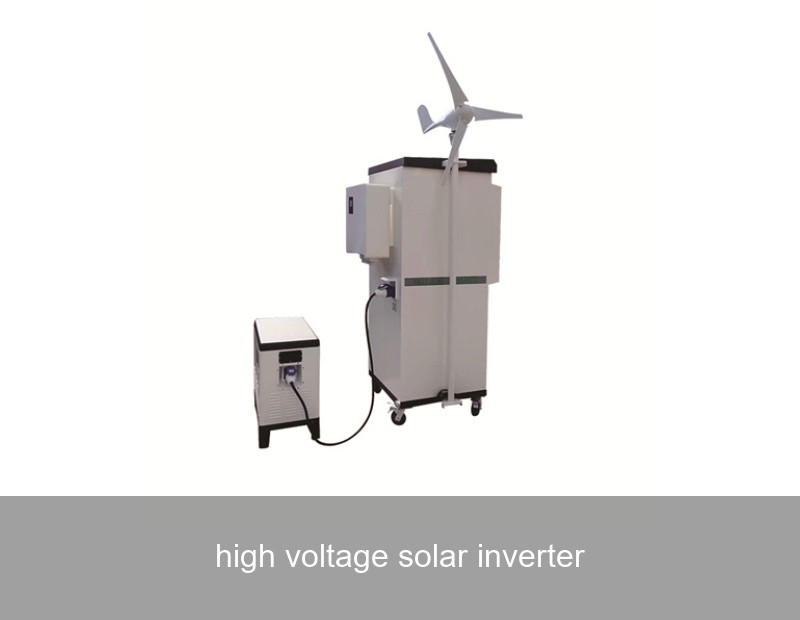
You've likely seen the solar panels gleaming on rooftops or in vast fields. But have you ever wondered what magic happens to turn that captured sunlight into the usable electricity powering your home or business? The unsung hero of this process is the high voltage solar inverter. As solar technology leaps forward, especially for larger commercial and industrial installations, the shift towards high-voltage DC strings is a game-changer. It's all about achieving higher efficiency, greater reliability, and a lower overall cost for your solar energy. Let's dive into why this technology is pivotal and how it's shaping the future of renewable energy.
Table of Contents
What is a High Voltage Solar Inverter?
At its core, a solar inverter's job is to convert the Direct Current (DC) electricity generated by your solar panels into the Alternating Current (AC) electricity that powers the grid and your appliances. A high voltage solar inverter is specifically designed to handle much higher input DC voltages from the solar array, typically operating at 1000V, 1500V, or even higher.
Think of it like water pressure in a pipe. A traditional low-voltage system uses a wider pipe (high current) to move a certain amount of water (power), which creates more friction (losses). A high-voltage system uses a narrower pipe (lower current) but with much higher pressure (voltage) to move the same amount of water. This higher "pressure" is far more efficient over long distances, reducing energy losses and the need for thick, expensive cabling.

Image Source: Unsplash - Representative image of a solar installation.
The Technical Shift: From 600V to 1500V
The solar industry has steadily moved from 600V systems to 1000V and now 1500V architectures, particularly for utility-scale and large commercial projects. According to a report by the National Renewable Energy Laboratory (NREL), 1500V systems have become the dominant design for new utility-scale plants, offering significant balance-of-system cost savings. This evolution demands inverters that are not just robust but intelligently designed to manage the complexities of higher voltage operation safely and efficiently.
Key Benefits of High Voltage Solar Inverters
Why is the industry moving in this direction? The advantages are substantial, impacting both the installation's economics and its long-term performance.
- Increased System Efficiency: Higher DC input voltage means lower current for the same power output. Reduced current leads to significantly lower resistive losses in the cables, meaning more of the precious solar energy you generate actually reaches the inverter and, ultimately, your facility or the grid.
- Reduced Balance of System (BoS) Costs: This is a major driver. With lower current, you can use thinner, less expensive DC cabling. Furthermore, you can connect more solar panels in a single long "string," reducing the number of combiner boxes, connectors, and conduit runs. This simplification slashes material and labor costs.
- Enhanced Power Density & Smaller Footprint: High voltage inverters pack more power conversion capability into a smaller physical size. This saves valuable space in equipment rooms or on pad-mounted sites, a critical factor for commercial and industrial properties.
- Improved Return on Investment (ROI): The combination of higher energy yield (from reduced losses) and lower upfront installation costs directly translates to a faster payback period and a higher lifetime return on your solar investment.
Ideal Applications & A Real-World Case Study
While beneficial for many setups, high voltage solar inverters truly shine in specific scenarios. They are the optimal choice for:
| Application | Why High Voltage is Ideal |
|---|---|
| Commercial & Industrial (C&I) Rooftops | Maximizes energy harvest from large, often complex roof spaces while minimizing cable runs and equipment footprint. |
| Utility-Scale Solar Farms | Essential for cost-effective power generation over vast areas; the standard for new multi-megawatt projects. |
| Agricultural & Farming Operations | Efficiently covers large land areas with fewer inverters and less trenching for DC cables. |
| Large-Scale Energy Storage Integration | Pairs seamlessly with high-voltage battery energy storage systems (BESS) for streamlined DC-coupled architectures. |
Case Study: Boosting a German Manufacturing Plant's Green Profile
Consider a concrete example from our work at Highjoule. A mid-sized automotive parts manufacturer in Bavaria, Germany, aimed to reduce its grid dependence and carbon footprint. Their challenge: a 200,000 sq. ft. facility with a high, consistent energy demand and limited space for bulky electrical equipment.
The Solution: Highjoule engineered a 750 kW rooftop solar PV system centered around our HJ-1500V Commercial Inverter Series. These inverters were selected for their high efficiency (up to 99%) and ability to support long string designs.
- System Voltage: Operates at a 1500V DC input.
- Cost Savings: Reduced BoS costs by an estimated 18% compared to a 1000V design, primarily through slimmer cabling and fewer combiners.
- Performance: The higher voltage operation reduced string-to-inverter line losses by approximately 2.5%, boosting annual energy production.
- Space Savings: The compact inverter design freed up 30% more space in the plant's electrical room for future expansion.
Within the first year, the plant met 35% of its daytime energy needs with solar, a figure that exceeded projections thanks to the system's high efficiency. This case mirrors findings from the Fraunhofer ISE Photovoltaics Report, which consistently highlights efficiency gains and LCOE reduction as key outcomes of modern high-voltage system design.

Image Source: Unsplash - Representative image of a commercial rooftop solar installation.
The Future and Making the Right Choice for Your Project
The trajectory is clear: higher voltage, smarter integration, and a focus on total system value. The next frontier involves even tighter integration with storage. A high voltage solar inverter that can natively connect to a high-voltage battery bank eliminates unnecessary DC-AC-DC conversion steps, creating a more efficient and robust solar-plus-storage solution. This is where companies with deep system integration expertise, like Highjoule, add immense value.
Where Highjoule Fits In
At Highjoule, we don't just supply inverters; we provide intelligent energy platforms. Our HJ-1500V Series Inverters are the cornerstone of our commercial and industrial solutions. They are built for durability and feature advanced grid-support functions and native compatibility with our Highjoule BESS for seamless storage integration. Our approach is to analyze your specific site, energy profile, and goals to design a system where the inverter, panels, and potential storage work as a single, optimized unit. We handle the complexity, delivering a turnkey system that maximizes your financial and environmental returns.
Key Considerations Before You Invest:
- System Size: Generally, projects above 50 kW start to see compelling benefits from high-voltage architecture.
- Component Compatibility: Ensure all components—panels, combiners, disconnects—are rated for the system voltage (e.g., 1500V).
- O&M and Safety: Work with certified installers. High-voltage systems require specific safety protocols during installation and maintenance.
- Future-Proofing: Are you considering adding storage in 2-3 years? Choose an inverter platform that can accommodate that growth easily.
As you contemplate harnessing solar power for your business or community, the technology choice at the system's heart—the inverter—is crucial. It determines not just today's output, but the system's adaptability for decades. Are you looking at a solar project where efficiency, density, and long-term value are paramount? What role could a high-voltage system play in achieving your energy independence goals?
 Inquiry
 Online Chat