


Beyond the Diesel Gen-Set: Why Modern Businesses in Ethiopia are Rethinking Their Generator Supplier
For decades, the familiar rumble of diesel generators has been the soundtrack to business continuity in Ethiopia and across much of Africa. When the grid falters—a common occurrence that can cost economies billions annually—the immediate solution has been to call a generator supplier in Ethiopia. This reliance on fossil-fueled backup is a pragmatic response to a real problem, but it comes with a heavy price: soaring operational costs, environmental impact, and operational complexity. Today, a technological shift is empowering Ethiopian industries and businesses to think differently about reliability. The question is no longer just "who is the best generator supplier?" but "what is the most intelligent, sustainable, and cost-effective way to ensure uninterrupted power?"
The Power Paradox: Why Ethiopia is Looking Beyond Traditional Generators
Ethiopia's energy landscape presents a paradox. The country is a regional leader in renewable energy investment, with the Grand Ethiopian Renaissance Dam (GERD) symbolizing its massive hydroelectric ambitions. Yet, for individual businesses, factories, and farms, power reliability remains a daily challenge. Grid instability forces a dependency on imported diesel, turning operational budgets over to volatile global fuel prices and logistics chains.
Consider the data: The World Bank notes that power outages can cost businesses in developing countries up to 10-15% of annual sales. For an Ethiopian agro-processing plant or textile factory, this isn't just an inconvenience; it's a direct threat to competitiveness, export orders, and job security. The traditional model of simply scaling up diesel generator capacity is becoming financially and environmentally unsustainable.

Image: The diesel generator has been the traditional backbone of backup power, but its costs are prompting a search for alternatives.
The Silent Revolution: Modern Energy Storage as a Generator Alternative
This is where the silent revolution begins. Advanced Battery Energy Storage Systems (BESS) are no longer just concepts for Western grids; they are practical, deployable solutions for markets like Ethiopia. Think of it this way: instead of only *generating* power expensively when the grid fails, what if you could *store* cheap, clean grid or solar power when it's available and use it precisely when you need it?
This system combines high-density lithium-ion batteries with sophisticated energy management software. It performs multiple roles:
- Uninterruptible Power Supply (UPS): Provides seamless, instant backup during grid outages—no sputtering start-up delay.
- Peak Shaving: Reduces demand charges by discharging stored energy during periods of high tariff rates.
- Solar Integration: Stores excess solar energy for use at night or during cloudy periods, maximizing self-consumption.
- Grid Stabilization: In some configurations, can support the local grid with frequency regulation.
The outcome? Reliable power without the noise, fumes, fuel logistics, and high maintenance of a traditional genset.
Case Study: A Textile Factory in Awash Finds a Sustainable Power Partner
Let's ground this in reality. A prominent textile export factory in the Awash industrial zone faced crippling daily power fluctuations and weekly outages. Their 1.5MW diesel generator fleet consumed over 250,000 liters of fuel annually, costing hundreds of thousands of dollars and emitting approximately 670 tons of CO2 (based on EPA conversion metrics). Downtime during generator switch-over was damaging sensitive machinery and production quality.
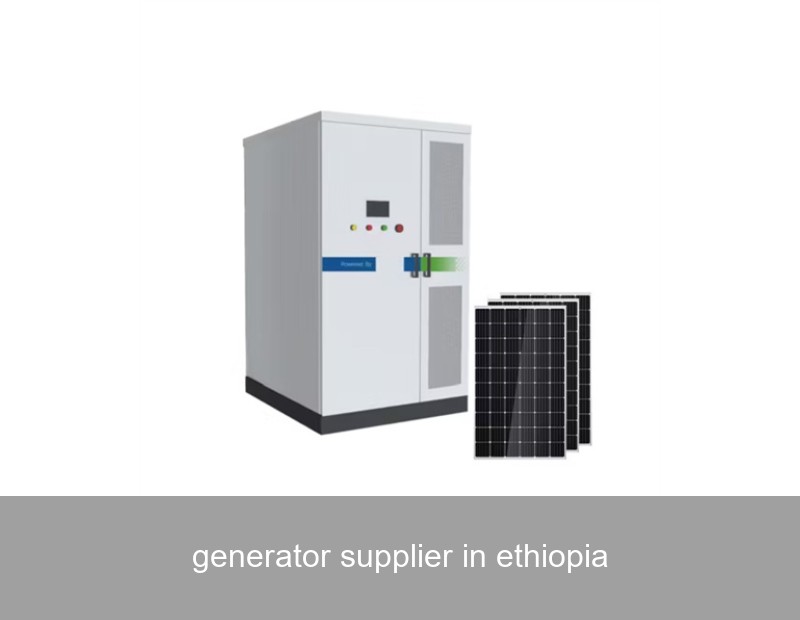
In 2023, they partnered with Highjoule to implement a hybrid solution. The project deployed a Highjoule C&I PowerStack 1000 system—a containerized, all-in-one energy storage unit with a capacity of 1 MWh and 500 kW inverter power—integrated with their existing rooftop solar and a smaller, optimized diesel generator as a final backup.
| Metric | Before (Diesel-Centric) | After (Highjoule BESS Hybrid) |
|---|---|---|
| Annual Fuel Cost | ~$300,000 | ~$45,000 (85% reduction) |
| CO2 Emissions | ~670 tons | ~100 tons |
| Backup Response Time | 30-60 seconds | Seamless (20ms) |
| Maintenance Cost | High (engine upkeep) | Significantly Lower |
| Solar Self-Consumption | 40% | Over 90% |
The Highjoule system's intelligent controller prioritizes solar and battery use, only engaging the diesel genset for prolonged outages. The result was not just cost savings and emission cuts, but also enhanced power quality that protected equipment and ensured consistent production schedules for European buyers.
Why Intelligent Storage Wins Over a Generator Supplier in Ethiopia
For a business decision-maker, the comparison is clear. While a generator supplier in Ethiopia provides a single-component solution (fuel-to-power), a provider like Highjoule delivers an intelligent energy *system*. Here’s the breakdown:
- Total Cost of Ownership (TCO): Despite a higher initial investment, the TCO of a BESS over 10 years is often lower due to near-zero "fuel" costs (sun, wind, off-peak grid) and lower maintenance.
- Energy Independence: Reduces exposure to diesel price volatility and supply chain disruptions.
- Sustainability Alignment: Meets corporate ESG goals and prepares businesses for potential carbon-related trade regulations from the EU and US.
- Operational Excellence: Provides clean, stable power critical for modern manufacturing, IT servers, and healthcare equipment.
Highjoule's Tailored Solutions for the Ethiopian Market
With nearly two decades of experience since 2005, Highjoule designs solutions for exactly these challenges. We understand that the needs of a hospital in Addis Ababa differ from a flower farm near Lake Ziway or a telecom tower in a remote region.
For the Ethiopian commercial and industrial sector, our PowerStack Series offers scalable, containerized solutions that are easy to deploy and operate. For larger microgrid or utility-scale applications, our GridMax Systems provide the robustness needed for grid stabilization and renewable integration. All systems are managed by our proprietary JouleBrain AI software, which optimizes every kilowatt-hour for cost and carbon savings.

Image: Intelligent control systems are the brain of modern energy storage, optimizing performance for cost and reliability.
Our role transcends that of a mere equipment vendor. We are a long-term partner in energy resilience, offering comprehensive services from site assessment and financial modeling to installation, remote monitoring, and maintenance.
Building the Future Grid, One Intelligent System at a Time
The vision for Ethiopia's energy future is not built on a foundation of diesel fumes. It's built on a diversified, resilient, and intelligent network. Distributed energy storage systems are the keystone of this network. They enable higher penetration of Ethiopia's abundant hydro, solar, and wind resources, reduce strain on the central grid, and provide local, reliable power that fuels economic growth.
As the nation continues its remarkable development journey, the choice for forward-thinking businesses and institutions is evolving. The question is shifting from finding a reliable generator supplier in Ethiopia to finding a reliable energy resilience partner.
Is your organization ready to calculate the true cost of your current backup power strategy and explore how intelligent storage could secure your operations for the next decade?
 Inquiry
 Online Chat