


Understanding and Managing Cold Storage Facility Cost: A Smart Energy Perspective
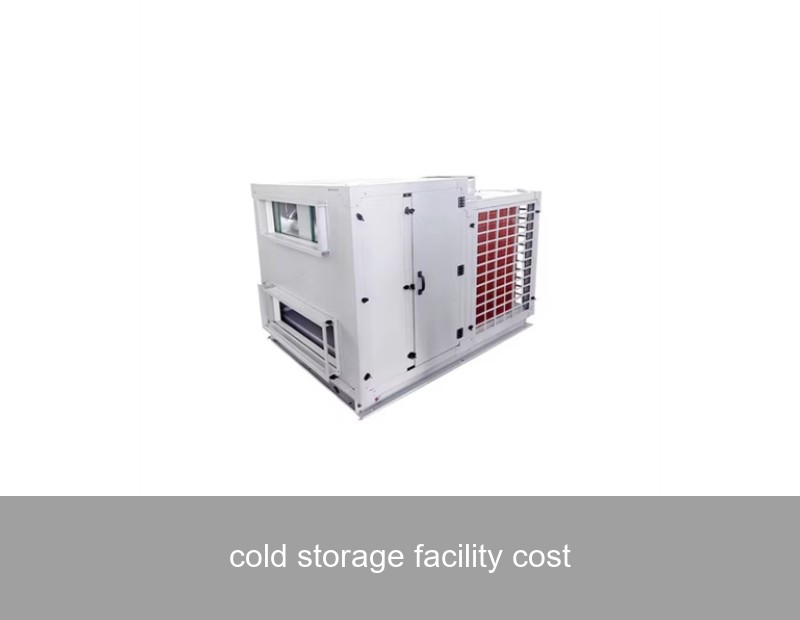
If you operate or are planning a cold storage facility, the word "cost" is likely always on your mind. Beyond construction and labor, the most volatile and critical expense is energy. Keeping vast warehouses at sub-zero temperatures 24/7 is a monumental energy task, and with rising electricity prices, particularly in Europe and the US, managing cold storage facility cost has become synonymous with managing energy consumption. This article delves into how modern energy solutions, particularly intelligent Battery Energy Storage Systems (BESS), are transforming this cost equation from a burden into an opportunity for control and savings.
Table of Contents
- The Energy Drain: Why Cold Storage is So Power-Hungry
- Beyond the Electricity Bill: The True Cost Components
- Case Study: Peak Shaving in a German Cold Logistics Hub
- The Highjoule Solution: Intelligent Storage for Cold Facilities
- Future-Proofing Your Facility
- What's Your Biggest Energy Cost Challenge?
The Energy Drain: Why Cold Storage is So Power-Hungry
Let's start with the core phenomenon. A cold storage facility isn't just a refrigerated room; it's a precision thermal environment. Constant cooling is required to combat heat infiltration from outside, heat generated by lights and machinery, and the "pulses" of heat every time a door opens for loading. Compressors, the heart of the refrigeration system, are large inductive loads that start and stop frequently, causing significant power spikes. This creates a highly variable energy demand profile with two costly characteristics: a consistently high base load and unpredictable, expensive peaks.

The Data: Peak Demand Charges Hurt
In both European and American utility markets, commercial and industrial customers don't just pay for the total energy (kWh) they consume. They also pay a "demand charge" based on their highest rate of power use (kW) during a billing period, often a short 15 or 30-minute window. For a cold storage facility, a simultaneous start of multiple compressors, combined with other site loads, can create a massive power spike. This single spike can set the demand charge for the entire month, sometimes accounting for 30-50% of the total electricity bill. The U.S. Department of Energy has highlighted demand charges as a major financial burden for energy-intensive businesses (source: energy.gov).
Beyond the Electricity Bill: The True Cost Components of Cold Storage
When we analyze cold storage facility cost holistically, energy intertwines with other critical factors:
- Capital Expenditure (CapEx): The cost of the refrigeration system itself, insulation, and building materials.
- Operational Expenditure (OpEx): Dominated by electricity, but also includes maintenance, repairs, and labor.
- Reliability & Risk: A power outage isn't an inconvenience; it's a catastrophic event risking millions in inventory spoilage. Backup power, often diesel generators, adds cost and carbon footprint.
- Sustainability Goals: Corporate Net-Zero commitments and potential carbon taxes are making emissions from grid-dependent operations a financial risk.
The insight here is clear: a strategy focused solely on buying cheaper energy is incomplete. The modern approach is to manage and optimize how and when you use energy to directly impact all these cost centers.
Case Study: Peak Shaving in a German Cold Logistics Hub
Let's look at a real-world application. A large third-party logistics (3PL) provider in North Rhine-Westphalia, Germany, operated a 15,000-pallet cold and frozen storage facility. Their challenge was severe grid demand charges and an aging electrical infrastructure that was nearing its capacity limit, threatening expansion plans.
The Solution & Data: The facility integrated a 1.2 MWh / 600 kW Battery Energy Storage System configured for peak shaving and load management. The system's intelligent software continuously monitored the site's total power draw. When it predicted that the concurrent operation of compressors, conveyors, and lighting would cause a peak exceeding a set threshold, it seamlessly discharged the battery to supplement grid power.
| Metric | Before BESS | After BESS Implementation |
|---|---|---|
| Average Monthly Peak Demand | 1,150 kW | 850 kW (26% reduction) |
| Monthly Demand Charge Cost | €11,500 (approx.) | €8,500 (approx.) |
| Annual Demand Charge Savings | €36,000+ | |
| Grid Capacity Headroom | ~50 kW (constrained) | ~350 kW (enabling expansion) |
This case study demonstrates the dual benefit: direct, recurring OpEx savings and the deferred CapEx of a costly grid infrastructure upgrade. The system paid for itself in under 5 years, and now delivers pure operational savings.
The Highjoule Solution: Intelligent Storage for Cold Facilities
This is where Highjoule's expertise becomes critical. As a global provider since 2005, we understand that a battery is not just a battery. For a mission-critical environment like cold storage, the system must be robust, intelligent, and seamlessly integrated.
Our H-Series Commercial & Industrial BESS is engineered for high-power, high-cycle applications like industrial refrigeration. Paired with our Energy Management Platform (EMP), it delivers a tailored solution:
- Advanced Peak Shaving: Our AI-driven algorithms learn your facility's unique load profile, predicting compressor cycles and pre-emptively dispatching battery power to avoid demand spikes.
- Energy Arbitrage: In markets with time-of-use (TOU) rates, the system automatically charges the battery when grid electricity is cheapest (e.g., at night) and uses it during expensive peak afternoon periods.
- Backup Power & Resilience: In the event of a grid outage, the BESS can provide instantaneous backup power to critical loads, bridging the gap until generators start or allowing for a safe, controlled shutdown of refrigeration systems to protect inventory.
- Solar Integration: For facilities with on-site solar PV, our platform optimizes consumption of self-generated renewable energy, storing excess solar production during the day to power cooling systems at night, further reducing grid dependence and carbon footprint.

By deploying a Highjoule system, you're not just adding a component; you're installing an active energy asset that works 24/7 to manage your most volatile operational cost.
Integration with Refrigeration Cycles
A key technical insight is the synchronization with refrigeration. Modern ammonia or CO2 systems have complex compressor sequencing. Our EMP can interface with Building Management Systems (BMS) or refrigeration controllers, receiving signals or forecasts to optimize battery dispatch around defrost cycles and compressor staging, maximizing efficiency and equipment lifespan.
Future-Proofing Your Facility: The Broader Cost-Benefit Picture
Investing in smart energy storage is a strategic move that addresses future cold storage facility cost pressures.
- Regulatory Compliance: As grids decarbonize, flexibility will be rewarded. Programs like Demand Response (DR) allow you to earn revenue by reducing load during grid stress. A BESS allows participation without disrupting core operations.
- Carbon Accounting: By enabling higher consumption of on-site renewables and providing a cleaner alternative to diesel backup, a BESS directly reduces your Scope 2 emissions. The International Energy Agency notes the crucial role of storage in enabling renewable integration (source: IEA).
- Total Cost of Ownership (TCO): While upfront cost is a consideration, the TCO of a Highjoule system is positive. The combination of demand charge savings, TOU savings, potential DR revenue, and avoided outage losses creates a compelling financial return, while simultaneously de-risking your operation.
What's Your Biggest Energy Cost Challenge?
Every cold storage facility has a unique energy fingerprint—defined by its location, utility tariff, refrigeration technology, and operational patterns. The journey to controlling your cold storage facility cost begins with understanding that fingerprint. Are demand charges your primary pain point? Is grid reliability a constant concern? Or are corporate sustainability targets driving your search for a solution?
We invite you to examine your last 12 months of electricity bills and identify your peak demand charges. What could a 20-30% reduction in those charges mean for your bottom line? How would the resilience of seamless backup power change your risk profile?
 Inquiry
 Online Chat