


Gewerbe Batteriespeicher: The Smart Business Decision for Energy Independence
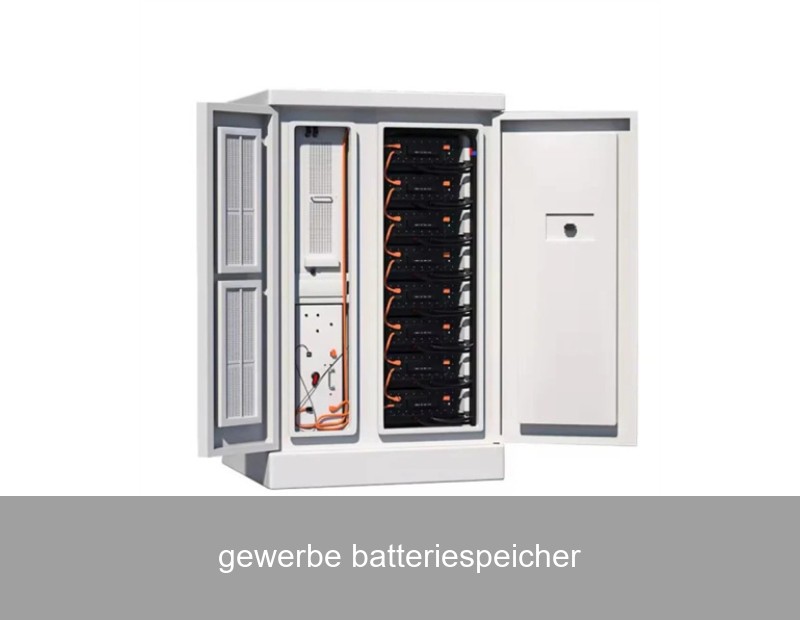
Let's talk about a common headache for business owners across Europe and the US: opening your electricity bill. That sinking feeling is becoming all too familiar, isn't it? You're not just paying for the power you use; you're paying for grid volatility, geopolitical uncertainty, and an infrastructure straining under new demands. But what if your business could turn this challenge into a strategic advantage? Enter the gewerbe batteriespeicher (commercial battery storage system). This isn't just a backup power source; it's an intelligent energy asset that can transform how you consume, manage, and even profit from electricity. For nearly two decades, Highjoule has been at the forefront of this revolution, empowering businesses to take control of their energy destiny.
The Phenomenon: Rising Costs & Unreliable Grids
The modern commercial enterprise sits at the intersection of two powerful energy trends. First, the volatile cost of electricity. In Germany, for instance, base commercial electricity prices have seen significant fluctuations, heavily influenced by gas prices and carbon costs[1]. In the US, demand charges—fees based on your highest 15-minute power draw in a month—can constitute up to 50% of a commercial bill. Second, grid reliability is no longer a given. From extreme weather events in California to grid congestion in industrial parts of Europe, unexpected outages mean lost revenue, spoiled inventory, and operational chaos.
The traditional response—diesel generators—is increasingly seen as a costly, polluting band-aid. The proactive solution? Generate and store your own. With solar PV becoming more affordable, the missing link has been intelligent storage. That's where a tailored commercial battery system comes in.

Image: A modern commercial facility combining rooftop solar with on-site battery storage. (Photo by American Public Power Association on Unsplash)
The Data: Why Commercial Battery Storage Makes Financial Sense
Let's move beyond theory and look at the numbers. A commercial battery storage system delivers value through multiple, quantifiable revenue streams and cost savings:
| Value Stream | How It Works | Potential Impact |
|---|---|---|
| Demand Charge Reduction | The battery discharges during short periods of peak demand, flattening your "peak draw" from the grid. | Can reduce demand charges by 20-40%, offering a rapid ROI. |
| Energy Arbitrage (Time-Shift) | Store cheap electricity (e.g., overnight or from solar) and use it during expensive peak hours. | Leverages time-of-use (TOU) rate differentials, directly lowering energy supply costs. |
| Backup Power & Resilience | Provides seamless, instantaneous power during grid outages, keeping critical operations online. | Prevents losses from downtime; value depends on business continuity needs. |
| Grid Services (in some markets) | Participate in frequency regulation or capacity markets, earning revenue for grid support. | Can provide an ongoing ancillary income stream, improving asset payback. |
When layered together, these benefits often result in a payback period of 5-8 years for a well-designed system, after which the savings drop directly to your bottom line for the system's remaining lifespan (often 15+ years).
The Solution: Highjoule's Smart Commercial Battery Systems
Understanding the "why" is one thing; implementing the "how" is where expertise matters. This is Highjoule's domain. Since 2005, we've evolved from a pioneer to a global leader in advanced储能 systems. Our approach to the gewerbe batteriespeicher is holistic: we provide not just hardware, but an integrated smart energy solution.
Our flagship Highjoule H-Series Commercial Stack is designed for scalability and intelligence:
- Modular Design: Start with a 50 kWh unit and scale up to multi-megawatt installations seamlessly as your needs grow.
- Advanced Battery Chemistry: We utilize lithium iron phosphate (LFP) chemistry for unparalleled safety, longevity (10,000+ cycles), and stable performance even in demanding environments.
- Intelligent Energy Management System (EMS): The true brain of the operation. Our AI-driven EMS learns your consumption patterns, weather forecasts, and tariff schedules. It autonomously optimizes charging and discharging to maximize your financial return, not just simple time-based control.
- Grid-Forming Capability: For critical operations, our systems can create a stable "microgrid" independently of the main grid, powering sensitive equipment without interruption.
Our service wraps around the entire project lifecycle: from initial consultancy and custom financial modeling, through seamless integration with existing solar or new installations, to ongoing monitoring and performance guarantees. We ensure your commercial battery storage system is a working asset from day one.
Real-World Case Study: A German Logistics Hub
Let's make this concrete. In 2022, Highjoule partnered with a mid-sized logistics company in North Rhine-Westphalia, Germany. The challenge: a 12,000 sqm warehouse with high refrigeration load, leading to crippling demand peaks and annual electricity costs exceeding €250,000. Their existing 400 kWp rooftop solar system was largely exporting to the grid at non-optimal times due to midday overproduction.
The Solution Deployed: A turnkey Highjoule system featuring a 340 kWh H-Series battery and an upgraded EMS integrated with their solar inverters.
The Results (after 18 months):
- Demand Charge Reduction: Peak grid draw reduced by 28%, saving over €18,000 annually on demand charges alone.
- Solar Self-Consumption: Increased from 35% to over 80%, drastically reducing purchased energy.
- Overall Savings: Combined savings and revenue (from controlled grid feed-in) totaled approximately €42,000 per year.
- Resilience: The system now provides 6+ hours of backup for critical cooling and sorting systems, a vital insurance policy.
The project achieved a calculated ROI in under 7 years, transforming a cost center into a predictable, controlled asset. "The Highjoule system doesn't just store energy; it manages our energy economics," noted the facility's managing director.

Image: A modern commercial battery storage installation similar to Highjoule's H-Series. (Photo by kindel Media on Pexels)
Key Considerations for Your Business Storage Project
Thinking about taking the next step? Here’s a quick guide to focus your evaluation:
- Analyze Your Load Profile: Your utility bills hold the key. Identify your peak demand patterns and time-of-use rates. This analysis is the first step in our consultancy process.
- Define Primary Objectives: Is your main goal cost savings (peak shaving), resilience (backup power), or sustainability (maximizing renewables)? The priority influences the system design.
- Evaluate Infrastructure: Space, grid connection capacity, and compatibility with existing solar or generators are crucial practical details.
- Understand Incentives: Markets like the US (via the ITC) and various European states offer tax benefits, grants, or accelerated depreciation for storage. Highjoule's team stays current on these to improve your project economics.
The Future Outlook for Commercial Energy
The trajectory is clear. The grid is evolving from a one-way street to a dynamic network, and businesses with intelligent storage will be the active participants, not passive consumers. With the rise of electric vehicle fleets, the concept of bidirectional charging—using your fleet's batteries as a grid resource—is on the horizon. A gewerbe batteriespeicher is the foundational platform for this future.
It’s more than a battery; it’s a declaration of energy independence. It tells your customers, your community, and your balance sheet that you are prepared for the future. So, the question we leave you with is this: When you look at your next electricity bill, will you see just a cost, or will you see the potential for an intelligent energy asset waiting to be unlocked? What would energy certainty do for your business's operational confidence and competitive edge?
 Inquiry
 Online Chat