


Finding the Right GFB 3.2 V 100Ah for Sale: A Buyer's Guide to Advanced Energy Storage
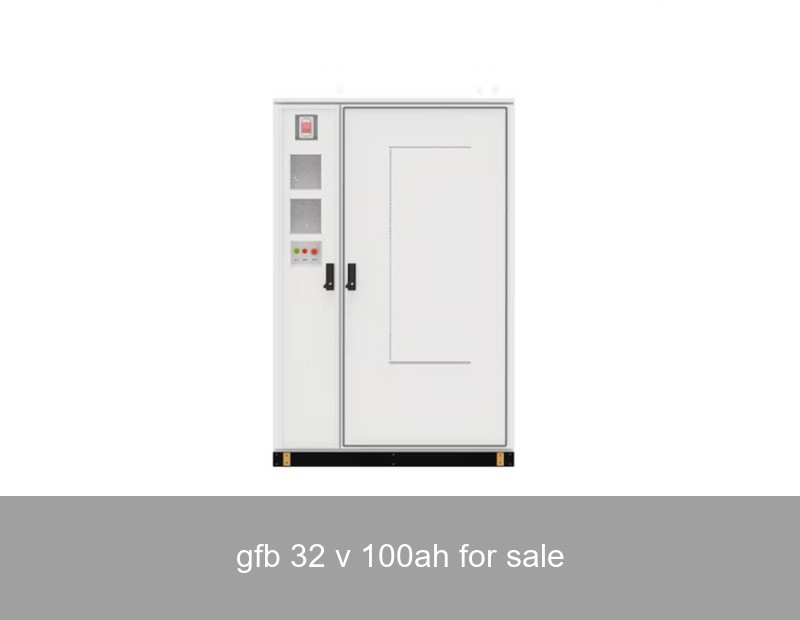
If you're searching for a "GFB 3.2 V 100Ah for sale," you're likely deep into planning a solar-plus-storage project, a critical backup power system, or an off-grid energy solution. That specific search term tells us you understand that the foundation of any reliable battery energy storage system (BESS) is the individual battery cell. The GFB 3.2V 100Ah Lithium Iron Phosphate (LiFePO4) cell has become a popular building block for its proven safety, long cycle life, and stable performance. But purchasing cells is just the first step. The real challenge lies in integrating them into a system that is safe, efficient, and intelligent. This is where expertise matters more than just a component purchase.
Table of Contents
Understanding the GFB 3.2V 100Ah Cell
Let's break down what "GFB 3.2 V 100Ah" actually means. It refers to a single prismatic lithium iron phosphate (LiFePO4) battery cell. The "3.2V" is its nominal voltage, and the "100Ah" (Ampere-hours) indicates its capacity. In simple terms, it can theoretically deliver 100 amps of current for one hour before needing a recharge. These cells are renowned in the industry for their thermal and chemical stability, which translates to a significantly lower fire risk compared to other lithium-ion chemistries. They also boast an impressive cycle life, often exceeding 6000 cycles while retaining 80% of their original capacity, as noted in research from institutions like NREL.
However, a cell by itself is not a plug-and-play power source. To create a usable voltage (like 48V for residential or 400V+ for commercial systems), dozens of these cells must be meticulously connected in series and parallel. This assembly requires a sophisticated Battery Management System (BMS) to monitor each cell's voltage, temperature, and state of charge, ensuring balance and preventing damage. The enclosure, thermal management, safety disconnects, and power conversion system (inverter/charger) are equally critical. This is the complex engineering leap from a box of cells to a trustworthy energy asset.
Beyond the Cell: The System Integration Challenge
Purchasing individual cells might seem cost-effective, but it introduces considerable risk and hidden costs. Imagine building a house by buying bricks, wood, and pipes separately without an architect or a proven blueprint. The potential issues are manifold:
- Cell Quality & Consistency: Not all cells labeled "GFB 100Ah" perform equally. Variations in internal resistance or capacity can drastically reduce the overall pack's lifespan and performance.
- BMS Criticality: A low-quality BMS is the single point of failure for any battery pack. It must be precisely calibrated for the cell's chemistry.
- Thermal Runaway Risk: Improper mechanical design and lack of thermal propagation barriers can turn a single cell failure into a module-wide event.
- Warranty & Compliance: Self-assembled systems typically have no unified warranty and may not meet local electrical codes (like UL 9540 in the US or IEC 62619 in the EU), complicating insurance and permitting.
This is precisely why leading providers like Highjoule focus on delivering fully engineered, certified systems. Since 2005, we've moved beyond the component level to provide integrated solutions where the advanced cells are just one part of a larger, smarter ecosystem designed for safety and longevity.
Case Study: From Cells to Grid Stability in Germany
Let's look at a real-world example that underscores the importance of system-level thinking. A medium-sized dairy cooperative in Bavaria, Germany, wanted to mitigate rising energy costs and participate in the country's lucrative primary frequency regulation (PCR) market. Their goal wasn't just to store solar energy, but to have a grid-interactive asset that could respond to frequency dips within milliseconds.
They initially explored sourcing cells like the GFB 100Ah to build a custom system. However, they soon realized the stringent regulatory and technical requirements for grid interconnection were a formidable barrier. The system needed to be pre-certified, have a guaranteed response time, and come with a performance warranty for the grid operator.
The cooperative partnered with Highjoule to deploy a containerized Highjoule GridMax 500 system. This turnkey BESS uses high-quality LiFePO4 cells (including grades similar to the GFB 100Ah) within a UL-certified architecture, coupled with our proprietary GridSyncTM inverter technology.
| Metric | Outcome |
|---|---|
| System Size | 500 kW / 1.1 MWh |
| Primary Use Case | Frequency Regulation, Solar Time-Shift |
| Grid Service Revenue (Annual) | €72,000 (estimated) |
| Solar Self-Consumption Increase | From 35% to over 80% |
| Payback Period | Under 7 years |
This case illustrates that the value is not in the cells alone, but in the system's intelligence to serve multiple revenue streams and applications reliably. The dairy now has a future-proof asset, not a DIY project.

Image: A containerized BESS unit, similar to commercial installations, providing stable power in demanding environments.
The Highjoule Approach: Delivering Performance, Not Just Parts
At Highjoule, we integrate premium cells, including LiFePO4 types, into our range of smart storage solutions. Our philosophy is that a storage system should be an intelligent, grid-aware asset. For businesses and communities looking for robust power solutions, we offer systems that encapsulate the reliability of cells like the GFB 100Ah but eliminate the integration risks.
- For Commercial & Industrial (C&I) Sites: Our Highjoule PowerStack series offers modular, scalable storage from 100 kWh to multi-MWh scales. These systems feature built-in advanced BMS with cell-level monitoring, active thermal management, and are designed for peak shaving, demand charge reduction, and backup power.
- For Residential & Small Business: The Highjoule Home+ system provides a sleek, all-in-one unit that pairs seamlessly with solar PV. It manages energy flows automatically to maximize self-consumption and provide peace-of-mind backup during outages.
- For Microgrids & Utilities: Our GridMax containerized solutions, as seen in the German case, are engineered for the toughest grid services and off-grid applications, featuring utility-grade compliance and remote management software.
We ensure every system is backed by a single-point warranty, comprehensive monitoring software, and our global technical support network. This holistic approach transforms the raw potential of lithium-ion cells into predictable, safe, and profitable energy independence.

Image: Integrated home energy systems require seamless communication between solar, storage, and the household grid.
Making the Right Choice for Your Project
So, when you search for "GFB 3.2 V 100Ah for sale," ask yourself the ultimate question: Am I buying a component, or am I investing in an energy solution? If your project's success depends on reliability, safety, and financial return, the choice leans heavily towards a pre-engineered system from a trusted provider.
Consider the total cost of ownership. A DIY cell-based pack might have a lower upfront cost but carries higher risks of premature failure, voided warranties on other components, and potential safety liabilities. A solution from an established provider like Highjoule includes the engineering, testing, certification, and software that guarantees performance for 10-15 years.
We invite you to think bigger than the cell. What specific energy challenge are you trying to solve? Is it eliminating demand charges, achieving energy resilience, or creating a new revenue stream? What would a guaranteed, worry-free energy storage performance mean for your operations or home?
 Inquiry
 Online Chat