


Demystifying the Givenergy All-in-One Price: A Smart Buyer's Guide
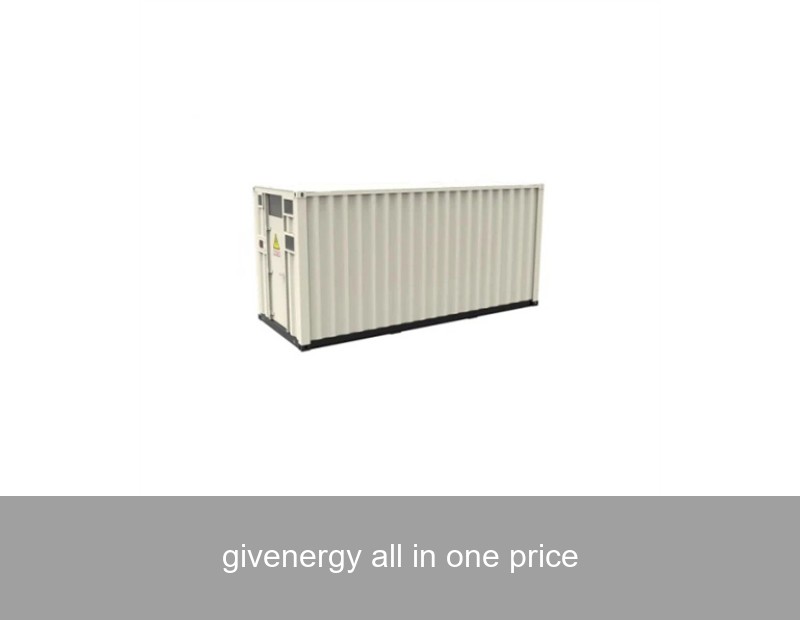
If you're researching home battery storage, you've likely come across the term "Givenergy all-in-one price." It sounds convenient, doesn't it? One box, one price, one solution for energy independence. As a homeowner in Europe or the US, navigating the renewable energy market can feel overwhelming. The promise of an integrated system is compelling, but what does that price truly encompass? Is it the ultimate value, or are there hidden layers to consider for your specific needs? Let's pull back the curtain and explore what goes into the cost of an all-in-one energy storage system, using the popular Givenergy model as our starting point.
Decoding the "Price" Tag: What Are You Really Paying For?
The allure of an all-in-one system is its simplicity. Typically, it combines the inverter, battery, and often a critical load panel or energy management system into a single, pre-configured unit. When you see a "Givenergy all-in-one price," it usually refers to the hardware cost of this integrated unit. However, treating this figure as your total project cost is a common pitfall. The real investment is a combination of the product, the expertise to install it, and its long-term performance.
The Upfront Cost Breakdown
Let's break down the typical components of your initial outlay:
- Hardware (The "All-in-One" Unit): This is the core system price. For a system like a Givenergy 5kW inverter with a 9.5kWh battery, you're looking at a significant portion of your budget.
- Balance of System (BOS): Even with an all-in-one, you may still need additional components like AC/DC isolators, cabling, a generation meter, or a consumer unit upgrade.
- Professional Installation: This is non-negotiable. A certified electrician or specialist must integrate the system with your home's electrical grid and, if applicable, your solar panels. Labor costs vary widely by region and complexity.
- Planning & Permits: Local building regulations and grid connection permits can add administrative time and cost.

Image: Professional installation is crucial for safety and performance. Credit: Unsplash
Long-Term Value & ROI: The Price Beyond the Price
This is where the conversation gets interesting. The sticker price is just the entry point. The true measure of an energy storage system is its return on investment (ROI) over 10-15 years. Key factors include:
- Efficiency: How much energy is lost during the charge/discharge cycle? A 95% efficient system saves more money than a 90% efficient one.
- Depth of Discharge (DoD) & Cycle Life: Can you safely use 90% of the battery's capacity daily for thousands of cycles without significant degradation? This directly impacts usable energy over time.
- Software & Smart Features: Intelligent software that learns your consumption patterns, integrates with time-of-use tariffs, and enables peak shaving is where modern systems earn their keep. According to the National Renewable Energy Laboratory (NREL), advanced controls can improve the value of storage by 20-40%.
A Real-World Case Study: The Nottingham Family Home
Let's ground this in data. A 2023 deployment in Nottingham, UK, involved a household with a 4.2kWp existing solar array. They installed an all-in-one battery system to maximize self-consumption and prepare for a dynamic import/export tariff.
| Metric | Before Installation | After Installation |
|---|---|---|
| Solar Self-Consumption | 35% | 85% |
| Grid Import (Annual) | 3,200 kWh | 1,100 kWh |
| Estimated Bill Savings | Baseline | £720/year |
| Backup Capability | None | Essential circuits for 8+ hours |
The total project cost was approximately £9,500. At this saving rate, the simple payback period sits around 13 years, not accounting for future electricity price increases—which would shorten it significantly. The intangible value of resilience during power outages was a major benefit for the family.
Beyond the Box: Key Considerations for Your Investment
Choosing a system isn't just about brand or upfront cost. Ask these critical questions:
- Scalability: Can you easily add more battery capacity later if your needs change (e.g., buying an EV)?
- Grid Services & Future-Proofing: Is the system software-upgradable to participate in grid-balancing schemes like virtual power plants (VPPs)? This can create new revenue streams.
- Warranty & Support: A 10-year warranty is standard, but what does it cover? Degradation guarantees (e.g., 70% capacity after 10 years) are a key quality indicator.
- Installation Partner Quality: The best hardware underperforms if poorly installed. Your installer's expertise is part of your system's "price."
The Highjoule Approach: Engineered for Lifetime Value
At Highjoule, with nearly two decades of experience since 2005, we view energy storage through the lens of total lifecycle value. While we offer competitive integrated solutions, our consultation process focuses on your unique home energy profile and future aspirations. Our HJS-Stack Commercial & Residential Series embodies this philosophy. These modular systems offer the clean aesthetics and simple installation of an all-in-one unit but with the core advantage of flexible, field-proven lithium iron phosphate (LFP) battery modules that can be scaled from 10kWh to over 30kWh. Paired with our EnergyOS™ platform, the system doesn't just store energy—it intelligently manages it, integrating with solar, wind, and the grid to autonomously optimize for cost, carbon, and resilience.

Image: A future-proofed home integrates solar, storage, and EVs. Credit: Unsplash
For us, the "all-in-one price" is the beginning of a partnership. We ensure our clients understand not just the component costs, but how the system's efficiency (over 96% round-trip), robust warranty, and smart grid readiness contribute to a faster ROI and a more resilient energy future. Our solutions for commercial, industrial, and microgrid applications are built on the same principle: intelligent design that maximizes financial and operational returns.
Making the Right Choice for Your Home
So, when you evaluate a "Givenergy all-in-one price" or any competitor's quote, look beyond the headline number. Compare the total installed cost, the long-term performance specifications, and the intelligence of the software. Demand clarity on scalability and the installer's credentials. The right system is one that fits your home's technical requirements, your financial expectations, and your vision for a sustainable, independent energy future.
What energy goal is driving your search for storage—is it purely financial savings, achieving energy autonomy, or preparing your home for the electrification of everything, from your car to your heating?
 Inquiry
 Online Chat