


Navigating the Dynamic Global Energy Storage Market: Trends and Opportunities
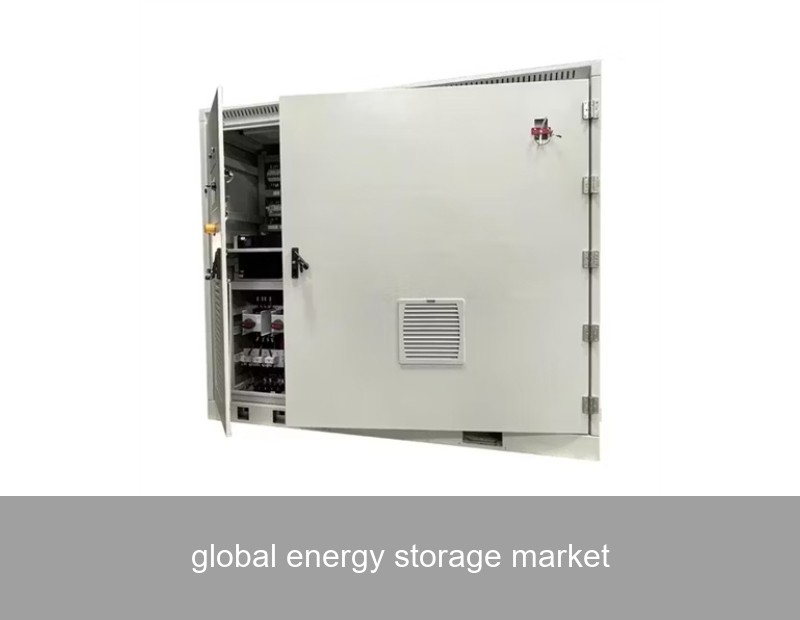
Have you ever wondered what's truly powering the global shift towards renewable energy? The answer lies not just in the solar panels and wind turbines you see, but increasingly, in the sophisticated systems working quietly behind the scenes. The global energy storage market is the unsung hero of this transition, evolving from a niche concept to a multi-billion-dollar cornerstone of a sustainable energy future. For businesses, communities, and homeowners, understanding this market is key to unlocking energy independence, resilience, and significant cost savings. Let's explore the forces shaping this exciting landscape and what they mean for you.
Table of Contents
The Phenomenon: Why Storage is Now Center Stage
For decades, electricity grids operated on a simple principle: generate power to meet instantaneous demand. The rise of variable renewables like solar and wind has beautifully disrupted this model, but it introduced a new challenge—intermittency. The sun doesn't always shine, and the wind doesn't always blow. This is where the global energy storage market steps in, acting as a "buffer" or a "bank" for electrons.
Think of it this way: energy storage systems are like a high-tech pantry for your power. During sunny or windy periods, excess energy is "stored" instead of being wasted. Later, when demand peaks or generation drops, that stored energy is released. This simple concept solves multiple complex problems: it smooths out supply, prevents blackouts, defers costly grid upgrades, and allows for a much higher penetration of clean energy sources. It's the critical enabler that makes a 100% renewable grid not just a dream, but a feasible engineering project.
The Data: A Market in Hypergrowth
The numbers behind this shift are staggering and tell a clear story of acceleration. According to BloombergNEF, the global energy storage market is poised for explosive growth, with annual deployments projected to surpass 1 terawatt-hour (TWh) by 2030—a monumental leap from the 45 gigawatt-hours (GWh) deployed in 2023. This represents a multi-trillion-dollar investment opportunity over the coming decade.
Let's break down the key drivers fueling this growth:
- Policy Support: Governments worldwide, particularly in the U.S. and Europe, are enacting ambitious climate legislation. The U.S. Inflation Reduction Act (IRA) and the EU's Green Deal provide substantial tax credits and funding, making storage projects more economically viable than ever.
- Plummeting Costs: The cost of lithium-ion batteries, the dominant technology, has fallen by over 90% in the last 15 years. This trend continues with advancements in manufacturing and chemistry.
- Energy Security: Geopolitical tensions and volatile fossil fuel prices have made energy independence a top priority for nations and corporations alike. On-site storage provides a direct path to resilience.
- Commercial & Industrial Demand: Businesses are turning to storage to manage peak demand charges, which can constitute up to 70% of a commercial electricity bill. Pairing storage with on-site solar is becoming a standard business practice for cost control.
| Region | 2023 (Estimated) | 2030 (Projected) | Primary Driver |
|---|---|---|---|
| United States | 15.8 GWh | ~400 GWh | IRA, Grid Modernization |
| Europe | 12.2 GWh | ~300 GWh | REPowerEU, Energy Security |
| China | 12.5 GWh | ~250 GWh | National Policy, Renewable Integration |
| Rest of World | 4.5 GWh | ~150 GWh | Off-grid Solutions, Electrification |
Source: Compiled from industry reports by BloombergNEF and the International Energy Agency (IEA).
A Case Study: California's Grid Resilience with the Moss Landing Project
To see the global energy storage market in action, look no further than California, USA. The state, a leader in solar adoption, faced the "duck curve" phenomenon—a rapid evening ramp-up in demand as solar generation faded. This strained the grid and increased reliance on fossil-fuel "peaker" plants.
The solution? Massive grid-scale battery storage. The Moss Landing Energy Storage Facility in Monterey County is a prime example. Built at the site of a retired gas-fired plant, its latest phase boasts a capacity of 750 MW / 3,000 MWh. That's enough to power approximately 300,000 homes for four hours during peak demand.

During a heatwave in September 2022, this facility and others like it were instrumental in preventing rolling blackouts. They discharged stored solar energy from the afternoon directly into the evening grid when demand was highest. This real-world case demonstrates three critical values of storage: grid stability, fossil fuel displacement, and community resilience. It's a blueprint being studied and replicated across the U.S. and European markets.
You can read more about grid-scale storage's role in the IEA's report on electricity security here.
Where Highjoule Fits In: From Grid-Scale to Your Doorstep
While Moss Landing represents the utility-scale end of the spectrum, the principles of resilience and optimization apply at every level. This is where a provider like Highjoule excels. With nearly two decades of experience since 2005, Highjoule designs intelligent storage solutions that bring grid-scale sophistication to commercial, industrial, and residential applications.
For a factory in Germany, this might mean a containerized Highjoule BESS (Battery Energy Storage System) that integrates with their rooftop solar, slashing peak demand charges and providing backup power for critical processes. For a microgrid powering a remote community in Scandinavia, it could be a turnkey system combining solar, wind, and Highjoule storage to ensure 24/7 clean power, independent of the main grid.
Our systems are built with advanced battery management and AI-driven energy optimization software, ensuring not just storage, but intelligent energy arbitrage and longevity. Whether the goal is pure financial return, sustainability targets, or unwavering power reliability, Highjoule engineers a solution tailored to the specific energy profile and market incentives of the region, be it in Europe or North America.
The Solutions: Matching Technology to Need
The "one-size-fits-all" approach doesn't work in energy storage. Different durations, power ratings, and use cases require tailored technologies. Here’s a quick guide to the main players in the current global energy storage market:
- Lithium-ion Batteries: The current heavyweight champion, dominating for short to medium-duration storage (2-8 hours). Ideal for frequency regulation, commercial peak shaving, and residential use due to high energy density and fast response.
- Flow Batteries: Using liquid electrolytes, these excel in long-duration storage (8+ hours). They are highly scalable, have long lifespans with minimal degradation, and are inherently safe—making them a growing choice for utility-scale renewable integration. Highjoule's portfolio includes advanced vanadium redox flow solutions for demanding C&I applications.
- Pumped Hydro: The established, large-scale technology, providing the vast majority of global storage capacity today. It's geographically limited but crucial for bulk energy management.
- Emerging Technologies: Compressed air, gravity storage, and next-generation chemistries (like sodium-ion) are rapidly developing, promising lower costs and longer durations for the future market.
Choosing the right technology depends on a detailed analysis of your load profile, financial goals, and physical site. A reputable provider like Highjoule will conduct this analysis as a first step, ensuring the recommended system delivers maximum value.
The Future Outlook and Your Role
The trajectory of the global energy storage market is clear: steep, sustained growth driven by decarbonization, digitization, and decentralization of power systems. The next frontier is the creation of virtual power plants (VPPs)—networks of thousands of distributed storage systems (like home batteries) aggregated to act as a single, dispatchable power plant. This turns consumers into "prosumers," actively participating in and stabilizing the grid.
For a business leader, municipality manager, or homeowner, the question is no longer if energy storage is relevant, but when and how to integrate it. The economics improve every quarter, and the value extends far beyond dollars to encompass brand reputation, operational continuity, and contribution to a stable climate.
So, as you look at your next energy bill, consider your sustainability roadmap, or plan your community's infrastructure, ask yourself this: What specific energy challenge—be it cost, reliability, or carbon footprint—could a tailored storage strategy solve for you today?
To explore the potential of specific technologies further, the U.S. Department of Energy's Office of Electricity provides useful primers on storage here.
 Inquiry
 Online Chat