


Golden Energy: Why Advanced Offshore Management (ASM) is the Linchpin for a Sustainable Future
vast wind farms, their turbines spinning steadily miles out at sea, harnessing powerful, consistent winds. This is the promise of offshore renewable energy—a true "golden energy" source for coastal nations. But here's the reality check that energy managers face daily: this golden energy doesn't automatically translate into golden reliability for the grid. The journey from a gust of wind over the ocean to a steady stream of power in your home or business is fraught with complexity. This is where the concept of Golden Energy Offshore Management as a sophisticated discipline comes into sharp focus. It's no longer just about generating power; it's about intelligently mastering its volatility, storing its surplus, and seamlessly weaving it into the broader energy tapestry. Without this advanced management, even the most abundant offshore resource can become a grid integration headache.
The Data Reality: Scale, Intermittency, and Integration
The numbers are staggering and highlight both the opportunity and the challenge. According to the International Energy Agency (IEA), global offshore wind capacity is set to increase fifteen-fold by 2040. Europe has long been a leader, but the U.S. is now rapidly entering the fray with ambitious targets for the East Coast and Gulf of Mexico. However, offshore wind is inherently variable. A study of North Sea wind output revealed that power generation can swing from 90% of installed capacity to below 10% within a 24-hour period. This isn't a flaw; it's a fundamental characteristic. The question for grid operators is: how do you balance a system when such a massive input can suddenly dip or surge?
The traditional "generate and transmit" model hits its limits here. You can't simply flip a switch on demand. This volatility can lead to curtailment (wasting clean energy), price spikes, and reliance on fossil-fuel peaker plants to fill gaps—undermining the very environmental goals of the project. This is the core problem that advanced offshore management seeks to solve.
Case in Point: The North Sea's Integration Hurdle
Let's ground this in a real-world scenario. The North Sea, often called Europe's "green power plant," aims for 300 GW of offshore wind capacity by 2050. A key challenge identified by grid operators like TenneT is the massive, simultaneous influx of power from offshore hubs during periods of high wind. The onshore grid, particularly in Germany and the Netherlands, sometimes cannot absorb all this power at once, leading to congestion and costly redispatch measures.
One pioneering solution being implemented involves creating energy islands—artificial hubs that collect power from multiple wind farms. But an island alone isn't enough. The real intelligence comes from what you attach to it: large-scale Battery Energy Storage Systems (BESS). In a simulated project, pairing a 2 GW offshore hub with a 500 MWh BESS was shown to reduce congestion events by over 70% and increase the utilization of transmitted renewable energy by 15%. The BESS acts as a shock absorber, storing excess "golden energy" during peak generation and releasing it during lulls or peak demand on land. This is Golden Energy Offshore Management as an operational necessity in action.

Credit: Unsplash - Modern offshore wind farms require intelligent management systems to maximize their grid value.
Advanced Storage & Management (ASM): The Critical Enabler
So, what does this advanced management system look like? We can break it down into a layered approach:
- The Physical Layer (The Muscle): This is the hardware—high-capacity, durable battery storage systems designed for harsh marine or coastal environments. They must have exceptional cycle life, high round-trip efficiency, and robust safety protocols.
- The Intelligence Layer (The Brain): This is the software platform that makes the decisions. Using weather forecasting, real-time grid data, and market price signals, it determines the optimal moments to charge, hold, or discharge the stored energy. It answers the critical question: Is it more valuable to smooth output right now, or to provide capacity reserves for the grid later?
- The Integration Layer (The Nervous System): This ensures seamless communication between the offshore asset, the storage system, the onshore grid control center, and often, energy markets. It turns a collection of components into a single, dispatchable asset.
| Function | Challenge It Addresses | Result |
|---|---|---|
| Production Smoothing | Rapid ramping up/down of wind power | Stable, predictable power injection into the grid |
| Congestion Management | Grid inability to absorb peak generation | Reduced curtailment, optimized grid use |
| Frequency Regulation | Maintaining grid stability (50/60 Hz) | Enhanced grid resilience and reliability |
| Energy Arbitrage | Low prices during surplus, high prices during scarcity | Improved project economics and ROI |
Highjoule's Role in the Golden Energy Ecosystem
At Highjoule, we've been anticipating this evolution for nearly two decades. Our mission is to provide the intelligent storage and management backbone that turns variable offshore resources into a truly dependable pillar of the energy mix. For offshore and coastal applications, we offer tailored solutions that align perfectly with the Golden Energy Offshore Management as a system philosophy.
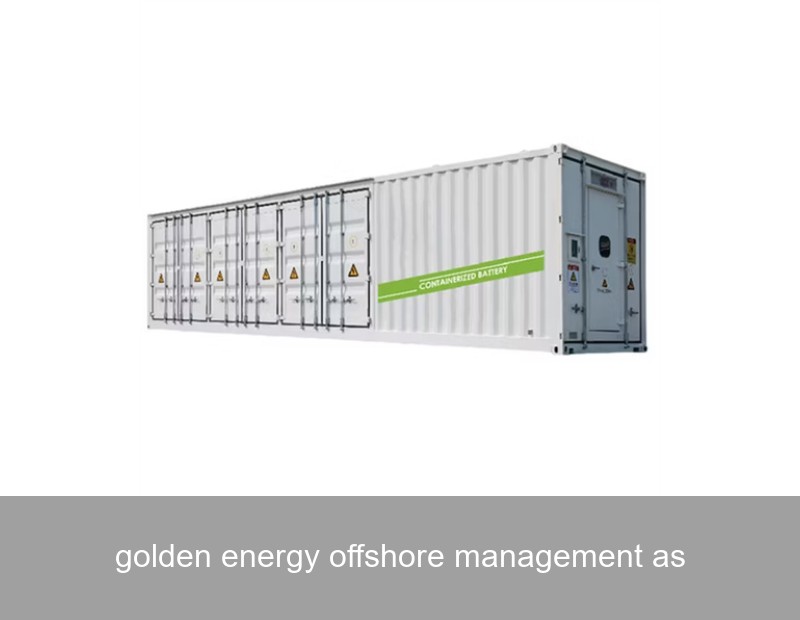
Our HarborGrid C&I series is engineered for coastal industrial sites, ports, and offshore support facilities. These containerized, high-power battery systems can help manage demand charges, provide backup power, and even participate in grid-balancing services, creating a revenue stream while supporting local grid stability.
More critically, for direct offshore wind integration, our GridSynch Platform is the brain of the operation. This AI-driven software doesn't just control our battery systems; it can optimize the entire asset's performance against multiple objectives—from maximizing renewable self-consumption for an islanded microgrid to executing complex market bidding strategies in wholesale electricity markets. Think of it as the conductor for your golden energy orchestra, ensuring every megawatt-hour performs at its best.

Credit: Unsplash - Intelligent software platforms are crucial for managing complex energy flows.
From Concept to Shore: A Practical Application
Imagine a new offshore wind farm off the coast of New England. Highjoule's solution would involve deploying our mega-scale BESS at the onshore grid connection point. Our GridSynch Platform would ingest real-time data from the wind farm's SCADA system, NOAA wind forecasts, and ISO-NE grid signals. During a predicted period of high wind and low demand, the system would proactively store energy, preventing congestion. Later, during the evening peak when gas plants would typically ramp up, the system would discharge, providing clean capacity and earning premium market revenue. This transforms the wind farm from a passive generator into an active, grid-supportive asset.
The Future Horizon: Smarter, More Resilient Grids
The integration of green hydrogen production facilities at offshore hubs is already on the drawing board. Here, advanced management systems become even more vital. The intelligent platform must decide in real-time: should this excess electron go into the battery for short-term grid balance, or should it be diverted to electrolyzers for long-term hydrogen storage and fuel production? This multi-vector energy management is the next frontier.
The vision is clear: a network of offshore energy hubs, each with integrated storage and managed by AI, acting as steady, predictable "virtual power plants" that bolster grid security, lower overall system costs, and accelerate the phase-out of fossil fuels. This is the ultimate realization of golden energy—not just clean, but also smart, resilient, and utterly dependable.
As your organization looks to develop, invest in, or operate the next generation of offshore energy assets, what will be your first step in moving from seeing storage as a cost center to recognizing advanced energy management as the ultimate value multiplier for your project?
 Inquiry
 Online Chat