


GWh Energy Storage Cabinet: The Powerhouse Behind Modern Energy Independence
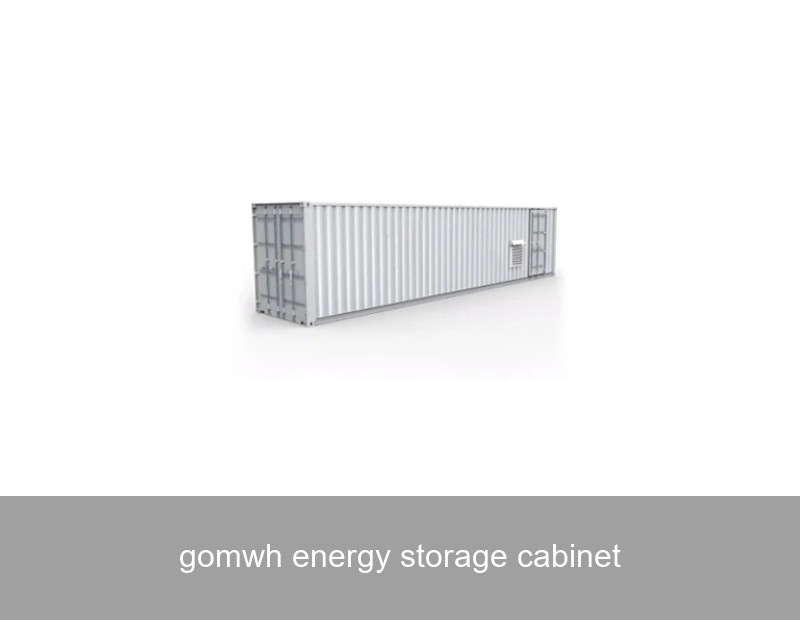
Imagine a single, streamlined unit capable of storing enough electricity to power hundreds of homes for hours, or to keep a factory running smoothly through peak tariff periods. This isn't science fiction; it's the reality of the GWh-scale energy storage cabinet. As the world pivots decisively towards renewables, the intermittent nature of solar and wind power presents a formidable grid stability challenge. The solution lies not just in generating clean energy, but in storing it intelligently and at scale. Enter the industrial-grade energy storage cabinet – the unsung hero transforming how commercial, industrial, and utility sectors manage their energy. These systems are the critical link, turning variable renewable generation into a reliable, dispatchable power source, and for businesses, they are fast becoming a cornerstone of financial resilience and sustainability strategies.
Table of Contents
- The Grid's New Challenge: From Megawatts to Gigawatt-Hours
- Deconstructing the GWh Energy Storage Cabinet
- Why Scale Matters: The Economic & Operational Imperative
- Case Study: Powering a German Industrial Park
- The Highjoule Advantage: Engineered for GWh Performance
- Future-Proofing Your Energy Assets
The Grid's New Challenge: From Megawatts to Gigawatt-Hours
For decades, grid operators had one primary directive: match generation with demand in real-time, typically using predictable fossil-fuel plants. Today, the script has flipped. With record-breaking deployments of solar and wind—the U.S. alone added 33 GW of solar capacity in 2023—the grid is increasingly fed by sources we don't fully control. This creates a dual phenomenon: surplus energy during sunny or windy periods that risks being curtailed (wasted), and sudden shortfalls when the weather changes. The result? Price volatility, grid instability, and missed decarbonization goals.
The answer is shifting focus from instantaneous power (MW) to energy over time (MWh, GWh). Think of it this way: a power plant's capacity is like the size of a water pipe, but storage is the reservoir. A GWh energy storage cabinet system is that massive reservoir, built from aggregating multiple, high-density cabinet units. It doesn't just provide a quick burst of power; it delivers sustained energy, enabling true time-shifting of renewable generation from day to night, or from a windy day to a calm one.

Image: Utility-scale solar farms paired with battery storage are key to a resilient grid. Credit: Unsplash.
Deconstructing the GWh Energy Storage Cabinet
So, what exactly is inside these behemoths? A GWh-scale storage system isn't a singular giant box; it's a meticulously engineered array of interconnected cabinets, each a fortress of technology. Let's break down the core components:
- Battery Modules (The Core): Typically using lithium iron phosphate (LFP) chemistry for its superior safety, longevity, and thermal stability, these are the fundamental energy-storing units. Thousands are integrated within a single cabinet.
- Battery Management System (BMS - The Brain): This is the guardian of safety and performance. It monitors every cell for voltage, temperature, and state of charge, ensuring balanced operation and preventing dangerous conditions.
- Power Conversion System (PCS - The Interpreter): This bi-directional inverter converts the DC electricity from the batteries to the AC electricity used by the grid or facility, and vice versa during charging.
- Thermal Management System (The Climate Control): Critical for performance and lifespan. A precise liquid cooling system maintains optimal temperature across all cells, far more efficient than air cooling, especially in dense GWh cabinet configurations.
- Energy Management System (EMS - The Conductor): The top-level intelligence that decides when to charge, when to discharge, and at what power level. It responds to grid signals, weather forecasts, and energy price data to maximize value.
| Component | Primary Function | Impact on GWh-Scale Performance |
|---|---|---|
| LFP Battery Cells | Energy Storage Core | Provides the foundational energy density, cycle life (often 6,000+ cycles), and inherent safety for large-scale aggregation. |
| Advanced Liquid Cooling | Precise Temperature Control | Enables tighter cell packing, uniform temperatures, and higher continuous power output without degradation, essential for cabinet density. |
| Cloud-Connected EMS | Intelligent Optimization | Unlocks revenue stacking (e.g., arbitrage, frequency regulation) by making millions of data-driven decisions across the entire storage asset. |
Why Scale Matters: The Economic & Operational Imperative
You might wonder, why aim for GWh? Why not just deploy many smaller, scattered systems? The benefits of scaling up are profound, both economically and technically.
First, cost efficiency. The levelized cost of storage (LCOS) drops significantly with scale due to economies of unit in hardware, installation, and software management. A single, large energy storage cabinet installation has a lower cost per kWh over its lifetime than a fragmented setup.
Second, grid services. Transmission system operators require substantial capacity to effectively stabilize grid frequency. A GWh-scale asset can deliver massive, instantaneous power injections or absorption, making it a valuable partner for grid operators. According to a National Renewable Energy Laboratory (NREL) report, large-scale storage is pivotal for integrating high penetrations of renewable energy.
Third, commercial resilience. For a large manufacturing plant or data center, a multi-MW/MW-scale storage system can provide critical backup power, but a GWh-scale system can also perform daily "energy shifting." It charges when electricity is cheap (or from on-site solar), and discharges during expensive peak hours, slashing demand charges and insulating the business from price spikes.
Case Study: Powering a German Industrial Park with a 100 MWh System
Let's make this tangible with a real-world scenario from Europe. A major automotive parts manufacturer in Bavaria, Germany, faced two problems: rising energy costs eating into margins, and corporate mandates to reduce carbon footprint. Their solution? A 50 MW / 100 MWh battery energy storage system, built from a series of high-performance GWh energy storage cabinets, installed on-site within their industrial park.
The system was strategically integrated with their existing 20 MW rooftop solar array. Here's what happened:
- Solar Self-Consumption Optimization: The storage cabinets captured excess solar generation at midday, previously fed back to the grid at low rates, and discharged it during the evening production peak.
- Peak Shaving: The system automatically discharged during the 2-3 highest price hours each day, reducing grid power draw and cutting capacity charges by over 40%.
- Data & Results: Within the first year, the installation reduced the site's annual energy costs by €1.2 million. It increased the direct use of self-generated solar power from 35% to over 80%, cutting Scope 2 emissions significantly. The system's intelligent EMS also enrolled it in the German primary control reserve market, generating an additional revenue stream during periods of low on-site demand.

Image: Professional maintenance of industrial battery storage cabinets ensures longevity and safety. Credit: Unsplash.
The Highjoule Advantage: Engineered for GWh Performance
As a global leader with nearly two decades of experience, Highjoule doesn't just supply storage cabinets; we deliver integrated, intelligent power ecosystems. Our H-Series GWh Energy Storage Cabinet is the building block for mega-scale projects. What sets it apart is a foundation of safety and intelligence designed for aggregation.
Our proprietary Cell-Sentinel™ BMS operates with millisecond precision, not just monitoring but actively balancing and predicting cell behavior. This is non-negotiable when you're managing hundreds of thousands of cells in a GWh-scale storage facility. Paired with our Direct-Liquid Cooling 3.0 system, it ensures every cell, even in the core of the cabinet, operates within a 2°C window, maximizing cycle life and preventing thermal runaway propagation.
But the true brain is the Highjoule Apex EMS™. This AI-driven platform doesn't just manage the battery; it connects it to market signals, weather APIs, and on-site generation forecasts. For our client in Germany, it was the Apex EMS that autonomously decided whether to save energy for the evening production shift or bid it into the frequency market for a higher immediate return. We provide the physical energy storage cabinet and the digital intelligence to make it a profitable, strategic asset.
Future-Proofing Your Energy Assets
The energy landscape is evolving at a breakneck pace. Regulations change, electricity tariffs become more complex, and new revenue streams for distributed energy resources emerge. A static piece of hardware cannot adapt. This is why modularity and software-upgradability are baked into the Highjoule design. Our cabinets are engineered for future chemistries and can have their power and energy ratios software-reconfigured as needs change. Investing in a GWh energy storage cabinet system today is an investment in a platform for the next 20 years of energy innovation.
So, as you contemplate energy independence, cost certainty, and sustainability leadership for your organization, the question isn't merely about needing storage. It's about whether your storage solution has the inherent intelligence, safety, and scalability to grow in value and capability over time. Does your current energy strategy have the capacity not just to meet today's peaks, but to harness and shape the power flows of tomorrow?
 Inquiry
 Online Chat