


GPS for Renewables: How Much Energy Can You Really Generate and Store?
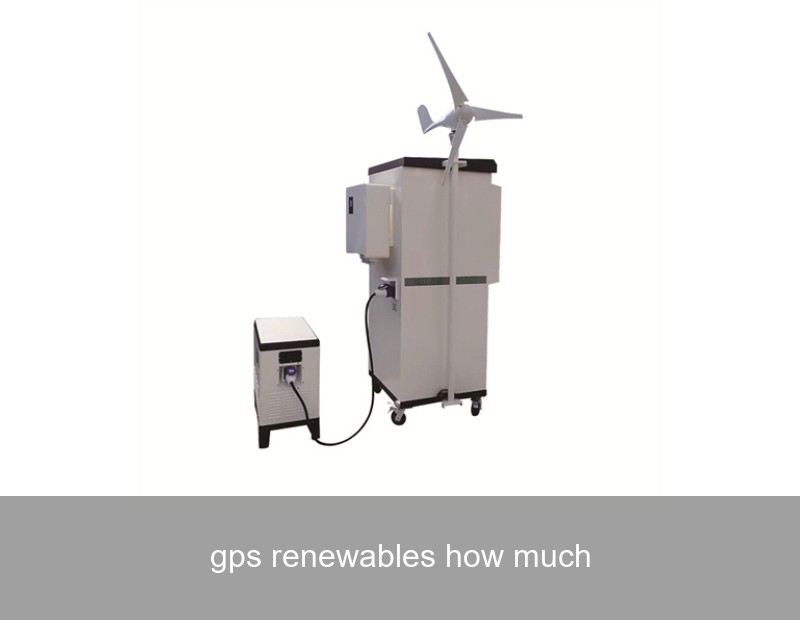
Imagine setting off on a crucial road trip with a vague map, no mileage indicators, and a fuel gauge that only works sometimes. That's precisely the challenge many businesses and homeowners face with their solar panels or wind turbines. You know you're producing "some" clean energy, but the critical questions remain: How much power am I generating right now? How much have I used? And most importantly, how much can I store for when the sun sets or the wind stops? This quest for clarity—this need for a reliable Energy GPS—is at the heart of modern renewable energy systems. Let's navigate the answers together.
The Phenomenon: Renewable Energy's Navigation Problem
Renewable sources like solar and wind are fantastic, but they're inherently intermittent. Unlike flipping a switch on a gas plant, you can't control the weather. This creates a fundamental management puzzle:
- Production Blind Spots: Without detailed monitoring, you only see your total monthly export to the grid, missing real-time generation peaks and valleys.
- Consumption Guesswork: Is your high energy bill from overnight operations or daytime peaks? Without granular data, it's hard to tell.
- Storage Uncertainty: If you have a battery, are you using it optimally? Is it sized correctly to cover your nightly load or your next power outage?
This lack of visibility leads to inefficiency, unexpected costs, and underutilization of your clean energy investment. You're driving your energy future without a dashboard.
The Data: Quantifying the "How Much" Challenge
The numbers paint a clear picture of why precision matters. According to the National Renewable Energy Laboratory (NREL), commercial buildings with solar PV alone typically achieve 30-50% self-consumption. That means up to 70% of the solar energy you generate might be sold back to the grid at a lower rate, only for you to buy it back later at a premium.
Now, let's add a battery. The right storage system can boost that self-consumption rate to 70% or even higher. But the "how much" question becomes critical here:
| System Component | Key "How Much" Questions | Impact of Not Knowing |
|---|---|---|
| Solar PV Array | How much is produced hourly? How much is lost to shading or dirt? | Overestimation of savings, poor ROI calculation. |
| Battery Storage | How much capacity is usable? How much cycle life remains? How much power can it deliver instantly? | Premature battery degradation, failure to back up critical loads during an outage. |
| Overall Energy Flow | How much is imported/exported at different times of day? How much can I shift? | Missed opportunities in demand charge reduction and grid service programs. |
Case in Point: A German Bakery's Journey to Clarity
Consider a real-world example from Bavaria. A mid-sized bakery with a 100 kW rooftop solar system was frustrated. Their energy bills remained high, especially for early morning operations before sunrise. They knew they produced energy, but how much was being wasted?
By installing an advanced AC-coupled battery storage system with high-precision monitoring, they gained their Energy GPS. The data revealed that 60% of their solar generation was being exported in the midday lull. Their new system was programmed to store that excess.

- Result: They now use 85% of their solar energy on-site.
- Financial Impact: A 40% reduction in peak demand charges and near-total energy independence during their 4 AM - 12 PM production window.
- The "How Much" Answered: They know exactly how much energy their ovens and chillers need from the battery each dawn (approx. 120 kWh), allowing for perfect cycle management.
This precision transformed their renewable installation from a generic green contribution into a strategic financial asset.
The Solution: Intelligent Storage as Your Energy GPS
The bakery's success wasn't just about adding a battery; it was about adding intelligence. Modern battery energy storage systems (BESS) are the central processing units for your renewable energy. They answer the "how much" by:
- Continuous Monitoring: Tracking every kWh in and out, from generation to consumption to storage.
- Predictive Analytics: Using weather forecasts and usage history to predict "how much" sun you'll get tomorrow and "how much" energy you'll need.
- Automated Optimization: Deciding in real-time whether to store, use, or (where profitable) sell energy, maximizing your economic return.
This turns a passive system into an active energy manager. Think of it as the difference between a paper map and a live-updating GPS with traffic data that reroutes you for the fastest journey.
Highjoule: Your Partner in Precision Energy Management
At Highjoule, we've been engineering this clarity since 2005. We understand that "how much" isn't just a curiosity—it's the foundation of a reliable, cost-effective, and sustainable energy strategy. Our solutions are designed to be the definitive GPS for your renewable energy journey.
Our H-Series Commercial & Industrial Storage Systems are built around this principle of precision. They integrate seamlessly with new or existing solar arrays, featuring:
- JouleMind AI Platform: The brain of the operation. It doesn't just log data; it learns your patterns, forecasts production and demand, and autonomously controls your energy flow to meet your financial and resilience goals.
- Granular Monitoring Suite: Provides a clear, dashboard view of every relevant metric—from per-string solar output to individual battery module health and building-level consumption breakdowns.
- Scalable & Resilient Architecture: Whether you need 50 kWh or 5 MWh, our modular systems scale to your exact "how much." They are engineered for safety and longevity, using high-quality LiFePO4 battery chemistry for thousands of deep cycles.

For residential and smaller commercial applications, our Home Energy Hub delivers the same level of intelligent control. It answers the homeowner's "how much" – ensuring your electric vehicle charges with surplus solar, your home stays cool during a heatwave-powered grid outage, and your monthly energy costs become predictable.
Our approach goes beyond hardware. We provide comprehensive feasibility modeling to answer the upfront "how much": How much storage do you *really* need? How much can you save? How much will your carbon footprint shrink? This data-driven planning, backed by nearly two decades of global experience across Europe and North America, ensures your investment hits the mark from day one.
Beyond Savings: The Grid Stability Imperative
As noted by the International Energy Agency (IEA), the large-scale integration of variable renewables makes grid-scale storage essential for stability. When thousands of precise systems like Highjoule's are aggregated, they provide a powerful tool for utilities to balance "how much" is on the grid at any moment, accelerating the clean energy transition for everyone.
Charting Your Course: What's Your Next Move?
The journey to energy independence and sustainability starts with a single, precise question: "How much?" Once you have that answer, everything else—savings, resilience, and environmental impact—falls into place. Your renewable system should be a source of confidence, not confusion.
Are you ready to move from guessing to knowing? What is the one "how much" question about your current energy use that, if answered, would change your decision-making tomorrow?
 Inquiry
 Online Chat