


Demystifying the 120 Watts Solar Panel Price: Your Guide to Smart Small-Scale Solar
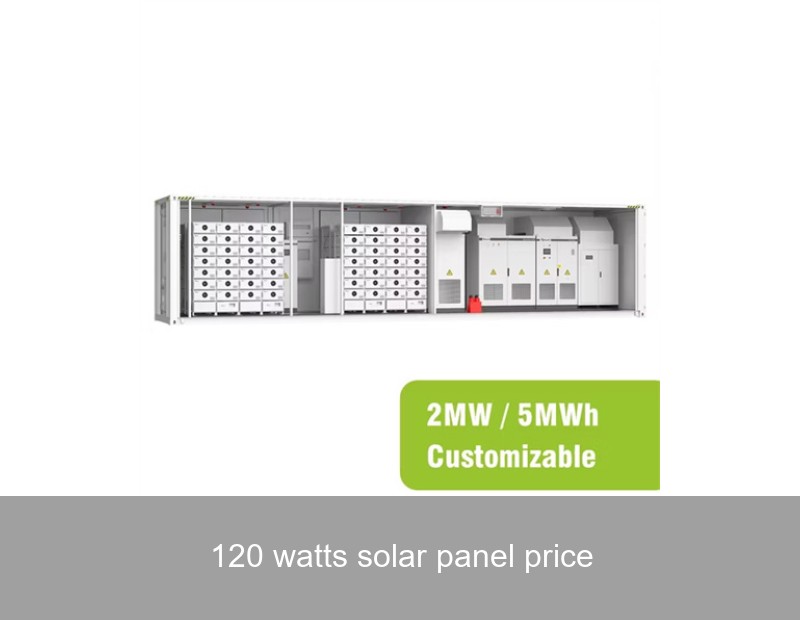
So, you're looking into a 120-watt solar panel. Perhaps for your RV, a tiny home, a shed, or to dip your toes into the world of solar energy. Your first search likely leads you to a single, burning question: "What's the 120 watts solar panel price?" You'll find online listings ranging from $100 to $300, and the variation can be confusing. But here's the crucial insight from our years at Highjoule: the panel's sticker price is just the opening chapter of the story. The true value—and the true cost—of your solar journey is determined by what surrounds that panel and how it integrates into a reliable power system.
Understanding the 120-Watt Solar Panel Price Tag
The price of a standalone 120W solar panel is influenced by several key factors. Primarily, it's about cell technology and brand reputation.
- Monocrystalline vs. Polycrystalline: Monocrystalline panels (black cells) are typically more efficient and slightly more expensive than polycrystalline (blue cells). For a 120W panel, this efficiency means you get more power in a smaller space, a critical factor for mobile or space-constrained applications.
- Brand & Warranty: A premium brand with a robust 25-year performance warranty will command a higher price than a generic panel with a shorter, less comprehensive guarantee. This warranty is a promise of long-term value.
- Market Dynamics: As of 2023, the U.S. and European markets have seen fluctuations due to supply chain factors and policy changes, like the U.S. Inflation Reduction Act incentives, which ultimately affect end-consumer pricing for complete systems.
On its own, a quality 120W monocrystalline panel might cost between $150 and $250. But purchasing it is like buying a car engine without the chassis, wheels, or fuel system. To make it work, you need the rest of the components.
The Real Price Breakdown: More Than Just the Panel
Let's shift from panel price to system cost. A functional, safe, and efficient 120W solar system requires a symbiotic ecosystem of components. Here’s what that investment really looks like:
| Component | Purpose | Estimated Cost Range (USD/EUR) |
|---|---|---|
| 120W Solar Panel | Generates DC electricity from sunlight | $150 - $250 |
| Charge Controller (MPPT Recommended) | Regulates voltage/current to battery, optimizing harvest | $80 - $200 |
| Deep Cycle Battery (e.g., 100Ah LiFePO4) | Stores energy for use when the sun isn't shining | $300 - $600+ |
| Power Inverter (e.g., 300W Pure Sine Wave) | Converts DC battery power to AC for household devices | $100 - $250 |
| Mounting, Wiring, Fuses, & Safety Gear | Secures the system and ensures safe operation | $75 - $150 |
| Total Functional System Cost | $705 - $1,450+ |
As you can see, the panel itself often represents only 20-30% of the total system cost. The heart of a reliable off-grid or backup system is actually the battery and the intelligence that manages it. This is where focusing on quality pays dividends in longevity and performance.

Image: A complete small-scale solar setup involves careful integration of the panel, charge controller, and battery. (Source: Unsplash)
A Real-World Case: The 120W Panel in a German Micro-Cabin
Let's look at data from a project in the Black Forest, Germany. A client powered a year-round garden cabin used for remote work. The goal was to run a laptop, LED lighting, a small Wi-Fi router, and a 12V fridge for beverages.
- Setup: 1x 120W panel, MPPT charge controller, a 2kWh Highjoule LiFePO4 battery module, and a 600W inverter.
- Annual Yield: In Bavaria's climate, the 120W panel produced approximately 110-130 kWh per year. (Validated by PVGIS solar tool estimates).
- Performance Insight: The critical finding wasn't peak panel output, but the battery's role. During a cloudy December week, solar harvest was minimal. The Highjoule battery's high depth of discharge and efficient management provided four full days of essential power without damage, something a cheap lead-acid battery could not achieve. The client's feedback was clear: "The peace of mind knowing the system manages itself and protects its components is worth the initial investment."
Maximizing Your Investment: The System is Key
To truly maximize the value behind your 120 watts solar panel price inquiry, think in systems. An optimized system ensures every watt your panel produces is captured, stored, and used effectively.
- MPPT Over PWM: An MPPT charge controller can increase energy harvest from your panel by up to 30% compared to older PWM types, especially in cold or low-light conditions.
- Lithium Over Lead-Acid: While more expensive upfront, LiFePO4 batteries (like those used by Highjoule) last 4-10x longer, are maintenance-free, can be discharged more fully, and are safer. Their total cost of ownership is lower.
- Scalability: Is your 120W panel a starting point? If so, ensure your charge controller and battery system can accommodate additional panels or battery capacity in the future.
How Highjoule Elevates Your Solar & Storage Project
At Highjoule, founded in 2005, we approach power solutions from the system level. While we specialize in larger commercial, industrial, and microgrid storage systems, our philosophy applies universally: intelligence, integration, and longevity are paramount. For projects considering a 120W panel as part of a critical power solution—like for a remote telecom sensor, a backup medical device cabinet, or an eco-hotel cabin—our expertise becomes relevant.
Our modular lithium-ion battery systems are designed with built-in Battery Management Systems (BMS) that communicate seamlessly with compatible inverters and charge controllers. This means for a sophisticated small-scale application, you're not just buying a battery; you're buying a smart storage node that optimizes its own health, reports performance data, and integrates into a broader energy management strategy. For residential or small business clients starting with solar, understanding this level of system integration is the first step toward future-proofing their energy independence.
Image: Modern, modular battery storage systems enable clean and scalable energy independence. (Source: Unsplash)
The Future of Small-Scale Solar: What's Next?
The trend is toward higher efficiency and smarter integration. We're seeing panels with micro-inverters (where each panel has its own optimizer) trickle down to smaller applications. More importantly, the standard is becoming the AC-coupled system, where solar and storage operate more independently, offering greater flexibility and resilience. In this setup, your 120W solar array feeds into a small inverter, and a separate, intelligent system like Highjoule's manages storage and grid interaction. This architecture is central to our microgrid and residential solutions, allowing for seamless addition of generation or storage capacity over time.
Your Next Step: From Price to Plan
Now that you understand the 120 watts solar panel price is a gateway to a broader system discussion, your perspective has shifted. You're no longer just a buyer of a component; you're a designer of a power solution.
What specific energy need—be it keeping the lights on during an outage, powering a remote research station, or simply reducing your cabin's carbon footprint—is driving your interest in solar, and how can a strategically designed system around that 120W panel ensure that need is met reliably for the next decade or more?
 Inquiry
 Online Chat