


Unlocking Reliable Green Energy Power Supply: A Guide for the Modern Grid
Imagine a world where the lights stay on, industries hum along, and homes are comfortable—all powered by the sun and wind, regardless of the weather or time of day. This is the promise of a true green energy power supply. Yet, for many businesses and communities, this vision hits a practical wall: renewable energy is intermittent. The solution, and the key to a resilient, clean energy future, lies not just in generation, but in advanced energy storage. As a global leader in this field, Highjoule has been at the forefront since 2005, engineering smart battery storage systems that transform variable renewable power into a dependable, 24/7 green energy supply for commercial, industrial, and residential applications.
Table of Contents
- The Intermittency Challenge: Why Green Energy Needs a Partner
- The Storage Solution: How BESS Creates a Steady Green Power Supply
- A Real-World Case: Stabilizing a Microgrid in Southern Europe
- Highjoule's Role: Intelligent Systems for a Sustainable Future
- Beyond Reliability: Why a Stored Green Energy Supply Makes Economic Sense
- Your Role in the Future Grid
The Intermittency Challenge: Why Green Energy Needs a Partner
We've all seen it: a sunny afternoon with solar panels at peak output, or a windy night where turbines spin vigorously. Then, clouds roll in or the wind dies down, and generation plummets. This isn't a flaw in solar or wind technology; it's the nature of these resources. The U.S. Department of Energy highlights that this variability can challenge grid stability if not managed properly (Source: U.S. DOE). For a factory manager, a data center operator, or a homeowner, this unpredictability makes it difficult to rely solely on renewables for a consistent power supply. The question becomes: how do we capture the abundance of green energy when it's available and release it precisely when it's needed?
The Storage Solution: How BESS Creates a Steady Green Power Supply
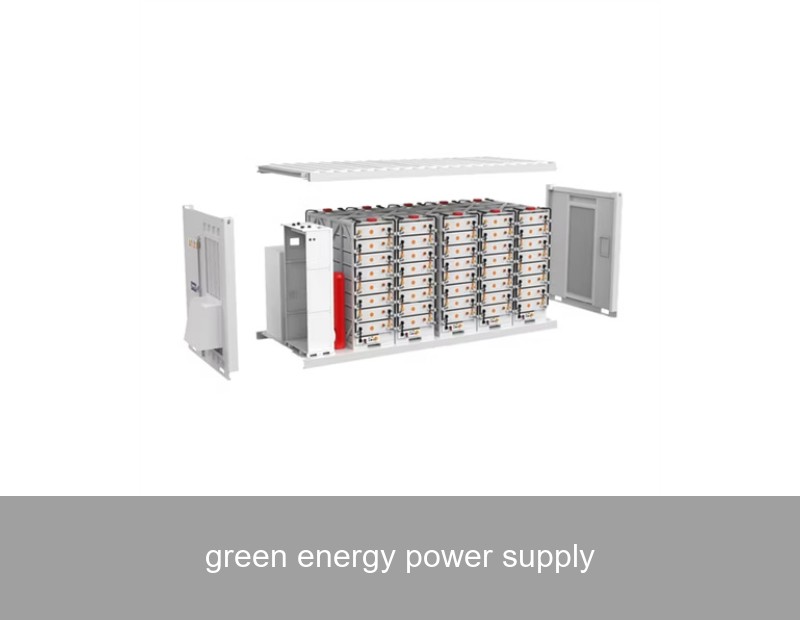
This is where Battery Energy Storage Systems (BESS) come in. Think of a BESS as a high-tech "energy bank." During periods of high renewable generation (like midday sun), instead of letting excess power go to waste or overloading the grid, it is stored in the battery system. Later, when demand is high but renewable generation is low (like during the evening peak), the stored energy is discharged. This simple charge-discharge cycle is the engine of a dependable green energy power supply.
A modern BESS is far more than just a battery. It's an integrated suite of components:
- Battery Modules: Typically using lithium-ion chemistry for high efficiency and energy density.
- Power Conversion System (PCS): The intelligent inverter that manages AC/DC conversion, dictating when to charge or discharge.
- Energy Management System (EMS): The "brain" of the operation. This software platform uses algorithms and sometimes AI to optimize the system's performance based on weather forecasts, energy prices, and consumption patterns.

Image Source: Unsplash - Example of a containerized BESS installation.
A Real-World Case: Stabilizing a Microgrid in Southern Europe
Let's look at a concrete example. A mid-sized agricultural processing cooperative in southern Spain faced a dual challenge: rising grid electricity costs and an unreliable local grid that threatened their refrigeration facilities. They invested in a 2 MW solar farm but needed to ensure power continuity during night operations and grid outages.
They deployed a Highjoule H4 Commercial BESS with a capacity of 4 MWh. The system was integrated with their existing solar PV and a backup generator. Here's the impact, measured over one year:
| Metric | Before BESS | After BESS Integration |
|---|---|---|
| Renewable Self-Consumption | 35% (excess solar exported) | 92% (most solar used on-site) |
| Grid Energy Cost | €18,000/month (avg.) | €6,500/month (avg.) |
| Grid Outage Protection | 0 hours (relied on diesel gen) | Critical loads powered for up to 8 hours |
| CO2e Emissions Reduction | Baseline | Estimated 120 tonnes/year |
The Highjoule system's EMS was programmed to prioritize using stored solar energy during high-tariff evening hours, dramatically cutting costs. It also provided seamless uninterruptible green energy power supply during several short grid failures, protecting perishable goods. This case mirrors trends across Europe, where the European Association for Storage of Energy reports a growing recognition of storage's value in energy security (Source: EASE).
Highjoule's Role: Intelligent Systems for a Sustainable Future
At Highjoule, we don't just sell hardware; we deliver tailored energy resilience. Our expertise, honed since 2005, allows us to design systems that address the specific green energy power supply challenges of each client.
For commercial and industrial clients, our H-Series BESS offers scalable, containerized solutions that manage demand charges, provide backup power, and enable participation in grid services like frequency regulation. For residential and small business applications, our EchoHome integrated storage system pairs seamlessly with rooftop solar, allowing homeowners to maximize self-consumption and gain independence.
What sets Highjoule apart is our Atlas Energy Management Platform. This cloud-based intelligence layer continuously analyzes data from the grid, weather stations, and your facility's load. It makes predictive decisions to optimize every kilowatt-hour—whether it's to save money, reduce carbon footprint, or ensure uptime. It's this smart control that transforms a battery into a true strategic asset for your green energy power supply.

Image Source: Unsplash - Integrated home energy system with solar, storage, and EV.
Beyond Reliability: Why a Stored Green Energy Supply Makes Economic Sense
The benefits of coupling renewables with storage extend beyond environmental stewardship and reliability. Financially, it's becoming an imperative. Many regions in the U.S. and Europe have adopted time-of-use (TOU) tariffs or dynamic pricing, where electricity can be several times more expensive during peak hours. A smart BESS allows you to avoid drawing power from the grid during these expensive periods by using your stored green energy.
Furthermore, in markets like California, Texas (ERCOT), and parts of the EU, large-scale and even aggregated residential storage systems can provide valuable services to the grid operator, creating a new revenue stream. By helping to balance supply and demand instantly, your storage asset contributes to overall grid stability while being compensated. The National Renewable Energy Laboratory in the U.S. has published extensive studies on the evolving value stacks for energy storage (Source: NREL).
Your Role in the Future Grid
The transition to a decarbonized grid isn't just a task for utilities and governments. It's a distributed opportunity. Every business with a power bill, every community seeking resilience, and every homeowner with solar panels can be part of the solution. By investing in an intelligent storage system, you secure your own green energy power supply and become an active participant in a more flexible and sustainable energy network.
What is the first step your organization could take to assess its vulnerability to grid volatility or rising energy costs, and how might an intelligent storage solution turn that vulnerability into a strategic advantage?
 Inquiry
 Online Chat