


Grid Connected Photovoltaic System: Your Gateway to Energy Independence and Savings
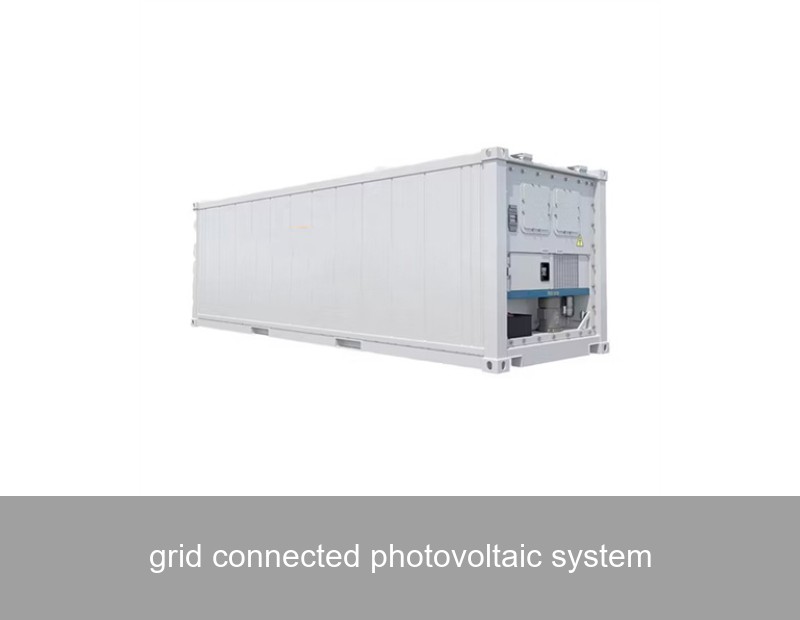
Have you ever watched your electricity bill climb with a sense of helplessness, or wondered how you can truly make a dent in your carbon footprint? For homeowners and businesses across Europe and the US, the answer is increasingly shining right above us. A grid connected photovoltaic system is more than just rooftop solar panels; it's an intelligent energy partnership between your property and the utility grid. This setup allows you to generate clean power, use what you need, and send the surplus back to the grid, often for credit. But what happens when the sun sets, or during peak demand periods when grid prices soar? The true potential of solar is unlocked not just by generation, but by smart storage and management. Let's explore how modern technology is transforming simple solar arrays into resilient, money-saving power stations.
Table of Contents
- What is a Grid Connected Photovoltaic System?
- The Challenge: Intermittency and the Duck Curve
- The Solution: Intelligence Beyond the Inverter
- Case Study: A German Bakery's Recipe for Energy Resilience
- Highjoule's Role: Smart Storage for a Stable Grid
- The Future of Grid-Connected Solar
What Exactly is a Grid Connected Photovoltaic System?
At its core, a grid-tied or grid-connected PV system is the most common solar installation for homes and businesses. Unlike off-grid systems that require large battery banks, a grid-tied system is seamlessly connected to the public electricity network. Its main components are:
- Solar Panels: Convert sunlight into direct current (DC) electricity.
- Grid-Tie Inverter: The heart of the system. It converts DC power into alternating current (AC) used in your building and the grid, and synchronizes its frequency and voltage perfectly with the utility grid.
- Bi-directional Meter: Measures both the electricity you draw from the grid and the surplus you export to it.
The traditional model is simple: generate during the day, use what you can, export the rest (via net metering or feed-in tariffs), and draw from the grid at night. However, this model is being challenged by the very success of solar adoption.
The Growing Challenge: Intermittency and the "Duck Curve"
Here's the phenomenon energy grid operators are grappling with. Solar power floods the grid during midday, often causing a dramatic dip in net demand. As the sun sets and people return home, demand skyrockets just as solar generation plummets. When charted, this net load curve resembles a duck—hence the term "Duck Curve".
The data is striking. The California Independent System Operator (CAISO) has seen the "belly" of the duck deepen yearly, with over 15,000 MW of solar capacity sometimes needing to be curtailed (essentially, wasted) to maintain grid stability. This volatility creates two problems for the system owner: 1) reduced value for exported energy as midday prices crash, and 2) continued reliance on expensive, often fossil-fuel-based grid power during evening peaks.

Image Source: U.S. Department of Energy (Public Domain)
The Modern Solution: Intelligence and Storage Beyond the Inverter
The next evolution of the grid connected photovoltaic system directly addresses these challenges. It integrates a critical fourth component: a smart battery energy storage system (BESS). This turns a one-way solar export system into a dynamic, home-or-business-centric microgrid.
With a smart BESS like those developed by Highjoule, the logic flips:
- Self-Consumption Optimization: Store excess midday solar energy instead of selling it at low value.
- Peak Shaving: Use stored energy to power your property during expensive evening peak hours, dramatically cutting demand charges for businesses.
- Backup Power: Provide seamless emergency power during grid outages, a feature traditional grid-tied systems lack.
- Grid Services: Advanced systems can even support grid stability through frequency response, benefiting the entire community.
Case Study: Müller Bakery, Bavaria, Germany
Let's look at a real-world example. Müller Bakery, a medium-sized artisan bakery with high energy needs for ovens and refrigeration, installed a 50 kW rooftop grid connected photovoltaic system in 2020. While it cut daytime grid use, the owner, Klaus Müller, was frustrated by high evening grid consumption and low feed-in tariffs.
In 2023, they integrated a Highjoule H-Stack Commercial 50 kWh battery system with intelligent energy management software. The results after one year:
| Metric | Before Highjoule BESS | After Highjoule BESS |
|---|---|---|
| Grid Energy Import (Peak Hours 4-9 PM) | 35 kWh/day avg. | 5 kWh/day avg. |
| Solar Self-Consumption Rate | 45% | 92% |
| Monthly Demand Charge (Peak Power Draw) | €850 | €220 |
| Total Annual Energy Cost Savings | Base Year | €8,400 |
"The Highjoule system doesn't just store energy; it makes business decisions," Klaus noted. "It knows bakery schedules, weather forecasts, and energy prices. It automatically runs our chillers on stored solar power before dawn, ensuring we start baking with a full battery. Our energy costs are now predictable and controlled."
How Highjoule's Expertise Elevates Your Grid-Connected System
Founded in 2005, Highjoule has evolved from a component supplier to a global provider of integrated, intelligent storage solutions. We understand that a modern grid connected photovoltaic system is a dynamic asset. Our products and services are designed to maximize its value and resilience.
For residential clients, our EverHome Series features scalable lithium-iron-phosphate (LFP) batteries with a built-in hybrid inverter. Its AI-driven software learns your household patterns and automatically optimizes for self-consumption, time-of-use savings, or backup readiness, all managed via a simple smartphone app.
For commercial and industrial (C&I) applications, our modular H-Stack Industrial systems can be scaled from 100 kWh to multiple MWh. These systems are engineered for high cycle life and include sophisticated energy management systems (EMS) that can interface with building management systems, allowing businesses to participate in demand response programs—turning energy savings into a direct revenue stream. According to a 2023 IEA report, C&I storage is one of the fastest-growing segments, crucial for decarbonizing the industrial sector.

Image Source: Highjoule (Company Installation Photo)
Our approach goes beyond hardware. Highjoule's technical team provides full lifecycle support, from system design and grid compliance assistance (critical in diverse markets like the EU and US) to remote monitoring and performance analytics.
The Future: Prosumers and a Virtual Power Plant (VPP)
The ultimate evolution of the grid connected photovoltaic system is the "prosumer" – a producer and consumer who actively participates in energy markets. Through Highjoule's VPP platform, thousands of distributed home and business storage systems can be aggregated into a single, grid-responsive resource. This virtual power plant can provide peak capacity, frequency regulation, and defer costly grid infrastructure upgrades, as seen in pioneering projects in the Netherlands and Texas.
This transforms your rooftop solar and battery from a private asset into a citizen's contribution to a more stable and renewable grid.
Ready to Transform Your Solar Investment?
Your solar panels are a great first step. But are you truly maximizing their financial return and energy independence? The modern grid demands—and rewards—intelligence and storage. Whether you're a homeowner tired of volatile rates or a business manager looking to lock in long-term operational cost certainty, the next step is clear.
What would a 90% self-sufficiency rate do for your energy budget, and what role could your property play in building the resilient, clean grid of the future?
 Inquiry
 Online Chat