


How Much Does a Solar Power Station Cost? A Comprehensive Guide for 2024
If you're a homeowner or business leader looking to harness the sun's power, one question inevitably rises to the top: how much does a solar power station cost? It's the crucial first step in your renewable energy journey. The answer, however, isn't a single number. It's a spectrum influenced by your energy needs, location, and a critical, often overlooked component: intelligent energy storage. Let's demystify the investment and explore what truly defines a modern, resilient solar installation.
The Solar Investment Phenomenon: From Expense to Asset
Gone are the days when solar was just an eco-friendly statement. Today, it's a strategic financial decision. Across Europe and the U.S., volatile energy prices and a desire for energy independence are driving unprecedented adoption. But the initial quote can be surprising. Understanding the breakdown is key to seeing the system not as a cost, but as a long-term asset that generates returns for decades.
Breaking Down the Costs of a Solar Power Station
A complete solar power station, or photovoltaic (PV) system, comprises several key components. Here’s a typical cost structure for a commercial-scale system (e.g., 100 kW):
| Component | Description | Approx. Cost Share |
|---|---|---|
| Solar Panels (Modules) | The most visible part, converting sunlight to DC electricity. | 25-30% |
| Inverters | The "brain," converting DC electricity to usable AC power. | 10-15% |
| Mounting & Racking | The structural system that secures panels to your roof or ground. | 10-12% |
| Installation & Labor | Professional design, permitting, and installation work. | 20-25% |
| Balance of System (BOS) | Wiring, conduits, switches, and safety equipment. | 10-12% |
| Battery Energy Storage System (BESS) | Optional but increasingly critical for maximizing value. | 20-40% (add-on) |
As you can see, while panels are important, the "soft costs" like labor and engineering are significant. In the U.S., the National Renewable Energy Laboratory (NREL) tracks these trends closely, noting that total average costs have fallen by over 50% in the last decade, making solar more accessible than ever.
The Hidden Game-Changer: Energy Storage
This is where the modern solar narrative shifts. A traditional solar-only system exports excess power to the grid, often for a low feed-in tariff. But what if you could store that excess for use at night or during peak price periods? This is the role of a Battery Energy Storage System (BESS). Adding storage transforms your solar power station from a partial solution into a comprehensive energy independence hub. It manages:
- Self-Consumption Optimization: Use more of your own solar power, slashing grid imports.
- Backup Power: Provide critical power during grid outages.
- Peak Shaving: Avoid expensive demand charges for commercial users.

Image: A modern commercial solar installation. The true potential is unlocked when paired with intelligent storage. Credit: Unsplash
A Real-World Case Study: The German Dairy Farm
Let's make this concrete. Consider a mid-sized dairy farm in Bavaria, Germany, with high refrigeration loads and milking operations. Their monthly electricity bill showed consistent peaks, leading to high energy costs.
- Challenge: High daytime energy use, some evening load, desire for backup during storms.
- Solution: A 150 kW rooftop solar array paired with a 240 kWh Highjoule H2 Series battery storage system.
- Outcome: The system was designed to maximize self-consumption. Solar powers daytime operations and charges the battery. The battery discharges during evening peaks and provides backup. The result? An 85% reduction in grid electricity purchases and full operational continuity during two grid outages in its first year. The payback period, factoring in German incentives for storage, was calculated at under 7 years.
This case highlights that asking "how much does a solar power station cost?" evolved into "what is the value of a solar-plus-storage system?" The latter delivers far greater financial and operational resilience.
Key Factors Influencing Your Price Tag
Your specific cost depends on:
- System Size (kW): Driven by your historical energy consumption.
- Location: Local sunlight, labor rates, and available incentives (like the U.S. Investment Tax Credit or European subsidies).
- Technology Choice: Premium high-efficiency panels vs. standard ones; advanced lithium-ion batteries with smart management vs. basic models.
- Installation Complexity: Roof type, ground-mount, and electrical upgrades.
- Storage Capacity (kWh): How much backup or load-shifting you need.
Beyond the Price Tag: Value and ROI
The conversation must move beyond upfront cost. Consider:
- Locked-in Energy Rates: Solar provides free "fuel" for 25+ years, insulating you from utility price hikes.
- Increased Property Value: Studies, including one from the U.S. Department of Energy, show homes with solar sell faster and at a premium.
- Sustainability Goals: Tangible reduction in carbon footprint, enhancing corporate social responsibility.
- Grid Services: In some markets, aggregated storage can provide grid stability services for additional revenue.
Highjoule: Your Partner in Smart Solar & Storage
Navigating this landscape requires a partner with deep technical expertise. Since 2005, Highjoule has been at the forefront of intelligent energy storage solutions. We don't just sell batteries; we provide integrated power resilience.
For businesses and homeowners considering their solar power station, our H-Series battery systems are the perfect complement. They feature:
- Advanced Lithium Iron Phosphate (LFP) Chemistry: Renowned for safety, longevity (10,000+ cycles), and stable performance.
- AI-Powered Energy Management: Our software learns your consumption patterns, automatically optimizing when to charge from solar or grid, and when to discharge to save you the most money.
- Scalable Design: From modular residential units to containerized industrial solutions, systems grow with your needs.
- Global Support: With a strong presence in Europe and North America, we ensure reliable service and peace of mind.

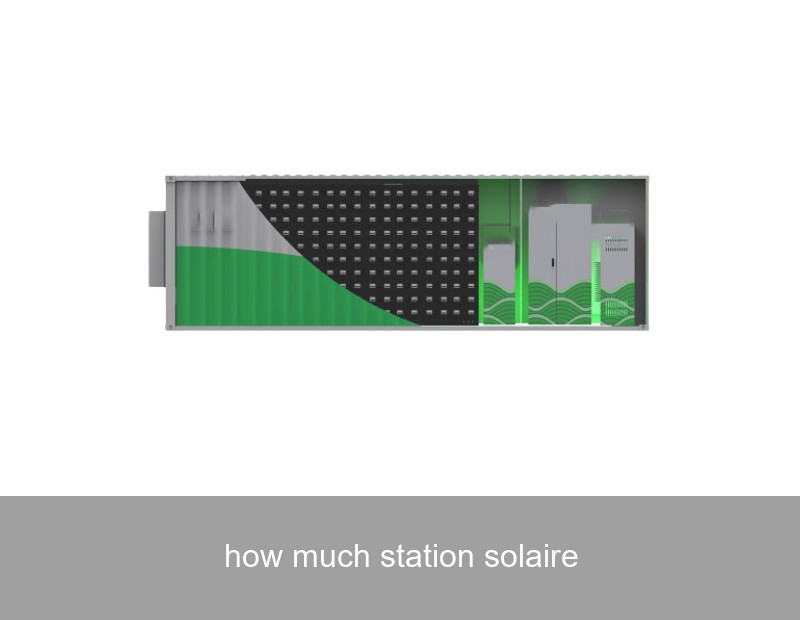
Image: The heart of a modern energy storage system. Intelligent management is key to ROI. Credit: Unsplash
By integrating a Highjoule system, you ensure your solar investment works harder, delivering faster payback and unwavering reliability.
So, What's Your Energy Independence Profile?
The question "how much does a solar power station cost?" is the beginning of your audit. The more insightful question is: What is the true cost of my current energy vulnerability, and what value would controlling my own clean power generation and storage bring to my home or business? With the right partner and a system designed for your specific goals, the transition to solar-plus-storage is not just an expense—it's one of the smartest capital investments you can make today.
Ready to calculate the specific value for your property? What would a 70% reduction in your grid dependency do for your operational budget or household peace of mind?
 Inquiry
 Online Chat