


Grid Inverter with Battery Backup: Your Key to Uninterrupted and Intelligent Power
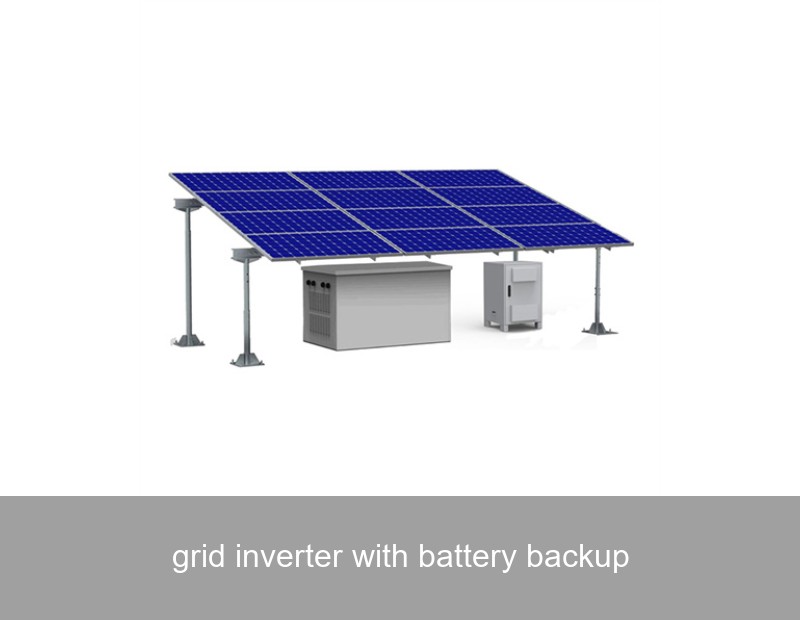
Imagine this: a storm knocks out the power in your neighborhood. While others are left in the dark, your home or business continues humming along seamlessly. The lights stay on, the Wi-Fi is live, and critical operations don't skip a beat. This isn't magic; it's the sophisticated synergy of a grid inverter with battery backup. This technology is rapidly transforming how we interact with electricity, moving us from passive consumers to active, resilient energy managers. For homeowners and businesses across Europe and the US, understanding this system is the first step toward energy independence, significant cost savings, and a robust contribution to grid stability.
Table of Contents
What Exactly is a Grid-Tied Inverter with Battery Backup?
Let's break it down. A standard grid-tied solar inverter converts the direct current (DC) electricity from your solar panels into alternating current (AC) for your home and sends any excess back to the utility grid. However, it has a critical safety feature: during a blackout, it shuts off entirely to prevent sending power back to the grid and endangering repair crews (a feature called "anti-islanding").
A grid inverter with battery backup changes this paradigm. It's an integrated system that combines a sophisticated, multi-mode inverter with a dedicated battery storage unit (like lithium-ion). This setup allows you to:
- Use Solar During the Day: Power your home directly from the sun.
- Store Excess Energy: Charge your batteries with surplus solar instead of sending it all to the grid.
- Use Stored Energy at Night: Draw power from your batteries after sunset, reducing grid dependence.
- Provide Backup During Outages: Automatically and instantaneously disconnect from the grid and power critical loads from your batteries, with or without solar.
Think of it as the brain and the heart of a modern energy-independent setup. The inverter is the intelligent manager, constantly deciding the most efficient flow of energy, while the battery is the resilient powerhouse, ready to spring into action.
How Does the System Work? The Seamless Transition
The true genius of this system lies in its automatic, sub-second operation. Here’s a step-by-step look at its logic:
- Normal Operation (Grid Connected): The inverter synchronizes with the utility grid. Solar powers the home, excess charges the battery, and any further surplus may be exported.
- Grid Failure Detected: The system detects a grid outage in milliseconds.
- Islanding & Transition: The inverter instantly isolates your home from the grid (creating a "microgrid") and switches to backup mode.
- Backup Power Delivery: It begins drawing power from the battery bank to supply your pre-selected critical circuits (e.g., refrigeration, lighting, internet, medical equipment).
- Grid Return: Once utility power is restored and stable, the system safely re-synchronizes and returns to normal operation, recharging the batteries if needed.

Image: A modern home energy setup combining solar generation and battery storage. (Source: Unsplash)
Key Benefits Beyond Emergency Power
While blackout protection is the most dramatic benefit, the advantages of a grid inverter with battery backup run much deeper:
- Maximized Self-Consumption: In markets with declining feed-in tariffs (common in Europe), using your own solar power is more valuable than selling it. Batteries allow you to store daytime surplus for use in the evening, boosting energy self-sufficiency to 70-90%.
- Bill Management & Load Shifting: In regions with Time-of-Use (TOU) rates (common in California and parts of the US), you can avoid drawing expensive grid power during peak hours (e.g., 4-9 PM) by using stored battery energy.
- Grid Support & Sustainability: By reducing peak demand on the grid, these systems help defer costly infrastructure upgrades and integrate more renewables. Some advanced systems can even participate in grid services programs.
- Increased Property Value: A home with resilient, clean power is becoming an increasingly attractive asset.
A Real-World Case Study: Resilience in Action
Let's look at a concrete example from the US market. A medium-sized winery in Napa Valley, California, faced two major challenges: frequent brief grid disturbances that could disrupt sensitive fermentation controls, and exorbitant demand charges on their electricity bill.
The Solution: They installed a 250 kW solar array coupled with a 500 kWh battery energy storage system, centered on advanced grid-interactive inverters with backup functionality.
- Resilience: The system has provided seamless backup during 5 grid outages in the past 18 months, preventing spoilage of valuable product.
- Financial: By strategically discharging the battery during peak operational hours, they reduced their peak demand by 40%, slashing their monthly demand charges by approximately $3,200.
- Sustainability: The system now provides 85% of their annual electricity from on-site solar, significantly reducing their carbon footprint.
This case illustrates the multi-faceted ROI of a well-designed grid inverter with battery backup system for commercial applications.
Choosing the Right System: Key Considerations
Not all systems are created equal. When evaluating a grid inverter with battery backup, consider these factors:
| Feature | Why It Matters |
|---|---|
| Continuous & Surge Power | Can the inverter handle the startup surge of motors (like well pumps or AC compressors) and the continuous load of all your critical circuits? |
| Battery Chemistry & Warranty | Lithium Iron Phosphate (LFP) is now the industry standard for safety, longevity, and depth of discharge. Look for a strong warranty (e.g., 10 years, 70% retained capacity). |
| Scalability | Can you easily add more battery capacity or solar panels in the future if your needs change? |
| Software & Monitoring | Intelligent software is what turns hardware into a smart system. Look for user-friendly apps that allow you to monitor, control, and optimize your energy flow. |
| Grid Service Compatibility | In some areas, you can earn revenue by allowing your system to support the grid. Check if the system is certified for programs like VPPs (Virtual Power Plants). |
The Highjoule Advantage: Intelligent Energy Orchestration
This is where expertise and integrated design make all the difference. At Highjoule, with nearly two decades of experience since 2005, we don't just sell components; we deliver intelligent, optimized power ecosystems.
Our HPS Series Hybrid Power Systems exemplify the pinnacle of grid inverter with battery backup technology. Engineered for the demanding residential and commercial markets in Europe and North America, they feature:
- High-Fidelity Inversion: Ultra-pure sine wave output that protects sensitive electronics and ensures smooth operation of all appliances.
- Unparalleled Transition Speed: Sub-20 millisecond switchover to backup power, so even the most sensitive digital equipment won't notice a glitch.
- Adaptive Energy Management (AEM) Software: Our proprietary brain learns your consumption patterns, weather forecasts, and utility rate schedules to autonomously optimize for cost, comfort, and carbon footprint.
- Modular & Future-Proof Design: Start with what you need and expand capacity seamlessly as your energy goals evolve.
For a large-scale commercial or microgrid application, our GridSynergy MegaPack solutions provide utility-scale storage and inverter capabilities, enabling facilities to achieve true energy sovereignty and participate actively in grid-balancing markets.

Image: Advanced monitoring and control are key to maximizing a battery backup system's value. (Source: Unsplash)
Understanding the Broader Landscape
The rise of grid inverters with battery backup is a key piece in the global energy transition puzzle. As noted by energy researchers, the flexibility provided by distributed storage is critical for integrating high levels of variable renewable energy (IEA, Energy Storage). Furthermore, standards and safety are paramount; organizations like UL in the US and similar bodies in Europe provide critical certifications for these systems.
So, as you consider taking control of your power, what specific energy challenge—be it reliability, unpredictable costs, or sustainability goals—is motivating you to explore a resilient energy solution today?
 Inquiry
 Online Chat