


Energy Storage System Batteries: The Heart of a Modern, Resilient, and Sustainable Grid
Have you ever wondered what keeps the lights on during a storm-induced blackout, or how a home with solar panels can power itself long after the sun sets? The answer increasingly lies in a sophisticated, intelligent, and rapidly evolving technology: energy storage system batteries. These are far more than just oversized versions of the batteries in your remote control. They are the critical linchpin enabling our transition to a renewable energy future, transforming how we generate, manage, and consume electricity. For businesses, communities, and homeowners, understanding this technology is key to unlocking energy independence, resilience, and significant cost savings.
Table of Contents
- The Phenomenon: From Intermittency to Reliability
- The Data: Quantifying the Storage Boom
- Case Study: A California Winery's Strategic Advantage
- Key Insights: Choosing the Right System for Your Needs
- How Highjoule Powers the Future with Intelligent Storage
- The Future Landscape: What's Next for Storage?
The Phenomenon: From Intermittency to Reliability
The global push for decarbonization has led to an unprecedented surge in wind and solar power. However, these sources are inherently variable—the sun doesn't always shine, and the wind doesn't always blow. This creates a fundamental challenge for grid stability. Energy storage system batteries solve this by acting as a buffer. They store excess electricity when generation is high and demand is low, then discharge it when the opposite is true. This simple "charge and discharge" cycle is revolutionizing our power infrastructure, moving us from a one-way grid to a dynamic, two-way network.
Think of it like a savings account for electricity. Instead of wasting surplus solar energy at noon, you "deposit" it into your battery. Later, during the expensive evening peak when everyone is home, you "withdraw" it, avoiding high utility rates and reducing strain on the grid. This capability, known as peak shaving, is just one of the many value streams modern storage systems provide.
The Data: Quantifying the Storage Boom
The numbers behind this shift are staggering and underscore a clear trend. According to the International Energy Agency (IEA), the global energy storage capacity is set to multiply exponentially this decade. In the United States alone, grid-scale battery storage capacity surged by over 80% in 2023. The European market is following a similar trajectory, driven by ambitious climate goals and the need for energy security.
Let's break down the key drivers with some concrete data points:
| Driver | Impact on Storage Adoption | Supporting Data/Policy |
|---|---|---|
| Falling Battery Costs | Lithium-ion battery pack prices have fallen nearly 90% since 2010, making projects highly economical. | BloombergNEF 2023 Survey |
| Renewable Integration Mandates | Grids require storage to safely integrate high levels of variable renewables. | EU's REPowerEU Plan, US State RPS Policies |
| Commercial & Industrial Demand Management | Businesses use storage to avoid "demand charges," which can constitute 30-70% of a commercial electricity bill. | Common utility rate structures in the US and Europe |
| Residential Energy Independence | Homeowners pair storage with solar to increase self-consumption from ~30% to 70% or more. | Industry analysis from solar-storage installers |
Case Study: A California Winery's Strategic Advantage
Let's move from theory to a real-world application. Consider a mid-sized winery in California's Napa Valley. This region faces two critical energy challenges: frequent Public Safety Power Shutoffs (PSPS) to prevent wildfires, and extremely high time-of-use electricity rates, especially during the hot summer months when irrigation and cooling loads peak.
The Challenge: A single prolonged outage during fermentation could ruin an entire vintage, costing hundreds of thousands of dollars. Furthermore, the winery's monthly electricity bill was dominated by demand charges and peak rates.
The Solution: The winery installed a 500 kW / 1 MWh containerized battery energy storage system, integrated with their existing rooftop solar. The system was configured for multiple objectives:
- Backup Power: Providing seamless, instantaneous power to critical loads (fermentation tanks, cold storage) during grid outages.
- Peak Shaving: The system's intelligent software automatically discharges the battery during the 4 PM to 9 PM peak window, drastically reducing demand charges.
- Solar Self-Consumption: Storing excess solar generation from midday for use in the evening.
The Results: Within the first year of operation:
- Financial: Achieved a 40% reduction in overall electricity costs, with a project payback period of under 5 years.
- Resilience: Survived three multi-day grid outages without any operational disruption, protecting the core business.
- Sustainability: Increased the utilization of their on-site renewable energy from 35% to over 85%.
This case exemplifies how modern energy storage system batteries are not just a cost but a strategic investment that mitigates risk, ensures operational continuity, and improves the bottom line.

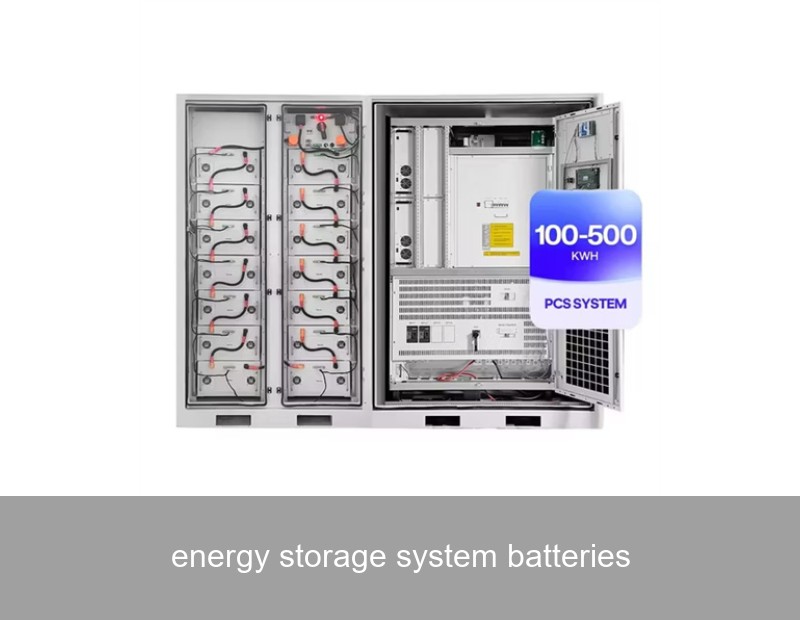
Containerized battery systems, like the one used in the winery case, provide scalable, plug-and-play storage for commercial and industrial sites. (Image for illustrative purposes)
Key Insights: Choosing the Right System for Your Needs
Not all storage systems are created equal. The "best" battery depends entirely on your application. Here’s a simplified guide to the core considerations:
1. Chemistry Matters: Lithium-ion is Not the Only Player
While lithium-ion (particularly LFP - Lithium Iron Phosphate) dominates for its high energy density and efficiency, other chemistries like flow batteries excel in long-duration storage (8+ hours) for microgrids. The choice hinges on required discharge duration, cycle life, and safety profile.
2. Intelligence is Everything: The Brain Behind the Brawn
A battery is a bank of cells, but its value is unlocked by its Battery Management System (BMS) and energy management software. Advanced systems, like those from Highjoule, use AI and weather forecasting to optimize charge/discharge cycles for maximum financial return and grid services participation.
3. Safety and Compliance are Non-Negotiable
Ensure any system is certified to stringent international standards (e.g., UL 9540, IEC 62619). Proper thermal management, fire suppression, and cybersecurity for grid-connected systems are paramount.
How Highjoule Powers the Future with Intelligent Storage
Since 2005, Highjoule has been at the forefront of this energy storage revolution. We understand that deploying a battery is just the first step; maximizing its lifetime value is the real goal. Our approach integrates cutting-edge hardware with proprietary, cloud-based intelligence.
For our commercial and industrial clients across Europe and North America, our H-Series modular storage solutions offer unparalleled flexibility. They can be configured for demand charge management, backup power, or even to participate in grid-balancing programs like Frequency Regulation, creating an additional revenue stream. Our platform continuously analyzes utility tariffs, weather, and load patterns to make real-time decisions that save our clients the most money.
For community-scale projects and microgrids, our M-Grid solution provides a fully integrated, resilient power system that can combine solar, wind, storage, and existing generators into a single, orchestrated asset. This is particularly transformative for remote communities or critical infrastructure like hospitals and water treatment plants.

Residential storage, when paired with solar, empowers homeowners and strengthens the local grid. (Image for illustrative purposes)
Our residential PowerHub system brings this same level of sophistication to homeowners. It seamlessly pairs with new or existing solar arrays, allowing families to maximize self-consumption, secure backup power, and contribute to a more stable grid—all controlled through an intuitive mobile app.
The Future Landscape: What's Next for Storage?
The evolution of energy storage system batteries is accelerating. We are moving towards even safer chemistries (solid-state), longer durations, and—most importantly—deeper integration with the digital infrastructure of our cities and homes. The concept of a "virtual power plant" (VPP), where thousands of distributed storage systems are aggregated to act like a single, large power plant, is already a reality in markets like California and Germany. Resources like the U.S. Department of Energy's work on VPPs highlight this transformative potential.
As electric vehicle adoption soars, the interplay between EV batteries and stationary storage will create new opportunities for bi-directional energy flow, turning fleets of vehicles into mobile grid assets.
Your Next Step: Are You Ready to Assess Your Storage Potential?
The question is no longer if energy storage will play a role in your energy strategy, but when and how. The economics and resilience benefits are too compelling to ignore. What is the single biggest energy challenge your business or home faces today—is it cost volatility, reliability concerns, or sustainability goals? Identifying that is the first step toward discovering how intelligent storage can provide the solution.
 Inquiry
 Online Chat