


Grid Solar Energy Storage Cabinet: The Cornerstone of Modern Energy Resilience
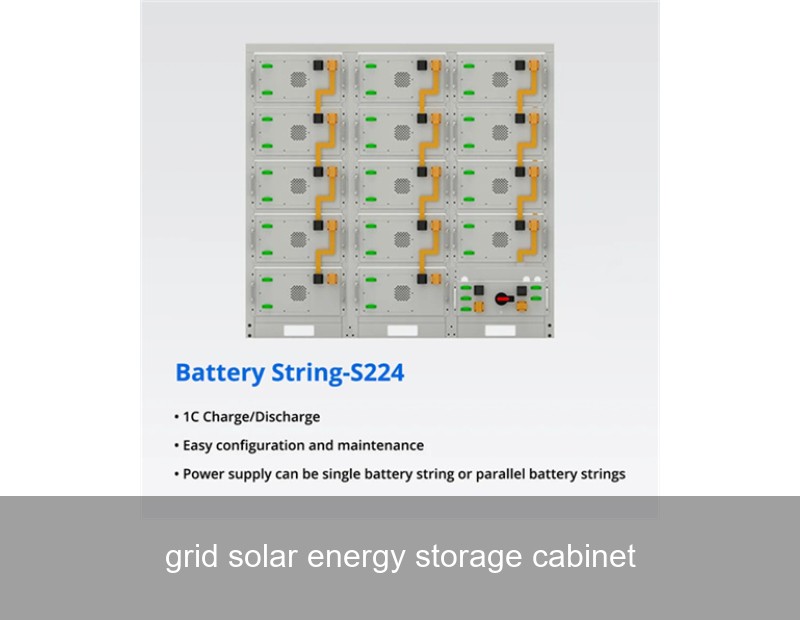
Imagine a bright, sunny day. Your solar panels are humming, producing more clean electricity than your home or business can use. Now, imagine that power staying with you long after the sun sets, powering your evening, or stepping in seamlessly during a grid outage. This isn't magic; it's the practical reality enabled by a grid solar energy storage cabinet. This unassuming unit is rapidly becoming the essential brain and battery pack for modern energy systems, transforming how we generate, store, and consume solar power. For homeowners and businesses across Europe and the U.S., integrating a robust storage solution is no longer a luxury but a strategic move towards energy independence, cost savings, and sustainability. As a leader in this field since 2005, Highjoule designs intelligent storage cabinets that do more than just hold energy—they optimize it for your specific needs.
Table of Contents
- The Phenomenon: From Passive Consumer to Proactive Prosumer
- The Data: Why Storage is No Longer Optional
- Case Study: A German Bakery's Recipe for Energy Resilience
- Inside the Grid Solar Energy Storage Cabinet: Key Components
- The Highjoule Solution: Intelligence Meets Durability
- Looking Ahead: The Evolving Role of Storage
The Phenomenon: From Passive Consumer to Proactive Prosumer
The energy landscape is undergoing a seismic shift. We are moving away from a one-way street where power flows solely from the utility to the consumer. Today, with the mass adoption of rooftop solar, millions have become "prosumers"—both producing and consuming energy. This creates a new challenge: solar generation peaks during midday, while energy demand often peaks in the early morning and evening. Without a grid solar energy storage cabinet, excess solar energy is fed back to the grid, often for minimal compensation, leaving you reliant on the grid when your panels are idle. The phenomenon of having solar but not truly harnessing its full potential is a common frustration. The solution lies in capturing that midday surplus in a dedicated battery system for use on your own terms.
The Data: Why Storage is No Longer Optional
The economic and practical case for adding storage to solar is stronger than ever. Let's look at the numbers shaping markets in Europe and the United States.
- Falling Feed-in Tariffs (FiTs): In countries like Germany and the UK, generous subsidies for selling solar power back to the grid have significantly decreased. The new economic model favors self-consumption. Fraunhofer ISE reports that self-consuming solar power with storage can be more valuable than exporting it under current tariffs.
- Rising Electricity Prices: Volatile and increasing grid electricity costs, exacerbated by geopolitical factors, make avoiding grid purchases financially attractive. Storing cheap solar power to offset expensive grid power is a straightforward calculation.
- Grid Service Demand: Utilities are increasingly looking to distributed storage systems to help stabilize the grid, offering payments for services like frequency regulation. A smart grid solar energy storage cabinet can participate in these programs, creating a new revenue stream.
- Resilience Imperative: From wildfires in California to intense storms in the Midwest and Europe, grid outages are a growing concern. A 2023 report by the U.S. Energy Information Administration (EIA) noted an increase in the frequency and duration of power interruptions. Storage provides critical backup power.
| Metric | Solar Only | Solar + Storage Cabinet |
|---|---|---|
| Self-Consumption Rate | ~30-40% | ~70-80% |
| Grid Independence During Outage | 0 Hours (Inverter shuts off) | 24+ Hours (Critical loads) |
| Bill Savings Potential | Good | Excellent |

Image: A modern home energy setup featuring solar panels and a wall-mounted battery storage cabinet. Source: Unsplash
Case Study: A German Bakery's Recipe for Energy Resilience
Let's make this concrete with a real-world example from Bavaria, Germany. "Bäckerei Schmidt" (a pseudonym for our case study subject) is a medium-sized artisan bakery with high energy demands for ovens, refrigeration, and lighting. They installed a 50 kW solar array in 2020 but found they were exporting over 60% of their generation each afternoon while buying expensive power in the early morning for dough preparation.
The Challenge: Maximize solar self-use, reduce peak demand charges, and ensure refrigeration stayed online during brief grid fluctuations.
The Solution: In 2022, they integrated a Highjoule grid solar energy storage cabinet—the C&I Series 100. This system featured a 120 kWh lithium-iron-phosphate (LFP) battery bank, a hybrid inverter, and Highjoule's proprietary Energy Management System (EMS).
The Results (12 Months Post-Installation):
- Self-Consumption of Solar: Increased from 35% to 89%.
- Peak Demand Charges: Reduced by 40% by discharging the battery during high-load periods.
- Energy Cost Savings: Total electricity bill reduced by approximately €8,500 annually.
- Reliability: Successfully rode through three minor grid outages, preventing spoilage of refrigerated goods.
"The Highjoule system pays for itself," the bakery manager noted. "It's not just a battery; it's an intelligent energy manager that works silently in the background, optimizing every kilowatt-hour we produce."
Inside the Grid Solar Energy Storage Cabinet: Key Components
So, what exactly makes up these systems? A grid solar energy storage cabinet is an integrated solution, more than just a box of batteries.
- Battery Modules: The core storage medium, typically using Lithium Iron Phosphate (LFP) chemistry for its safety, long life (6,000+ cycles), and thermal stability. LFP is now the dominant choice for stationary storage.
- Battery Management System (BMS): The guardian of the battery pack. It monitors cell voltage, temperature, and state of charge, ensuring safety, balance, and longevity.
- Power Conversion System (PCS)/Hybrid Inverter: The heart of the system. It converts DC electricity from the solar panels and batteries to AC for your building, and vice-versa for charging. It handles grid synchronization and islanding during outages.
- Energy Management System (EMS): The brain. This software uses algorithms and weather forecasts to decide when to charge, discharge, or hold energy based on tariffs, consumption patterns, and user preferences.
- Thermal Management: A critical but often overlooked component. Proper cooling/heating (liquid or air-based) maintains the battery at its ideal operating temperature, drastically impacting performance and lifespan.
- Safety Enclosure & Integration: A robust, often IP54-rated cabinet that houses all components safely, provides fire resistance, and allows for clean integration into garages, utility rooms, or outdoor spaces.
The Highjoule Solution: Intelligence Meets Durability
At Highjoule, we've spent nearly two decades refining the art and science of energy storage. Our approach to the grid solar energy storage cabinet is defined by three core principles: intelligence, integration, and resilience.
Our product lines, such as the Residential H-Series and Commercial & Industrial C&I Series, are built on a modular platform. This means you can start with the capacity you need and expand later as your energy needs grow—a future-proof investment. We exclusively use LFP battery chemistry, prioritizing safety and cycle life above all.
What truly differentiates a Highjoule cabinet is our Adaptive EMS. Unlike simple timer-based systems, our EMS uses machine learning to understand your unique load profile. It can factor in dynamic electricity rates (like Time-of-Use in California), participate in virtual power plant (VPP) programs where available, and even prioritize backup power for your most critical circuits. It’s like having a full-time energy trader working for you.

Image: The interior of a large-scale, professionally installed battery energy storage system. Source: Unsplash
For installers and system integrators, we provide comprehensive support, from design software and commissioning tools to remote monitoring via the Highjoule Portal. Our cabinets are designed for straightforward installation, with UL and IEC certifications for both North American and European markets, ensuring compliance and peace of mind.
Looking Ahead: The Evolving Role of Storage
The grid solar energy storage cabinet is evolving from a behind-the-meter asset to a key player in the broader smart grid. With vehicle-to-grid (V2G) technology on the horizon, your storage system could one day interact with your EV. As renewable penetration increases, the collective power of millions of distributed storage units will be crucial for grid stability.
The question is no longer if you should add storage to your solar, but how to choose the right system for your long-term goals. Do you prioritize maximum financial return, absolute energy independence, or providing community grid services?
What specific energy challenge in your home or business could a smart, Highjoule-grade grid solar energy storage cabinet solve for you today?
 Inquiry
 Online Chat